
DOMINANT ANGLE
Doha sees the French riots as an expression of a social crisis born in high schools and fueled by the high cost of living, which the presidential address does not resolve.
Dominant angle identified — does not reflect unanimity of this country’s media
KEY POINTS
- 01
According to the Interior Ministry, around 550,000 people demonstrated in France on Saturday; unions and organizers announced 800,000 (Al Jazeera).
- 02
Interior Minister Laurent Nuñez reported 1,800 arrests, including a "record" 855 in Paris, and the city hall of Limoges was destroyed by a fire (Gulf Times).
- 03
Macron expressed "anger and shame" and promised that the rioters will pay, without declaring a state of emergency or curfew (Al Jazeera).
ANALYSIS
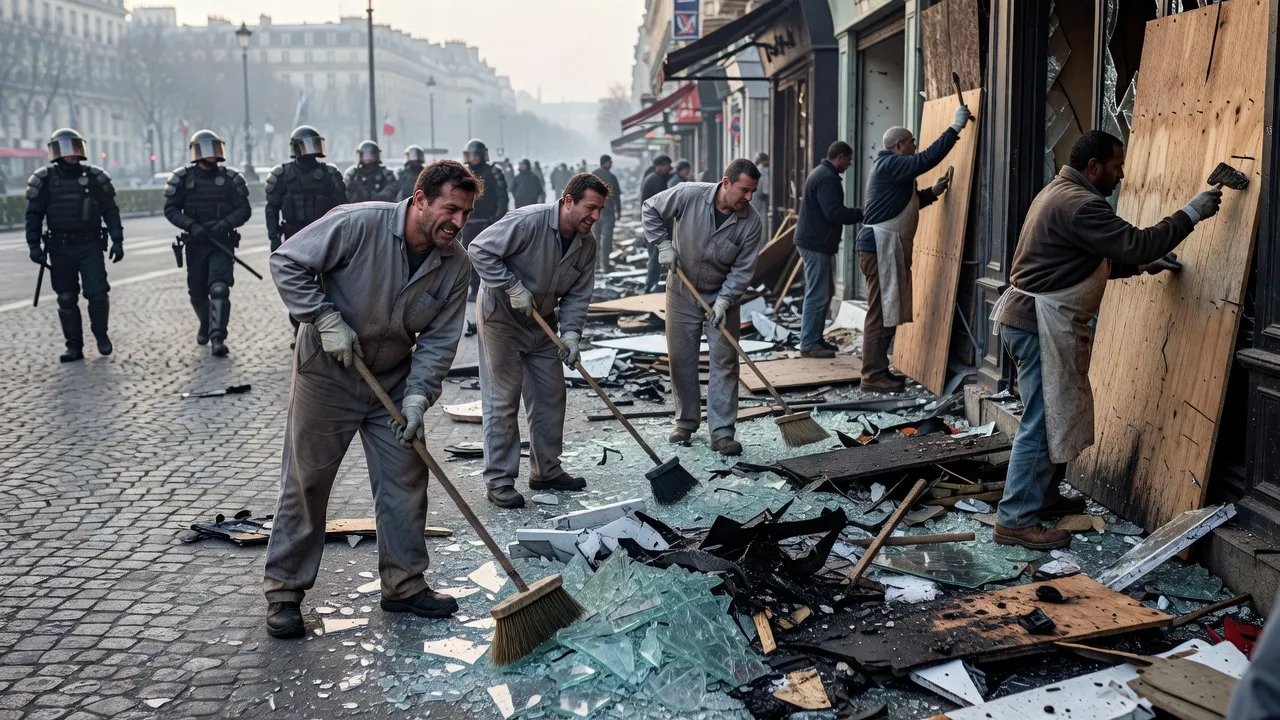
Doha, October 18, 2026. In Qatari media, Saturday, October 17, was first and foremost a day of social unrest. Al Jazeera recalls that the protests originated in September in high schools in the popular north of Paris, against the lack of teachers and the dilapidation of facilities, before spreading to Bordeaux, Rennes, Nantes, Lyon, Lille, and Marseille, and then joining the outrage against the high cost of living. According to the Ministry of the Interior, around 550,000 people demonstrated; unions and organizers announced 800,000. The channel emphasizes that most marched peacefully, while a minority attacked buildings, looted stores, and clashed with the police.
The toll is detailed. Gulf Times, citing Interior Minister Laurent Nuñez, reports 1,800 arrests, including 855 in Paris, a "record" according to the police. The 19th-century city hall of Limoges burned; Prefect Maurice Barate speaks of a "savage horde". Lamia El Aaraje, deputy mayor of Paris, evokes a violence that the capital had "never" seen. The figures vary: Al Jazeera cites nearly 2,400 arrests and around 1,000 injured police and gendarmes, while Sébastien Lecornu announced 1,200 arrests and 150 injured police.
On Sunday, Emmanuel Macron said he was seized with "anger and shame", promised that rioters and looters "will pay for their crimes", and distinguished between protesters with "legitimate claims" and those who "destroyed, broke, and looted". Al Jazeera notes that he did not declare a state of emergency or curfew, announced a crisis unit for urgent aid, and asked the government to draw lessons. His correspondent Natacha Butler judges the speech as without "surprises" and doubts that it will suffice to calm the streets.
On the ground, the channel collects the consternation of Parisians in the Place de la République: "unacceptable", says Rabah, who has been living there for over 70 years. On the statue of Marianne, a graffiti proclaims: "Those who sow misery reap anger". Gulf Times puts the episode into the political calendar: Emmanuel Macron is ending his term, with a presidential election scheduled in six months. The government and Marine Le Pen blame the "ultra-left", while Jean-Luc Mélenchon, who supported the mobilization, is exposed. Al Jazeera adds that Belgium, Italy, and Portugal experienced similar protests against the high cost of living on the same day, and that one of its reporters was hit in the head in Rennes.