
DOMINANT ANGLE
Paris justifies sending soldiers to Yanbu due to the fuel crisis affecting the French, rather than a choice to become involved in the Yemeni conflict.
Dominant angle identified — does not reflect unanimity of this country’s media
KEY POINTS
- 01
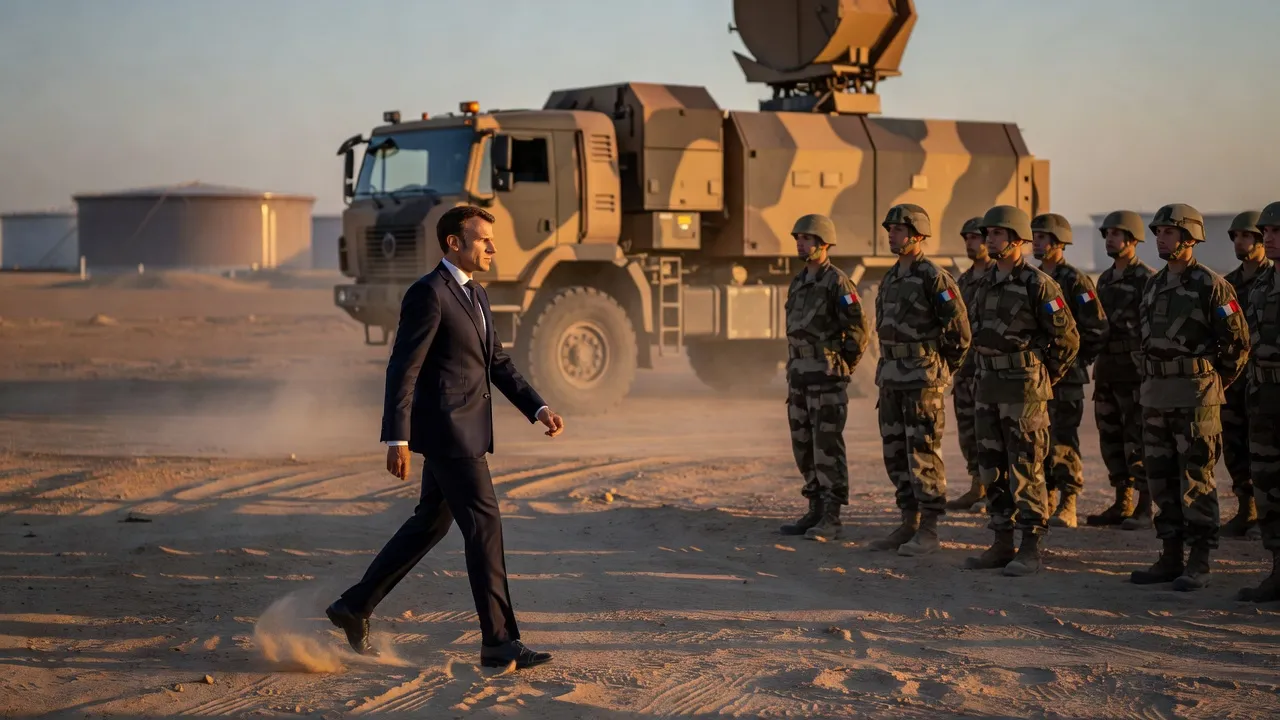
Macron announced on Thursday, September 24, the deployment of "military assets, namely soldiers, radar, and defense systems" to protect Yanbu, without ruling out the use of Rafale jets "as needed"
- 02
He guaranteed the supply of "diesel, gas, and fuel" until the end of the year, did not rule out a tax cut or difficulties at the beginning of 2027, and wants to "bring together the G7 countries"
- 03
Dominique de Villepin (BFMTV) sees a gesture towards a "very isolated" Saudi Arabia, Ségolène Royal believes that "the French will be very disappointed"
ANALYSIS
Paris, September 25, 2026. Emmanuel Macron announced, on Thursday, September 24, during a joint interview on the 8 pm news on TF1 and France 2, the deployment of "military means, namely soldiers, radar, and defense systems" to protect the Saudi port of Yanbu, the kingdom's main crude oil export terminal on the Red Sea and a regular target of the Houthis from Yemen. The President of the Republic specified that this did not mean "engaging" in the conflict between Riyadh and the pro-Iranian rebels, while not excluding the use of Rafale fighter jets "as needed".
The head of state presented this deployment less as a military choice than as a lever against the surge in fuel prices. According to him, a easing of tensions at this strategic site would have an "immediate impact on fuel prices". He assured that the supply of "diesel, gas, and fuel" would remain guaranteed "until the end of the year", without excluding difficulties "if the crisis were to worsen" in early 2027, and did not rule out having to lower fuel taxes in the long term. He also announced his intention to "bring together the G7 countries" to study a possible release of strategic oil and gas stocks.
On BFMTV, former Prime Minister Dominique de Villepin saw this move as a way for Macron to show support for Saudi Arabia, "which finds itself very alone" against the Houthis, while Ségolène Royal, a socialist primary candidate, judged that "the French will be very disappointed" by the president's announcements on purchasing power. Macron also described a potential US ban on diesel exports as "catastrophic", an additional cause of tension on domestic prices.
The announcement comes as Saudi Arabia claims to have intercepted six Houthi ballistic missiles targeting Taif and Yanbu, and as Riyadh, Turkey, and Pakistan have convened an emergency meeting of their chiefs of staff in New York under their common defense pact. In France, the debate remains focused on the domestic consequences: taxes, fuel prices, and the credibility of a diplomacy presented as an economic policy tool rather than a military commitment to a regional war.
SOURCES (5)
- L'ObsMEDIUM
- BFMTVMEDIUM
- LibérationMEDIUM