
DOMINANT ANGLE
Berlin is first and foremost concerned with the energy implications of the deployment of French troops to Yanbu, rather than its strictly military aspect.
Dominant angle identified — does not reflect unanimity of this country’s media
KEY POINTS
- 01
According to Macron, quoted by Tagesschau, up to five million barrels of crude oil could be loaded every day via Yanbu, which allows bypassing the Strait of Hormuz blocked by Tehran.
- 02
Macron described a potential US ban on diesel exports as "catastrophic" for the world and the US economy, according to FAZ.
- 03
The Janbu facilities were "heavily damaged" by Houthi attacks, and the militia has taken control of large portions of the coastline near the Bab al-Mandab Strait, reports Tagesschau.
ANALYSIS
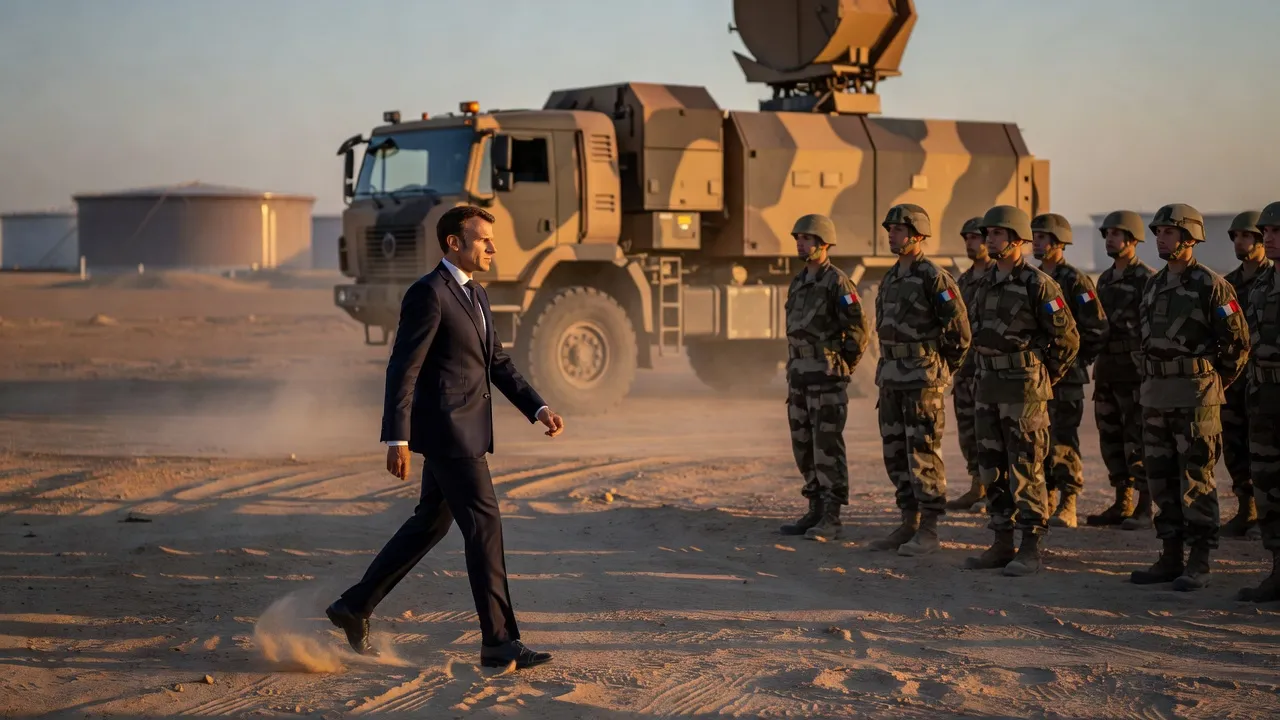
Berlin, September 25, 2026. The German press first notes the energy implications of Emmanuel Macron's announcement, on Thursday, in a television interview: France will send "military means, i.e. soldiers, radar systems and defense systems" to protect the Saudi port of Yanbu, on the Red Sea, a repeated target of Houthi missiles. Tagesschau emphasizes that Yanbu is home to the terminus of the east-west pipeline, which allows bypassing the Strait of Ormuz blocked by Tehran since the start of the war with Iran, and that up to five million barrels of crude oil could be loaded there every day. According to Macron, quoted by the public channel, a relaxation of tension at this site would have an impact "two days later" on prices at the pump.
FAZ, in its live blog on the Iranian war, places the announcement in a context of high energy prices: Macron assured the French that the country had sufficient reserves of gas and oil before winter, and described a potential American ban on diesel exports as "catastrophic" for the world and the American economy. Neither of the two titles specifies the number of soldiers or the exact nature of the defense systems sent; Macron himself, according to Tagesschau, did not provide any numerical indication on this point.
The French president insists, in both accounts, that this is not about "getting involved in conflicts": the military dimension of the announcement is presented as a gesture of protection of infrastructure, not engagement in combat against the Houthis. Tagesschau recalls that the Yemeni militia, supported by Iran, has recently taken control of large portions of the coastline near the strategic Strait of Bab al-Mandab, and that the Janbu facilities have been, according to Macron, "heavily damaged" by these attacks.
Neither FAZ nor Tagesschau mentions, in the available excerpts, the meeting of Saudi, Turkish and Pakistani ministers in New York or the defense pact of Mecca: the German subject remains focused on the French announcement and its consequences for oil and fuel prices, rather than on the regional alliance architecture being drawn around Riyadh.