
DOMINANT ANGLE
Canberra is particularly concerned about the threat to oil routes: the Australian press links the attack on Riyadh and Yanbu to the growing risk for crude oil exports from the Gulf, between the Houthi naval blockade in the Red Sea since July and the already blocked Strait of Hormuz.
Dominant angle identified — does not reflect unanimity of this country’s media
KEY POINTS
- 01
The Saudi coalition claims to have intercepted a ballistic missile targeting Riyadh early Saturday and foiled other strikes in Bisha, Farasan, Taif, and Yanbu.
- 02
The Houthists claim to have hit "sensitive sites" in Riyadh and an Aramco facility in Yanbu, using missiles, cruise missiles, and drones, according to their spokesman Yahya Saree.
- 03
The press links the episode to the risk for global oil supplies: the Houthist naval blockade imposed since July threatens the Red Sea route, while the Strait of Hormuz remains blocked.
ANALYSIS
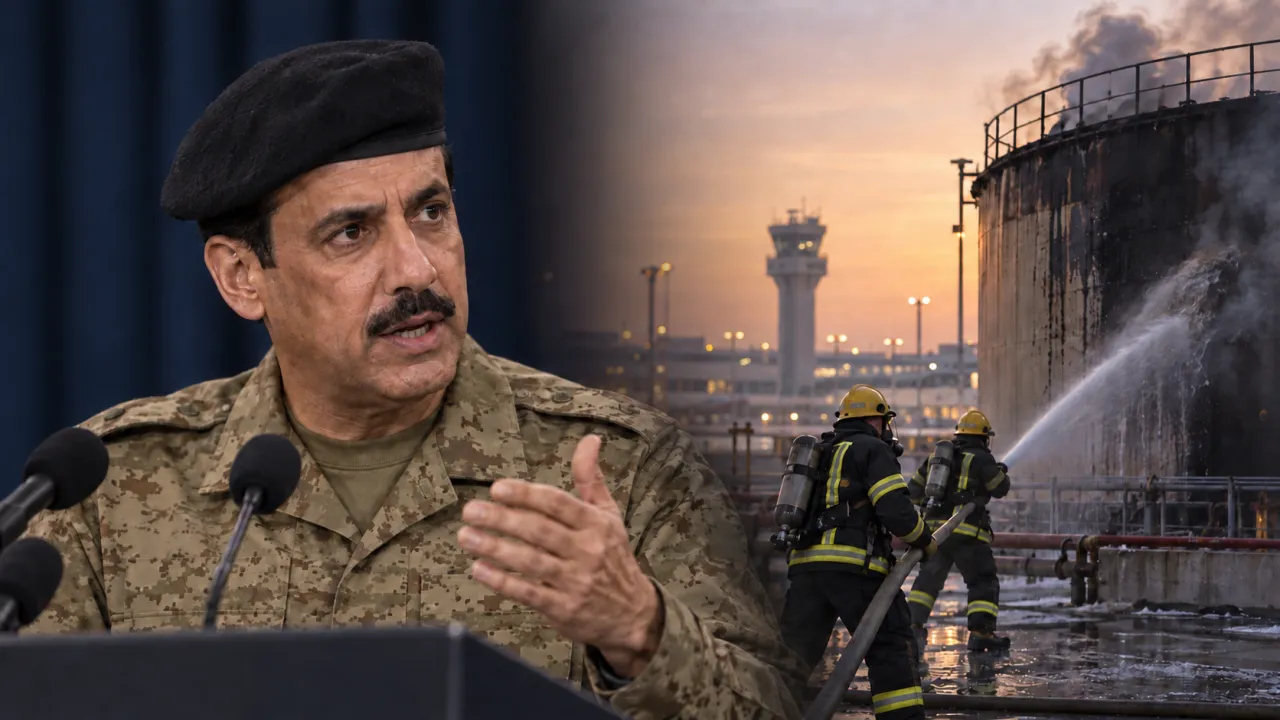
Canberra, September 20, 2026. Australian newsrooms — ABC, SBS, Sydney Morning Herald, The Age, and PerthNow — all opened their weekend coverage with the same images: a thick plume of black smoke above Riyadh's international airport, coming, according to witnesses, from a fuel depot bearing the Aramco logo. Yemen's Houthi rebels claim to have targeted "sensitive sites" in the Saudi capital with missiles and drones, just hours after Riyadh and the city of Al-Kharj received nighttime alerts signaling an aerial threat, lifted on Saturday morning.
The coalition led by Saudi Arabia claims to have intercepted a ballistic missile fired towards Riyadh early on Saturday, and says it foiled other attempts targeting civilians in Bisha, Farasan, and Taif, as well as Yanbu, on the Red Sea, where an Aramco facility is also claimed by the rebels. Houthi military spokesman Yahya Saree asserts that the operation is in response to a strike on Sanaa, and mentions the deployment of Saudi F-15 and Typhoon fighters from Khamis Mushait and Taif; he promises "a blockade for a blockade, escalation for escalation".
The Australian press emphasizes the energy dimension of the episode. PerthNow and ABC recall that the Houthi rebels, who control the most populated regions of Yemen and a large part of the north since a lightning offensive launched this month on the entire Red Sea coast, have been conducting a naval blockade against Riyadh since July and multiplying strikes on Saudi ships. These attacks, ABC writes, create "new threats to the global oil supply", by putting the main alternative route for Gulf exports through the Red Sea in jeopardy, while the Strait of Hormuz remains already blocked.
No official Saudi confirmation was available on Sunday regarding the extent of the damage near the airport; the government's media office did not respond to questions from Reuters. A Reuters agency journalist present in the Olaya neighborhood of Riyadh says he heard detonations before the alert was lifted. FlightRadar24 classified King Khaled Airport at its maximum level of disruption, with cancellations and prolonged delays. The newsrooms note that similar alerts had already targeted Riyadh earlier in the year, at the beginning of the war between the United States and Iran, but that those over the weekend are the first since the escalation with the Houthi rebels began in July.
SOURCES (5)
- ABC News AustraliaMEDIUM
- The AgeMEDIUM
- PerthNowMEDIUM
- SBS News AustraliaMEDIUM