EXPLORE THIS STORY

IRAN PERSPECTIVE
HOUTHIS DECLARE NAVAL BLOCKADE OF SAUDI ARABIA, OPENING A NEW FRONT IN THE US-IRAN WAR
DOMINANT ANGLE
Tehran links the Houthi blockade against Riyadh to its own closure of the Strait of Hormuz, two fronts of the same war imposed on it, according to Iran, by the United States.
Dominant angle identified — does not reflect unanimity of this country’s media
ANALYSIS
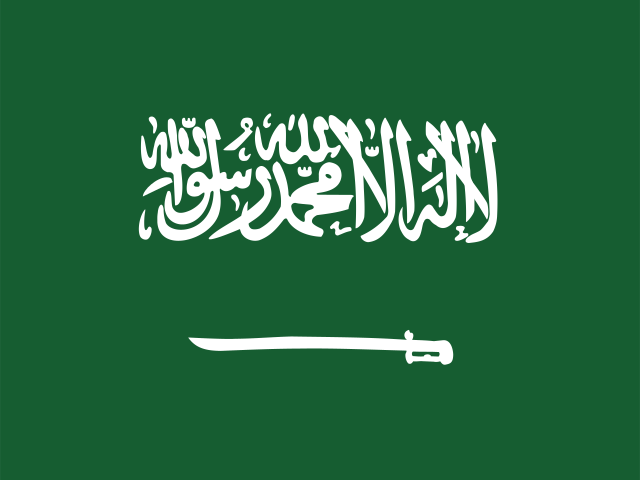
Tehran, July 21, 2026. Tehran openly links the maritime blockade imposed by the Houthis against Saudi Arabia to its own standoff with the US in the Strait of Hormuz, framing both fronts as sides of the same war imposed by the United States. The spokesperson for the Yemeni armed forces, General Yahya Saree, announced on Monday the immediate ban on Saudi ships, a measure he describes as "an eye for an eye" after strikes by the Riyadh-led coalition against Sanaa and Abha airports, putting the 2022 truce at risk, Mehr News reports.
This new front opens as Iran maintains its own closure of the Strait of Hormuz, through which around 20% of the world's oil passes. A source from the Islamic Revolutionary Guard Corps (IRGC) claims that "traffic in the strait has reached zero" and that no transit permits will be issued as long as "hostile American maneuvers" continue. The IRGC claims to have intercepted several ships that attempted to cross the area "with the support of the American army," specifying that two of them suffered damage after cutting off their navigation systems.
On the ground, Hormozgan province is bearing the human cost of the escalation. Six bridges have been destroyed in Khamir county, cutting off the Bandar Abbas-Lar highway, while strikes on electrical installations and desalination pumps in Jask have left around 10,000 people in 20 villages without water, according to Tasnim agency cited by Iran International. The maritime control tower in Chabahar has been hit for the third time in a week, and the Shahid Rajaee port, the country's main commercial hub, is operating at a slow pace, with half of its staff laid off.
In the face of this pressure, part of the US establishment is calling for de-escalation. Joseph Kent, who resigned from the leadership of the National Counterterrorism Center (NCTC) in March, denouncing the war against Iran, believes that Washington should accept Tehran as a regional power and withdraw its forces from the Gulf to reopen the Strait of Hormuz to navigation. Secretary of State Marco Rubio, on the other hand, has hinted at a diplomatic opening, while maintaining strikes, according to Iran International. For Tehran, the Houthi blockade and the closure of the Strait of Hormuz form a single maritime pincer against Washington's allies in the region.
KEY POINTS
- Iran's General Yahya Saree announced an immediate naval blockade against Saudi ships, describing it as "an eye for an eye" (Mehr News).
- A source from the IRGC claims that traffic in the Strait of Hormuz has reached zero and that two ships suffered damage after attempting to cross it.
- US strikes have left around 10,000 people in 20 villages near Jask without water after hitting desalination pumps, according to Tasnim (Iran International).
COGNITIVE BIASES IDENTIFIED
Institution-centered framing: the statements from the CGRI and military spokespeople dominate the narrative of the Ormuz blockade.
Preference for official Iranian and Yemeni sources, to the detriment of directly quoted Saudi or American positions.
Limited coverage of Riyadh's diplomatic response: the articles provide little detail on the official Saudi reaction to the Houthi blockade.
SOURCES (2)
Iran InternationalCenter-right
MEDIUM
Does this analysis seem accurate?