EXPLORE THIS STORY

NIGERIA PERSPECTIVE
HOUTHIS DECLARE NAVAL BLOCKADE OF SAUDI ARABIA, OPENING A NEW FRONT IN THE US-IRAN WAR
DOMINANT ANGLE
Nigeria is feeling the oil shockwave of a Houthi blockade that threatens to disrupt global prices, as Lagos remains one of the mainstays of the world's energy supply.
Dominant angle identified — does not reflect unanimity of this country’s media
ANALYSIS
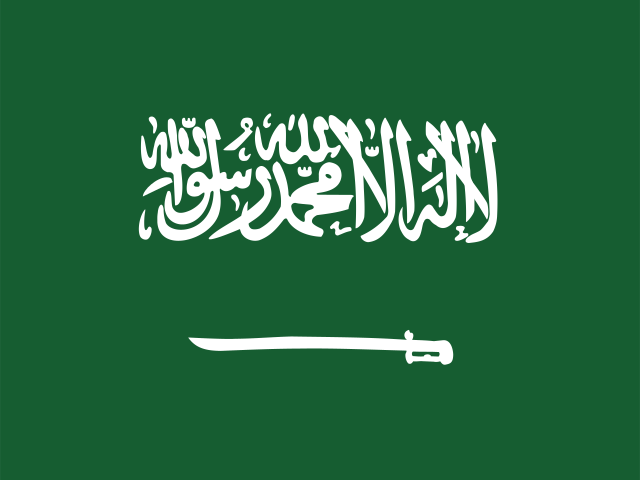
Lagos, July 21, 2026. For Nigeria, the continent's top crude oil producer, the announcement of a "maritime embargo" by Houthi rebels against Saudi Arabia is first and foremost a warning sign for energy markets. Nigeria's government is closely monitoring the situation, as the Houthi military spokesman Yahya Saree vows to impose a blockade "effective immediately" against the "criminal Saudi enemy," following the logic of "an eye for an eye." Nigeria's Vanguard reports that Riyadh produces over 10 million barrels per day and that its Red Sea ports have become vital since traffic in the Strait of Hormuz has largely come to a standstill due to cross-fire between the US and Tehran.
Nigeria's BusinessDay details the military escalation: the US has struck Iranian capabilities deemed threatening to commercial navigation in the strait for the ninth consecutive night, while Tehran maintains its closure "until the US stops its aggression." The publication notes that the interim agreement intended to end the conflict "has collapsed" and that maritime traffic remains largely paralyzed, a factor closely watched by Nigeria's economic press, as crude oil prices impact the country's budget revenues.
Nigeria's Premium Times and Nigerian Eye document the growing human cost on the American side: a 17th soldier killed in Iraq while defusing an Iranian drone, bringing to three the number of military personnel killed in as many days, according to CENTCOM. Legit.ng relays the renewed global alert from the US Department of State, which fears Iranian or allied strikes "far beyond the conventional battlefield," a signal that Nigeria's diaspora abroad is invited to take seriously.
Vanguard also quotes the UN's concern: Stephane Dujarric warned that the Houthi threat could provoke a regional conflict "even wider." For the Nigerian press, the equation is twofold: a potential shock to global oil prices that could benefit the country's export revenues, but also an increased risk to the security of commercial routes and Nigerian nationals in the Gulf. Nigeria's government is weighing these factors as it considers the implications of the escalating conflict.
KEY POINTS
- Nigeria's Vanguard reports that the Houthis declared an "effective immediate maritime embargo" against Saudi Arabia, according to their military spokesman Yahya Saree
- Saudi Arabia produces over ten million barrels of crude oil per day and relies on its Red Sea ports as the Strait of Hormuz remains largely blocked
- In the Middle East, a seventeenth American soldier was killed while defusing an Iranian drone shot down in Iraq
COGNITIVE BIASES IDENTIFIED
Nigeria's economy-centric framing: strong focus on the oil and budget consequences for a crude-exporting nation
Preference for Western sources (AFP, CENTCOM, US Department of State) relayed verbatim by the Nigerian press
Limited coverage of the direct impact on Nigerian nationals in the Gulf or on West African freight transiting through the region
SOURCES (5)
Premium TimesCenter-left
RELIABLE
Does this analysis seem accurate?