
DOMINANT ANGLE
Islamabad weighs the US withdrawal from Iraq in terms of Tehran's strategic gain: the Pakistani press relays the analysis that Iran and its allies emerge strengthened from a withdrawal agreed upon in 2024 and completed in the midst of war.
Dominant angle identified — does not reflect unanimity of this country’s media
KEY POINTS
- 01
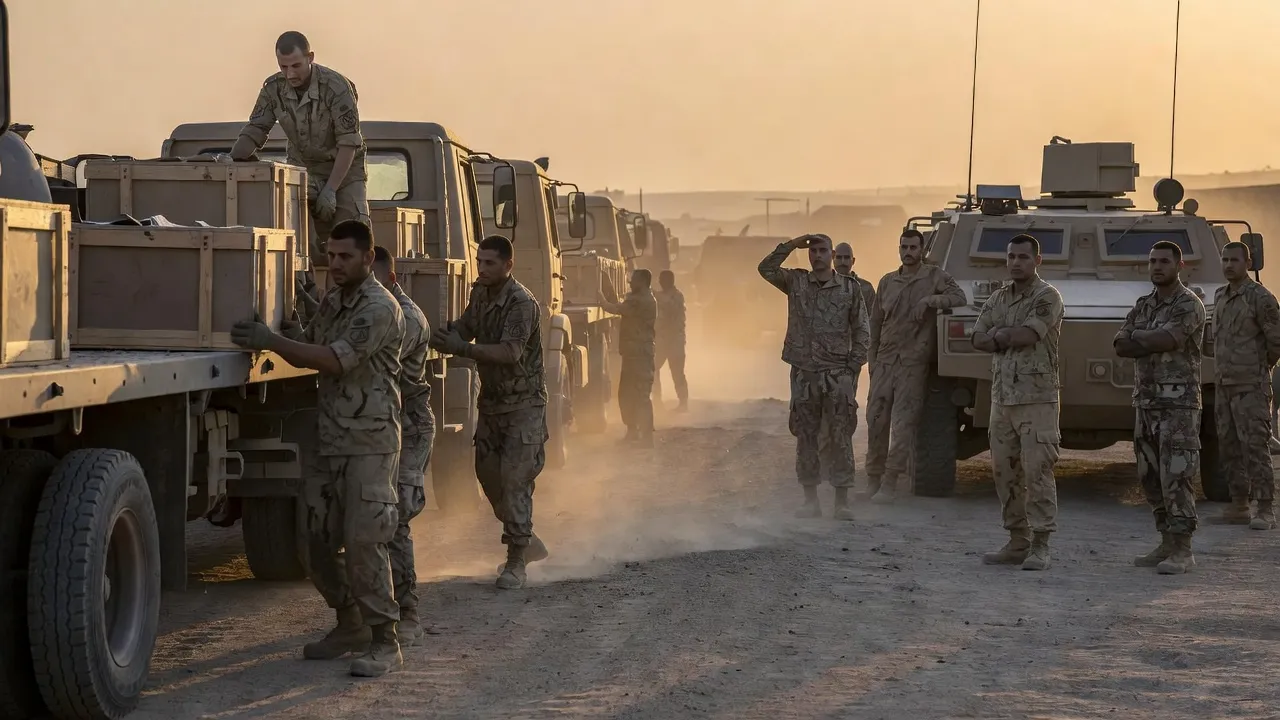
US forces must have left their last bases in Iraq by Wednesday, September 30, according to Reuters as reported by ARY News, Business Recorder, and Geo News.
- 02
The withdrawal, agreed upon in 2024 under Joe Biden, is being carried out by the Trump administration, at war with Iran; 4,500 Americans have died in Iraq.
- 03
Commander Abu Mojtaba al-Yasiri speaks of a "historic victory"; analyst Jasim al-Bahadli anticipates a gain in influence for Tehran and a possible return of the Islamic State.
ANALYSIS
Islamabad, September 30, 2026. The three Pakistani titles in the corpus, ARY News, Business Recorder, and Geo News, published on September 29 the same Reuters dispatch, dated from Baghdad: US forces must have left their last bases in Iraq by Wednesday. They open with the viewpoint of the proclaimed winners: a departure "celebrated as a victory by Iran and its allies, who now exert a profound influence" in a country where 4,500 Americans have died in more than two decades of war.
The text recalls the chronology: the withdrawal was agreed upon in 2024 under Joe Biden and carried out by the administration of Donald Trump, even as it is at war with Iran. This irony structures the Pakistani reading, which presents a calendar inherited and executed by a successor in open conflict with Tehran.
The central voice is that of Iraqi experts and militiamen. Security analyst Jasim al-Bahadli estimates that Iran "benefits strategically from the coalition's departure, as it eliminates a military presence that has served for years as a counterweight" to its influence. He predicts that pro-Iranian groups will present the withdrawal as their victory and will seek to gain more weight in security and political decisions.
Abu Mojtaba al-Yasiri, commander of the Islamic Resistance in Iraq, which federates factions supported by Iran, speaks of a "historic victory" and a "crushing defeat of the American project". He announces that on September 30, "the black page turned" will be celebrated and affirms that Iraqi sovereignty is not obtained through foreign forces but through resistance.
The articles nuance this enthusiasm: while the departure is largely popular among Iraqis, those who worry about the power of armed groups consider it premature and believe that Iraq is not yet ready to assume sole responsibility for the security dossier. The cited experts also warn that other enemies of the United States, including the Islamic State, could return.
None of the three media outlets add editorial commentary or Pakistani reaction: the national perspective is based on the selection and reproduction of this dispatch, which emphasizes the regional balance of power rather than the balance sheet of the American presence.





