
DOMINANT ANGLE
Jerusalem decodes the American departure order as a diplomatic signal: Washington recognizes that the war against Iran is now spilling over into Yemen and the Gulf.
Dominant angle identified — does not reflect unanimity of this country’s media
KEY POINTS
- 01
The State Department has ordered the departure of non-essential employees and their families from Saudi Arabia only, according to spokesman Tommy Pigott.
- 02
At King Fahd Airport in Dammam, one person was killed and eight injured; a drone attack on an oil field killed two people.
- 03
Four US officials told Reuters that missions from other Gulf countries would also order the departure of families.
ANALYSIS
Jérusalem, October 22, 2026. The Israeli government notes that the US State Department has ordered some of its diplomats and their families to leave their missions in Saudi Arabia, and plans to withdraw families from several other missions in the region, according to American officials cited by Reuters.
The Jerusalem Post quotes the statement of spokesman Tommy Pigott, published on X: the departure concerns "non-essential American government employees and their families in Saudi Arabia only", due to Houthi attacks, aligned with Iran, against civilian targets. Pigott asserts that these rebels "have increasingly engaged in hostilities against Saudi Arabia, including attacks against civilian airports and other critical infrastructure". He did not specify the planned changes in missions outside the kingdom, but four American officials indicated to Reuters that other Gulf countries would give the same order to families.
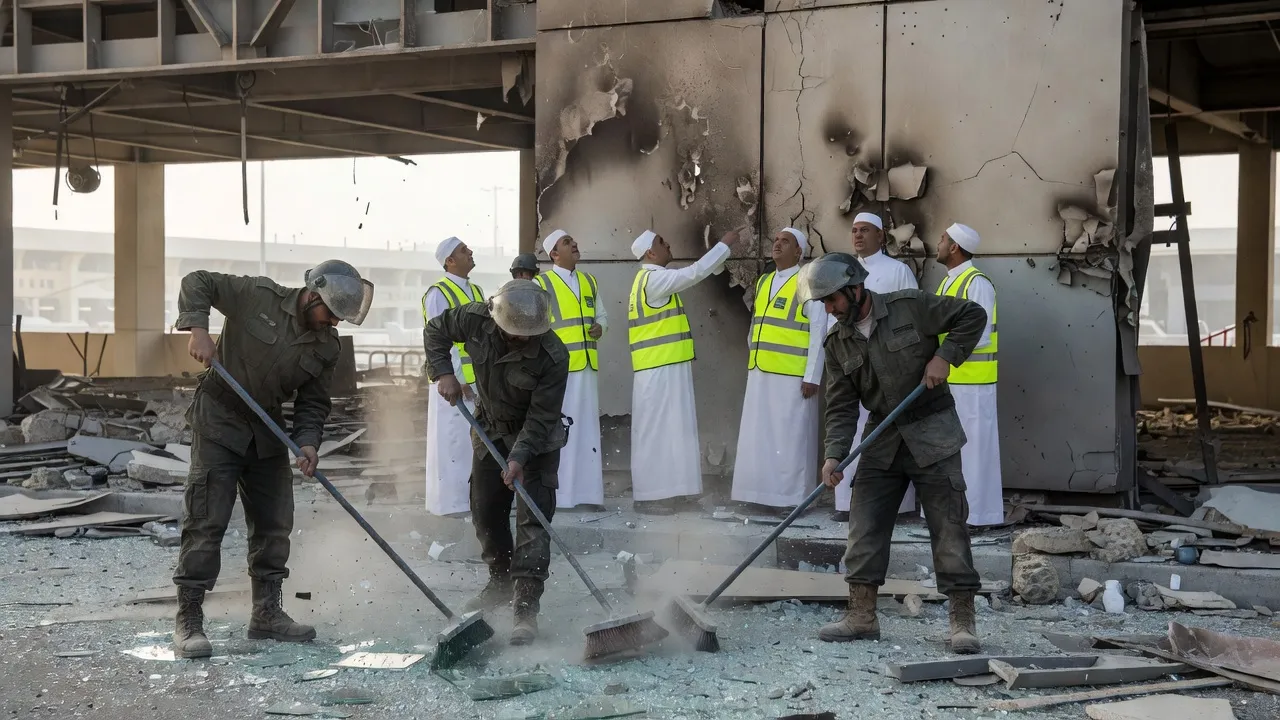
The newspaper details the day's toll: one person killed and eight injured at King Fahd International Airport in Dammam, according to the Saudi civil aviation authority, and two dead in a drone attack on an oil field. It recalls that Washington had sent back diplomats in the region in recent months, after a massive withdrawal following Iranian strikes against American facilities, launched when the American-Israeli war against Iran began, at the end of February.
The framing is that of an expansion: according to the Jerusalem Post, these withdrawals follow an escalation in Yemen that opens "another front" in the regional conflict triggered by the American-Israeli war against Iran, which has disrupted global energy trade and weighed on the economies of the Gulf. Haaretz, in a brief text dated the same day, speaks of a measure that extends to the region "as Houthi attacks intensify in the context of the broader conflict".
The two titles remain factual and rely on Reuters and the State Department spokesman. They do not accompany this information with an official Israeli position, nor an analysis of the consequences for Israel: the angle retained is that of the signal sent by Washington, which judges the situation to be sufficiently degraded to reduce its diplomatic presence in its Saudi ally.


