
DOMINANT ANGLE
Singapore sees the signal from Washington: the withdrawal of some of its diplomats from Saudi Arabia, relayed by the press via Reuters, as a new front in the regional conflict related to Iran.
Dominant angle identified — does not reflect unanimity of this country’s media
KEY POINTS
- 01
The State Department has ordered the departure of "non-essential employees" and their families from Saudi Arabia only, according to spokesman Tommy Pigott.
- 02
At least one dead and eight injured in the Dammam civil airport, two dead in a drone attack on an oil field.
- 03
Four US officials told Reuters that other missions in the Gulf would also be pulling out families.
ANALYSIS
Singapour, 22 October 2026. Singapore's Channel News Asia and the Straits Times, both of which picked up a Reuters dispatch dated 21 October, make the US departure order the central fact. The State Department has ordered its "non-essential" employees and their families to leave Saudi Arabia, and four US officials told Reuters that missions in other Gulf countries will also ask families to leave.
Spokesman Tommy Pigott, in a message on X, justifies the decision due to Houthi attacks, backed by Iran, against civilian airports and other critical infrastructure, which have caused "civilian casualties and significant disruptions to travel". He did not specify any change for missions located outside Saudi Arabia.
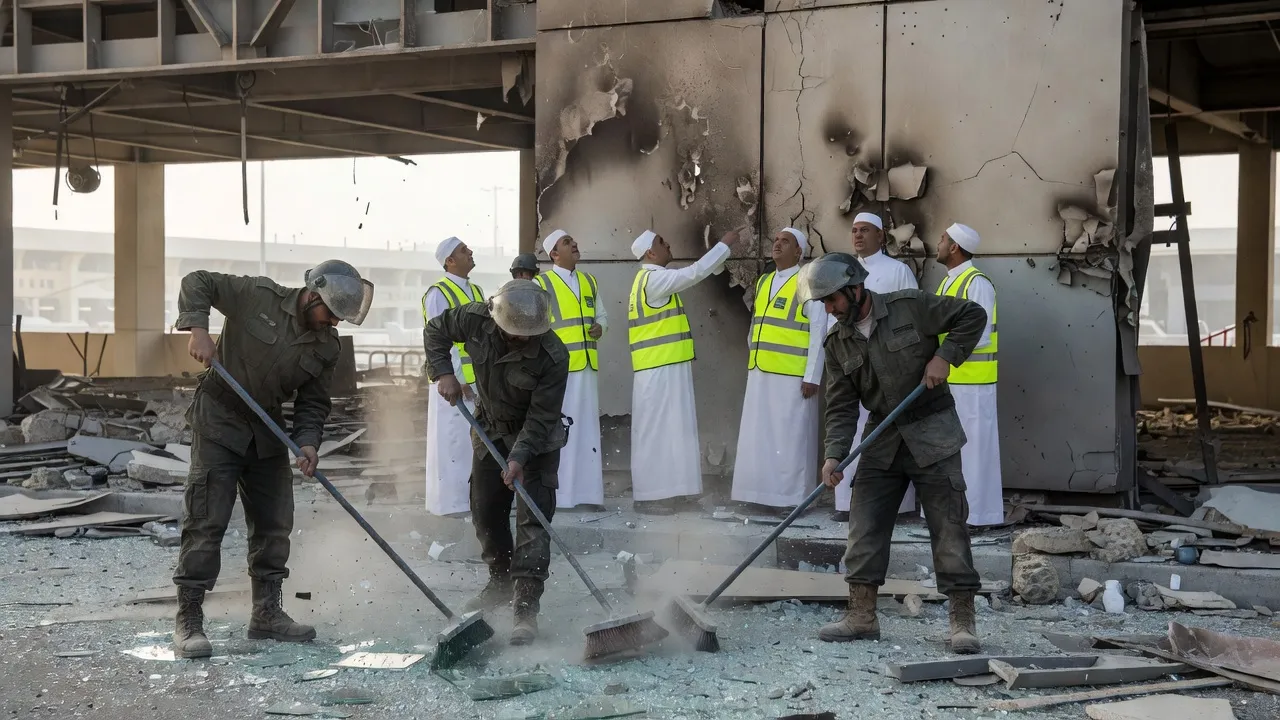
The articles detail the day's toll: at least one dead and eight injured at Dammam's civilian airport, two dead in a drone attack on an oil field. The US embassy in Riyadh had published a security alert on Wednesday about possible new attacks, following deadly strikes, including one against Riyadh's airport.
The Singaporean press places the episode in a broader chronology. Washington had brought back part of its diplomatic personnel in the region in recent months, after a massive withdrawal following Iranian attacks on US facilities, launched when the US-Israeli war against Iran began at the end of February. The latest withdrawal "follows an escalation of fighting in Yemen", which opens "another front" in the regional conflict triggered by this war.
CNA adds, in a truncated passage, that the expanded conflict has disrupted global energy exchanges, a sensitive topic for an import-dependent city-state. However, the article does not detail the reaction from Riyadh, Tehran, or the Houthis, and the text focuses on the signal sent by Washington rather than the causes of the resumption of hostilities in Yemen.
The tone remains that of a news agency dispatch: chronology, toll, official quotes, without editorial or commentary from Singaporean officials in the available excerpts.


