
DOMINANT ANGLE
The United States is weighing its exposure: the withdrawal of diplomats from Saudi Arabia is seen as a possible prelude to American intervention against the Houthis and new strikes against Iran.
Dominant angle identified — does not reflect unanimity of this country’s media
KEY POINTS
- 01
The State Department has ordered the departure of non-essential employees and their families from Saudi Arabia only, according to Tommy Pigott.
- 02
According to ACLED, cited by Fox News, Houthi strikes on the kingdom have more than doubled in one week; the October 10 attack on Riyadh killed at least 13 people.
- 03
The New York Times, cited by CNBC, says Washington and Israel have prepared strikes against Iran after the midterm elections, without Trump's approval.
ANALYSIS
The United States government, on October 22, 2026, is taking a closer look at its involvement with Riyadh after an order to depart was given on Wednesday, October 21. The State Department has ordered non-essential government employees and their families to leave Saudi Arabia. Spokesman Tommy Pigott clarified that the measure only applies to Saudi Arabia, contradicting a Reuters article about a withdrawal from the Gulf, while AFP, citing a diplomatic source, mentioned embassy families in the UAE, Jordan, Qatar, and Bahrain. When asked, Donald Trump responded that he did not know if that was the case.
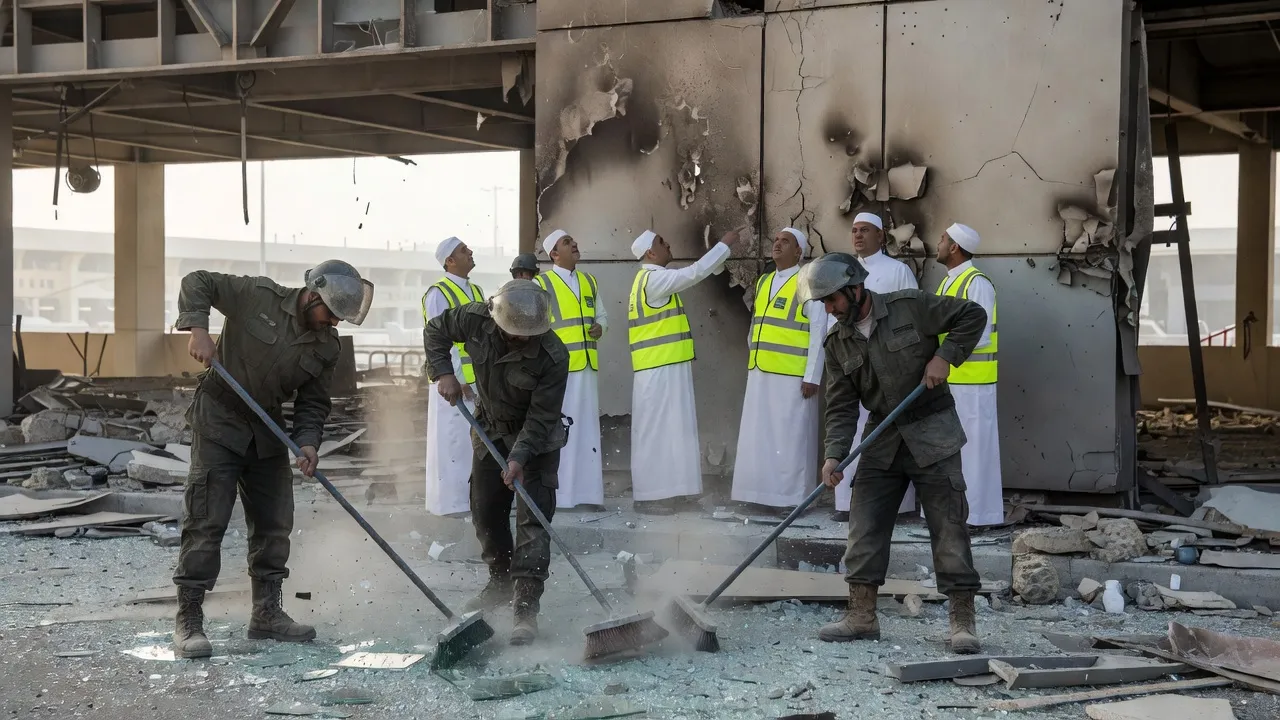
The official statement cites "attacks on civilian airports and other critical infrastructure" that have resulted in casualties and disrupted travel. CBS notes that the "restricted operations" status, introduced in August, allows other embassies to reduce their staff without mandatory evacuation. Fox News highlights the political dimension: Saudi Arabia's military vulnerability "could soon become the president's problem," as he evaluates direct strikes against the Houthis. Riyadh is demanding more interceptors, the UK is sending Typhoons, Egypt is already providing aid, and Israel has offered its assistance. According to ACLED, Houthi strikes and attempts have more than doubled in one week this month; the deadliest, on October 10 against Riyadh's King Khalid airport, killed at least 13 people, including an American, and injured over 300.
CBS is investigating why a kingdom that spent $83 billion on defense last year, according to SIPRI, is failing to intercept these attacks; a researcher at the Washington Institute calls this failure "a big failure," while noting that no country achieves 100% interception. NPR reports the cancellation of the "Davos in the Desert" investor forum. CNBC links this to the Iranian dossier: The New York Times claims that the US and Israeli armies have prepared new strikes after the midterm elections, which Trump has not approved, while negotiations on nuclear issues and the Strait of Hormuz continue. On Wednesday, an attack killed one person at Dammam airport, and two people died in Shaybah.


