
DOMINANT ANGLE
Quito remembers Maricarmen Abascal's death as the face of an octogenarian who became a symbol of the right to decent housing, far more than the debate on the economic causes of the Spanish crisis.
Dominant angle identified — does not reflect unanimity of this country’s media
KEY POINTS
- 01
Maricarmen Abascal, 87 years old, died on Wednesday, October 7, 2026, after fifteen days of hospitalization, according to the Sindicato de Inquilinas
- 02
She had lived 71 years in the same apartment in Madrid from which she was evicted on September 23; a return agreement had been reached on September 28 with the owner
- 03
The two housing decrees of the Sánchez government were repealed by Congress, which hastened the announcement of the election advance on Monday, October 5
ANALYSIS
Quito, October 8, 2026. The Ecuadorian press treats the death of Maricarmen Abascal as a human story before making it a Spanish political issue. El Universo, Primicias, and El Comercio, which largely rely on the EFE agency, report that this 87-year-old woman died on Wednesday, October 7, after fifteen days of hospitalization, according to a statement from the Sindicato de Inquilinas, the tenants' union.
The three newspapers recall the facts in the same order. Maricarmen Abascal had been living in the same Madrid apartment for 71 years. She was evicted on September 23. She suffered from a 50% disability and mobility problems. El Universo specifies that her old and affordable rental contract had been signed by her father, then transferred to her mother. The owner company, after acquiring the building, deemed the contract extinct and demanded a new rent that she could not pay. El Comercio emphasizes that her image being evacuated on a stretcher has become "one of the symbols of the protests".
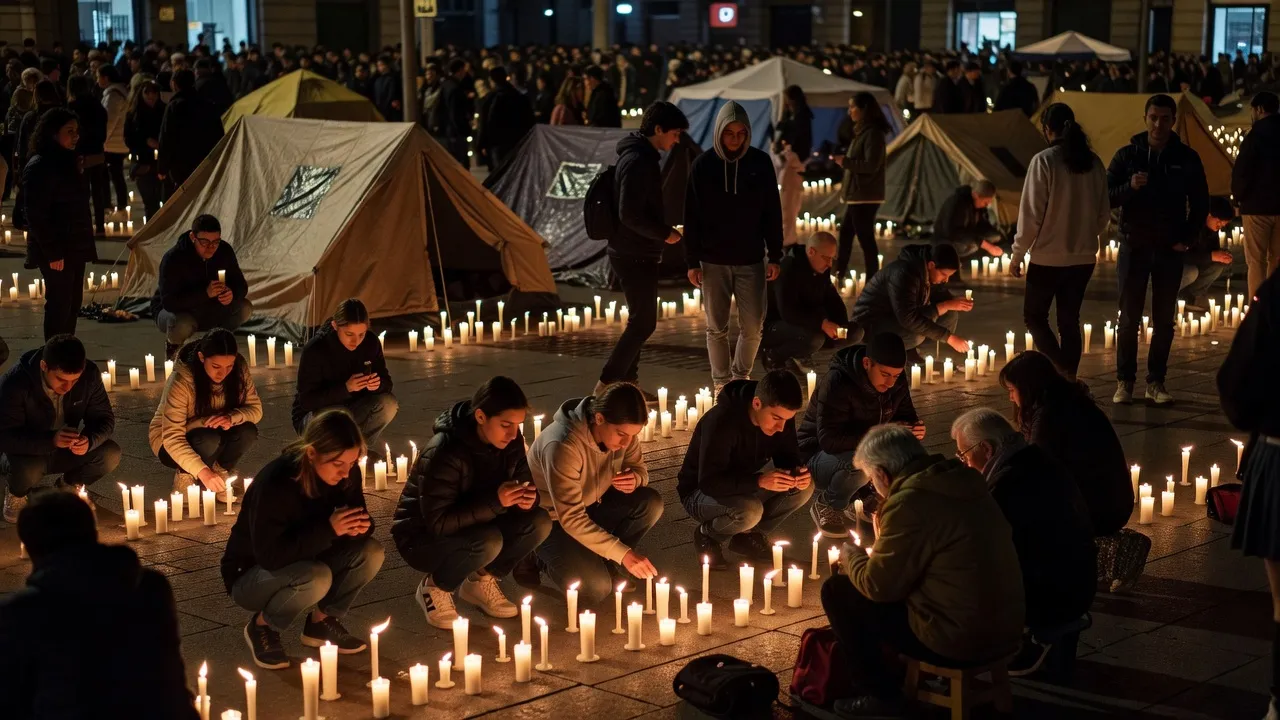
The dimension of mobilization occupies a central place. According to EFE, cited by El Comercio, the demonstrations resulted in a camp at the Puerta del Sol. Primicias notes that the pressure pushed the government of Pedro Sánchez to adopt two housing decrees. El Universo adds that Congress subsequently repealed them with the votes of the conservative parties, which precipitated the early elections announced by Sánchez on Monday, October 5.
The "too late" motive structures the three articles. An agreement concluded on September 28 with the owner company was supposed to allow her to return home, with a rent capped at 30% of her net income, according to El Comercio. The union lamented a solution that arrived "demasiado tarde" and a situation that was "absolutely avoidable" after a "proceso torturante". El Comercio also indicates that, from the hospital, she had participated in videos calling for the adoption of the "Maricarmen decree".
These articles say little about the structural causes of the Spanish rental market. They do not quantify the rise in rents and do not address the reactions of the opposition or the announced strike. The Ecuadorian perspective remains that of a social fact with symbolic scope: an old woman, a home, a collective struggle, and a political system under pressure.
SOURCES (3)
- El UniversoMEDIUM
- PrimiciasMEDIUM
- El Comercio ECMEDIUM