
DOMINANT ANGLE
Mexico City first remembers the figure of an octogenarian who became a symbol of the fight against evictions, and treats her death as a social drama more than a Spanish electoral issue.
Dominant angle identified — does not reflect unanimity of this country’s media
KEY POINTS
- 01
Maricarmen Abascal died on Wednesday, October 7, 2026, at 87 years old, at the Gregorio Marañón hospital in Madrid (Reforma).
- 02
She had been hospitalized since her eviction from her Madrid home on September 23 (Reforma, El Norte).
- 03
Reforma describes her as "a symbol of the fight against evictions in Spain", an AP-credited dispatch.
ANALYSIS
In Mexico, the press, represented here by Reforma and El Norte (Grupo Reforma), reprints the same dispatch: Maricarmen Abascal, "considered a symbol of the fight against evictions in Spain", died on Wednesday, October 7, at 87 years old at the Gregorio Marañón hospital. She had been hospitalized since her eviction from her Madrid home on September 23.
The text, credited to the AP agency, is brief and factual. It first establishes the character: an elderly woman who became an emblem of a collective fight against evictions, rather than a partisan figure. The title highlights the cause-and-effect link that the press retains, that of a forced displacement that "sparked protests", even before the details of the death.
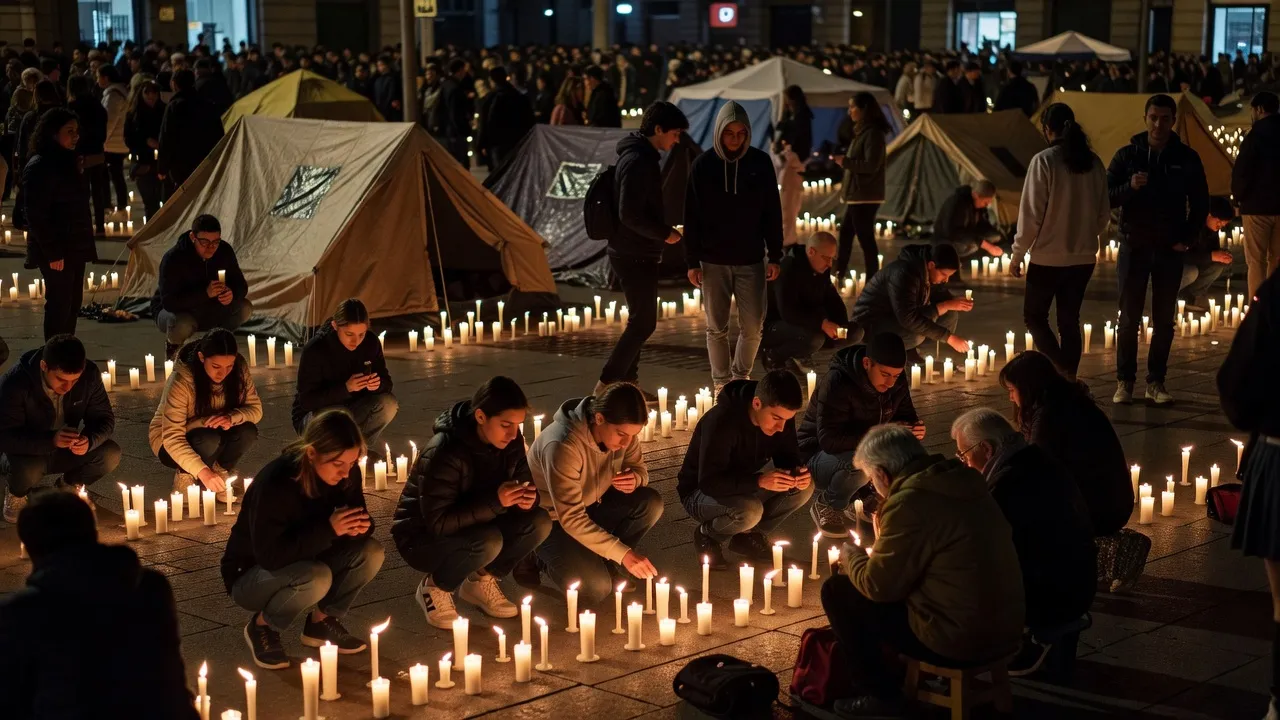
The provided articles do not develop the political dossier. The context of the subject, however, is known: the rent for the apartment in the Retiro neighborhood, occupied for over 70 years, had been increased by 275% to 2,650 euros per month after being purchased by a real estate company. The Supreme Court had rejected the last appeal, and the image of the evacuation on a stretcher had provoked demonstrations in several cities as well as a campout on the Puerta del Sol.
On Wednesday evening, hundreds of people gathered near the Parliament chanting "Maricarmen lives, the fight continues". The Madrid tenants' union announced the death, specifying that an agreement to return to the home had arrived too late. Pedro Sánchez presented his condolences, and Alberto Núñez Feijóo called for "respect".
For the Mexican reader, the coverage therefore remains centered on the human and social dimension: a life of more than eight decades, a home of seven decades, a filmed eviction. The early elections of November 29 and the general strike of November 11 do not appear in the texts of this pool; only the story of the death and its immediate origins is reported, without analysis of rents or the Spanish real estate market.