
DOMINANT ANGLE
Budapest is holding the fate of an octogenarian who has become a symbol of the Spanish housing protests, a story largely relayed by MTI agency dispatches and the BBC.
Dominant angle identified — does not reflect unanimity of this country’s media
KEY POINTS
- 01
Maricarmen Abascal, 87 years old, died after fifteen days of hospitalization; the death was announced on Wednesday by the tenants' union, according to the MTI agency cited by Index and Telex.
- 02
According to 444, the owner company had agreed, under pressure, to a return to the apartment with a rent of 30% of her pension; the union considers the agreement to have come "too late".
- 03
According to Telex, the government measures on the rental market were rejected by Parliament and Pedro Sánchez announced early elections for late November.
ANALYSIS
Budapest, October 8, 2026. Hungarian media are treating the death of Maricarmen Abascal as a Spanish social issue with strong symbolic significance. Index, 444, and Telex are almost verbatim reproducing the statement from the Confederation of Tenant Unions, relayed by the MTI agency, announcing on Wednesday the death of this 87-year-old Madrid native, who became "the symbol of housing protests" across the country.
The three outlets quote the same phrase from the union: a "historically significant" agreement would have allowed her to return home, but this solution came "too late". The events that followed her eviction (mass protests, public space occupations, early elections, general strike) mark a historic turning point, according to the union, but at the cost of a "too heavy" sacrifice.
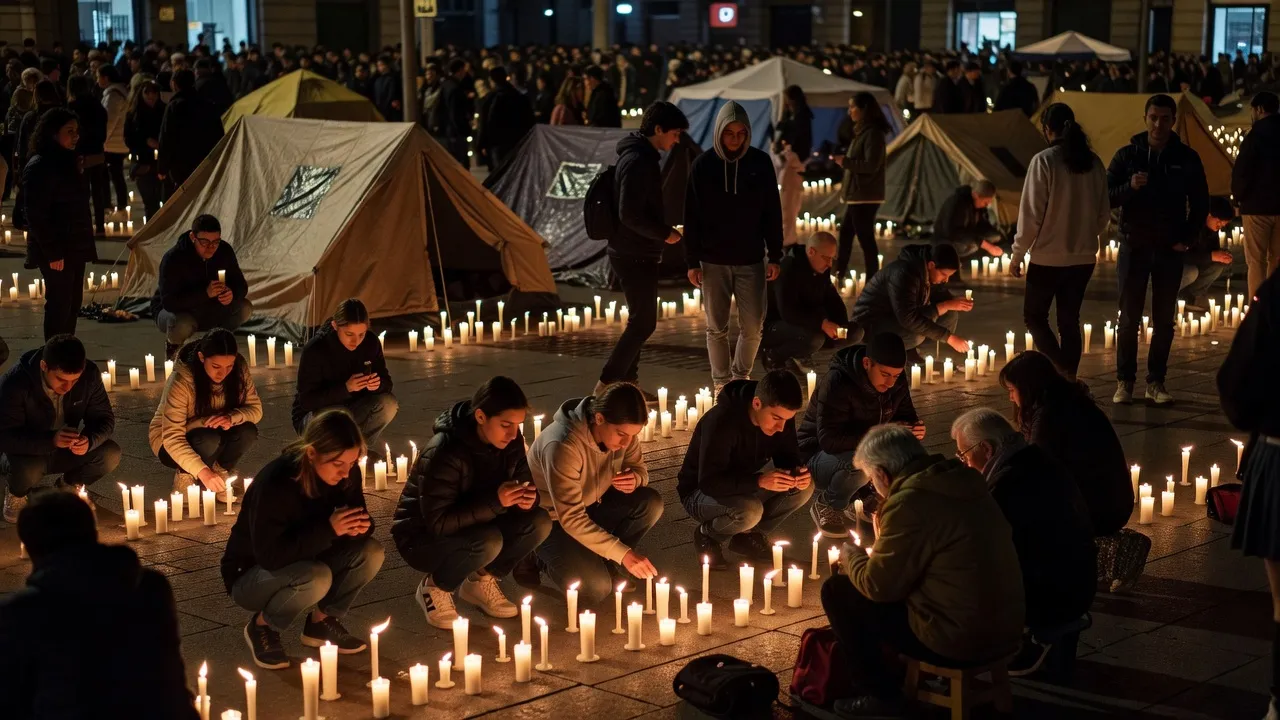
444 provides the most detailed account of the octogenarian's story. She had to leave, after a six-year procedure, the apartment she had occupied for seventy years. The owner company, since 2020, had multiplied the rent, beyond the amount of her pension. Under public pressure, the company had reached an agreement with its lawyers: return to the apartment, rent capped at 30% of her pension. The site also describes the permanent camp at Puerta del Sol, extended to Barcelona, Bilbao, Zaragoza, and Seville.
Index emphasizes the image that made the rounds of national and international press, that of the old woman evacuated on a stretcher on the day of the eviction, then hospitalized fifteen days before her death.
Telex adds a political dimension, citing the BBC: the Abascal case was the "spark" in Spanish society, and the government was forced to act. Its measures to toughen the rental market were rejected by Parliament on Friday, and Pedro Sánchez subsequently announced early elections for late November. The site specifies that a defeat for his party would mean "the end of one of the last left-wing governments in Europe". It presents the housing crisis as a European problem, not just a Spanish one.
The articles do not provide reactions from Sánchez and Feijóo, nor the figure of the rent increase, nor data on the evolution of rents. The tone remains factual and compassionate, without editorial commentary on Madrid's handling of the case.