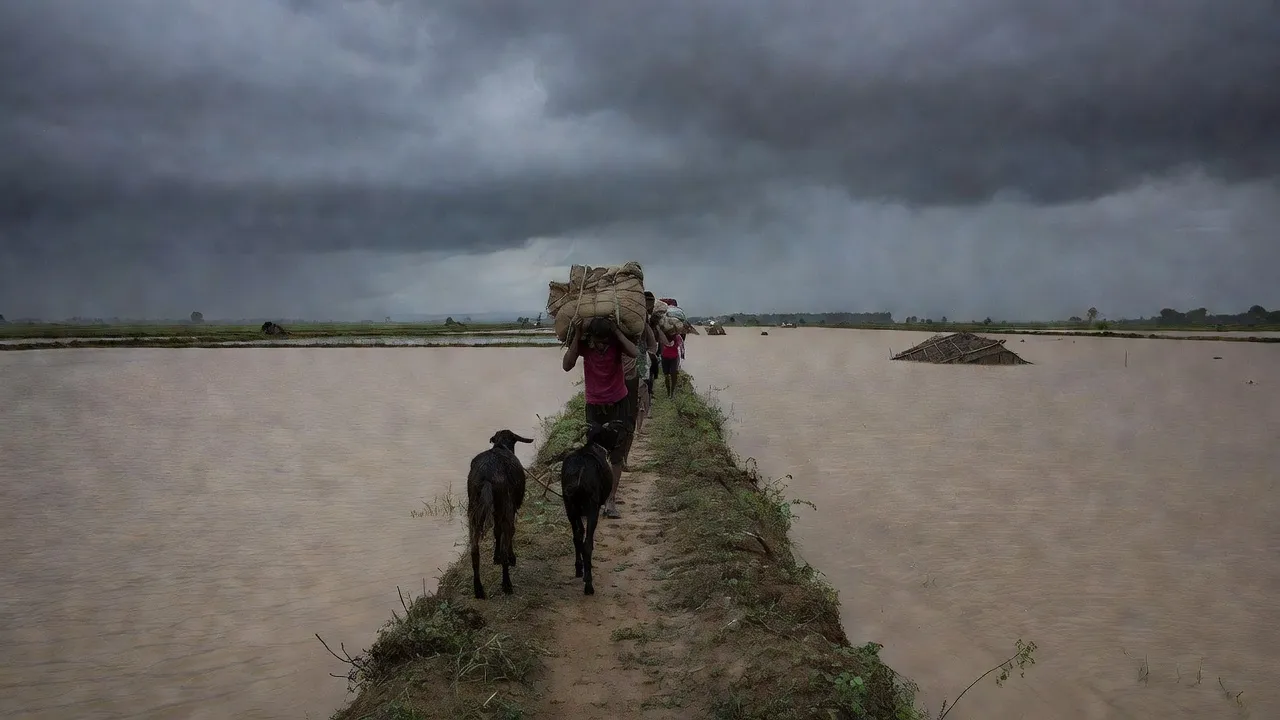

DOMINANT ANGLE
Doha is first calculating the economic cost of these new floods for Nepal, where tourism, a pillar supporting more than 1 million jobs, is experiencing a new wave of cancellations a month after the August flooding.
Dominant angle identified — does not reflect unanimity of this country’s media
KEY POINTS
- 01
At least 56 people have died in three days in Uttar Pradesh according to the relief commissioner's office (Gulf Times)
- 02
In Nepal, 14 dead and 11 missing, Chitwan district the most affected, 49 of 77 districts on alert for flash floods (Al Jazeera)
- 03
Tourism accounts for nearly 8% of Nepal's GDP and supports more than a million people; the country hosted 1.15 million visitors last year (Al Jazeera)
ANALYSIS
Doha, September 28, 2026. Barely a month after the floods that killed more than 1,450 people in Nepal, new torrential rains are hitting India and the Nepalese Himalayas, and the Qatari press first retains the price paid by an economy already on its knees. According to the office of the relief commissioner cited by Gulf Times, at least 56 people have died in three days in the Indian state of Uttar Pradesh, under "exceptionally heavy rain that has affected much of Uttar Pradesh". In Nepal, Al Jazeera reports a new toll of 14 dead and 11 missing, with the Chitwan district being the most affected, while 49 of the 77 districts in the country remain on alert for sudden floods.
But it's the tourism industry, a pillar of the Nepalese economy, that the Qatari channel puts at the center of its report. In Kathmandu, Pushpraj Rimal, a tour organizer and taxi driver, describes a disastrous season: "It is still a lockdown kind of situation", he confides to Al Jazeera, nearly a month after the August disaster. The sector accounts for nearly 8% of Nepal's gross domestic product and supports more than a million people; it had welcomed 1.15 million visitors last year, with nearly a third of them during the peak season from September to November, which is now opening with a series of cancellations.
Al Jazeera also recalls that the Nepalese leader had described the August floods as a "warning to the world", and that more than 500 Nepalese children had been left orphaned after the disaster. The Qatari channel thus links the two catastrophes: the one in August, which destroyed essential roads, and the one in September, which immediately closes the window of recovery that the entire tourism industry was counting on.
None of the articles in the corpus detail, on the other hand, the government response, either in New Delhi or in Kathmandu, or the extent of the relief efforts deployed in the Indian field, reduced to a brief official statement from the relief commissioner. The Qatari focus, dominated by the prism of Al Jazeera, thus draws a disaster seen through its impact on livelihoods rather than through the public action supposed to respond to it.