Common ground and differences in coverage across the media analysed.
What the media report in common
1
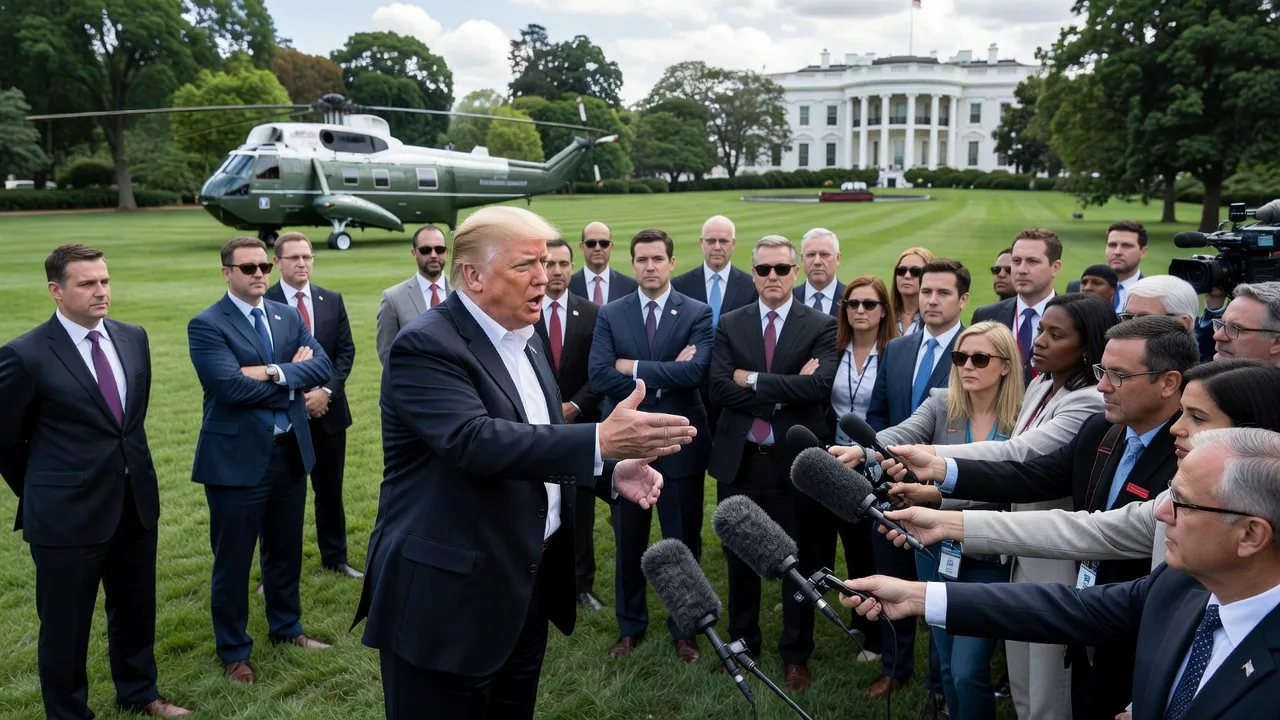
On Saturday, October 10, Donald Trump stated to the press at the White House that it was time for Ukraine to have a new president, or a leader capable of concluding an agreement.
2
This statement comes on the heels of the announced agreement with Vladimir Putin on Russian diesel, accompanied by a temporary lifting of American sanctions.
3
Donald Trump blames Volodymyr Zelensky for Ukrainian strikes on Russian refineries, which he links to the rise in diesel prices.
Where media coverage diverges
Reason for Trump's call
When asked what explains the statement, the press in several countries cites the fuel price and midterm elections; other sources link it to the agreement itself or the duration of Zelensky's term.
When asked if the agreement provides resources for the Russian war, Zelensky, Kaja Kallas, and several sources answer yes; US texts present it as a means to increase fuel supply.
Beyond the 300,000 immediate tonnes, sources give different totals: 1.5 million tonnes by the end of the year (Sweden), one million by December according to Novak (Russia), one million afterwards (Lithuania).
Buenos Aires sees in Trump's outburst against Zelensky the consolidation of a rapprochement with Moscow, sealed by the agreement on Russian diesel and criticized by Europeans.
Canberra is interpreting the episode as a fuel dispute: the Australian press is linking Trump's call to the new Ukrainian president to the surge in American diesel prices and the midterm elections.
Brasília sees Trump's outburst against Zelensky as a campaign gesture: with the midterm elections approaching, the high cost of diesel is being blamed on Kiev rather than on the war waged by the United States in Iran.
Buenos Aires sees in Trump's outburst against Zelensky the consolidation of a rapprochement with Moscow, sealed by the agreement on Russian diesel and criticized by Europeans.
KEY POINTS
Trump stated on Saturday at the White House: "It's time for Ukraine to have a new president," suggesting a leader capable of concluding an agreement (La Nación, Perfil).
According to Perfil, the agreement with Putin provides for 300,000 tonnes of Russian diesel immediately and 500,000 tonnes in November.
Kaja Kallas warned that easing restrictions would give Russia more resources for the war: "This is not the time to relieve pressure on Russia" (Perfil).
ANALYSIS
Buenos Aires, October 11, 2026. The Argentine press views the episode as another step in the rapprochement between Washington and Moscow. La Nación headlines that Donald Trump "targets Zelensky and consolidates his rapprochement with Moscow," and notes that the call for a change in leadership followed the agreement on Friday with Vladimir Putin on the purchase of Russian diesel by the United States.
According to the newspaper, Trump stated on Saturday at the White House that it was time for Ukraine to have a new president, suggesting a leader "who can conclude an agreement." He reproaches Zelensky for not having done enough to end the war and holds him responsible for the rise in diesel prices. La Nación recalls that these statements are among the most explicit from the American president against the Ukrainian cause, and that Trump has been pressing Kiev for weeks to stop strikes on Russian energy infrastructure.
Perfil emphasizes the grievance of the refineries. Trump claims to have given Zelensky the freedom to strike Russia, except for these sites: "I told him to do what he wanted against Russia, but not to attack the refineries," and then warned that Zelensky would do better to stop. He links these strikes to supply tensions and price increases, with Russia being a major supplier of diesel. He also mentions American farmers and livestock breeders.
The two media outlets place the agreement in its electoral and energy context. La Nación emphasizes that Trump is trying to lower fuel prices for consumers just a few weeks before the midterm elections, and that he is seeking to attribute record prices to Ukraine rather than to the war against Iran, which has driven up energy prices since February. Trump then left for a Republican meeting in Tennessee.
Perfil details the volumes: Moscow would deliver 300,000 tonnes immediately, then 500,000 tonnes in November, with additional shipments later. It quotes European diplomacy chief Kaja Kallas, who believes that easing restrictions would give Russia more resources to continue the war: "This is not the time to ease pressure on Russia, and Europe will not do so." La Nación notes that the statements have sparked strong criticism from European allies.
The coverage remains focused on Washington and the European reaction, with Kiev's voice appearing only in the background.
Australia
DOMINANT ANGLE
Canberra is interpreting the episode as a fuel dispute: the Australian press is linking Trump's call to the new Ukrainian president to the surge in American diesel prices and the midterm elections.
KEY POINTS
Trump stated on Saturday at the White House: "I think it's time for Ukraine to get a new president" and ordered Zelensky to stop striking Russian refineries (PerthNow, SBS).
Trump concluded an agreement with Putin to buy Russian diesel, with a relaxation of American sanctions, before the midterm elections (ABC, PerthNow).
Kaja Kallas wrote that "Europe won't" ease the pressure on Russia, and Andy Burnham expressed his "complete solidarity" with Zelensky (SBS).
ANALYSIS
Sydney, October 11, 2026. Australian media are treating Donald Trump's statement as the culmination of a dispute over diesel prices. According to The Age and the Sydney Morning Herald, which speak of a "diesel stoush", the American president said Volodymyr Zelensky "better damn well stop" hitting Russian refineries, and called on him to step down, as relations between the two men "sink to fresh lows".
The ABC and PerthNow report the central phrase spoken on Saturday at the White House: "I think it's time for Ukraine to get a new president". Trump adds: "I suggest they get a new leader who can make a deal, because he could have made many deals that, for some reason, he never does". He also reproaches Kiev for "making problems for our farmers, our ranchers, with diesel fuel", before leaving for a Republican meeting in Tennessee.
The economic context dominates the narrative. The ABC recalls that Trump concluded an agreement with Vladimir Putin to buy Russian diesel in order to calm prices before the midterm elections, despite sanctions signed against Moscow last month. The newspaper notes that he attributes the record prices to Ukraine rather than to the war waged by the United States in Iran, which has driven up global energy prices. The Age emphasizes that it is not certain that Putin can keep his part, as Russia is struggling to fuel its own economy.
Brazil
DOMINANT ANGLE
Brasília sees Trump's outburst against Zelensky as a campaign gesture: with the midterm elections approaching, the high cost of diesel is being blamed on Kiev rather than on the war waged by the United States in Iran.
KEY POINTS
On Saturday, October 10, Trump stated from the White House: "É melhor ele parar imediatamente" regarding Ukrainian strikes on Russian refineries, and suggested that Ukraine should have "un nouveau leader" (G1).
Trump concluded an agreement with Putin on Friday to purchase Russian diesel in an attempt to contain fuel prices before the midterm elections (Jornal de Brasília).
According to G1, twenty people, including three children, died in a Russian attack less than 24 hours after the agreement was announced, based on a still provisional toll.
ANALYSIS
Brasília, October 11, 2026. The two Brazilian media outlets in the pool, Jornal de Brasília and G1, recount the same scene: on Saturday, October 10, from the White House, Donald Trump judged that it was time for Ukraine to have a new president. Jornal de Brasília quotes his phrase: "I suggest they find a new leader who can close deals," because Volodymyr Zelensky "could have closed many deals and, for some reason, never does." For G1, Trump is responding to Zelensky's criticism of the agreement concluded with Moscow to ease sanctions on Russian diesel, an agreement that the Ukrainian leader had described as an "investment in war" and a demonstration of "evident weakness."
The Brazilian account places fuel at the center. Trump reproaches Kyiv for its strikes on Russian refineries: "It's better if he stops immediately," he launched at journalists, adding that these facilities pose "a global problem." According to Jornal de Brasília, he claims that Zelensky "wants to create problems for our farmers, our livestock breeders, with diesel." The Brazilian title recalls that the American president concluded the agreement with Vladimir Putin on Friday to buy Russian diesel and has been pressing Kyiv for weeks to suspend attacks on Russian energy infrastructure.
Chile
DOMINANT ANGLE
Santiago is deciphering Trump's attack on Zelensky through the prism of diesel: Russian refineries hit, global prices under tension and American farmers invoked.
KEY POINTS
Trump stated on Saturday, October 10: "it's time for Ukraine to have a new president", one who can "reach an agreement" (La Tercera, BioBioChile).
The agreement with Putin provides, according to La Tercera, for more than 300,000 tonnes of Russian diesel to be delivered "immediately" and then 500,000 tonnes in November.
Trump announced that he would allow Russian operations on diesel until April to control the global price surge (BioBioChile).
ANALYSIS
Santiago, October 11, 2026. Chilean media outlets, La Tercera and BioBioChile, report on Donald Trump's remarks against Volodymyr Zelensky as an episode initially linked to diesel. On Saturday, October 10, the American president estimated that "it's time for Ukraine to have a new president (...) who can conclude an agreement," adding that "Zelensky, for one reason or another, never concludes any agreements." According to La Tercera, he said this from Andrews Base in Maryland. BioBioChile places him in front of the White House, before his departure for Tennessee, where he was to hold a meeting ahead of the legislative elections.
The central criticism concerns Ukrainian strikes against Russian refineries. Trump claims that Zelensky "wants to create problems for our farmers" and for the world, since "Russia supplies a large part of the world's diesel." He says he told him: "You can do what you want to Russia, but don't attack the refineries." La Tercera also quotes his more blunt phrase, according to which Kiev "should stop that."
The two articles put these remarks into perspective the day after the agreement with Vladimir Putin. According to La Tercera, Moscow would "immediately" deliver more than 300,000 tonnes of diesel to the American and global markets, and then 500,000 tonnes in November. BioBioChile adds that Trump announced he would authorize Russian operations on diesel until April to contain the global price increase. Zelensky had deemed this agreement "unfair" as early as Friday.
Germany
DOMINANT ANGLE
Berlin sees Trump's call to replace Zelensky as an electoral calculation linked to energy prices, recalling that the war comes from Russia and that the federal government is maintaining its sanctions.
KEY POINTS
Trump, in front of the White House: "I suggest they find themselves a new leader who can conclude an agreement" (FAZ, Tagesschau).
According to Axios, cited by FAZ, emissaries Witkoff and Kushner threatened Kyiv on Friday with a cut-off of American intelligence if the strikes on Russian refineries continued.
The FAZ reports that the federal government maintains sanctions against Russia and that an election in Ukraine is ruled out during wartime by the Constitution.
ANALYSIS
Berlin, October 11, 2026. The German press is extensively covering Donald Trump's statement, made on Saturday, October 10, in front of the White House. "I think it's time for Ukraine to have a new president," the US president said, before adding: "I suggest they find a new leader who can conclude an agreement." According to Tagesschau, he also claimed that Volodymyr Zelensky could have concluded many agreements but never did, "for some reason."
The FAZ and Tagesschau directly link this attack to the diesel agreement announced the day before with Vladimir Putin. Trump reproaches Kyiv for its strikes on Russian refineries, which would exacerbate the diesel shortage and penalize American farmers; Zelensky should stop them "damn it." Tagesschau notes that crude oil prices are at a record high due to the war against Iran. The FAZ believes that the US president "let it be seen" that his concerns were about energy prices, just over three weeks before the midterm elections. Its headline summarizes the reading: for Putin's diesel, Trump drops Zelensky again.
The Frankfurt daily also reports, according to the American website Axios and an anonymous Ukrainian negotiator, that the talks in Miami with Steve Witkoff and Jared Kushner ended earlier than expected. The emissaries would have threatened Kyiv, on Friday, with a cut in American intelligence if the strikes on the refineries continued. The FAZ recalls that a brief interruption had already occurred in the spring of 2025, after the scandal of Zelensky's visit to Washington.
Spain
DOMINANT ANGLE
Madrid is deciphering an open rift between Washington and Kiev: by calling for "a new president" for Ukraine, Trump would make Zelensky pay for his criticism of the deal on Russian diesel.
KEY POINTS
On Saturday, October 10, Trump stated to the press at the White House: "It's time for Ukraine to have a new president," according to ElDiario.es.
Trump announced he would allow Russian operations on diesel until April to control the global price surge (ElDiario.es).
Zelensky had called the diesel agreement a "weak decision by strong partners" the day before, according to HuffPost España.
ANALYSIS
Madrid, October 11, 2026. For the Spanish press, the episode marks a clear escalation in the relationship between Washington and Kiev. ElDiario.es reports that Donald Trump "lashed out" on Saturday, October 10, against Volodymyr Zelensky in front of the press, outside the White House, judging that "it's time for Ukraine to have a new president".
The newspaper highlights the energy grievance. Trump claims to have told Kiev: "you can do what you want with Russia, but don't attack the refineries", because that would be "a global problem" that also penalizes "our farmers, our livestock breeders" via the price of diesel, Russia supplying a large part of the world's diesel, according to him. He uttered these words before leaving for a meeting in Tennessee, ahead of the legislative elections.
ElDiario.es puts the outburst into a sequence: the delegation sent by Kiev to Florida to talk to American emissaries would have brought forward its return, and Trump had just announced that he would allow Russian operations on diesel until April in order to contain the global price increase. The American president claims that Zelensky "did not want" to conclude an agreement, that the war began "due to incompetence" and that Ukraine would not have lost "30% of its country". He suggests looking for "a new leader capable of concluding an agreement".
HuffPost España, which relies on Europa Press and the AP, talks about a "strong deterioration" of the relationship between the two governments, fueled by the energy rapprochement between Washington and Moscow. The media recalls that the day before, Zelensky had described the agreement as a "weak decision by strong partners" and warned that allowing the sale of Russian petroleum products amounts to financing an unfinished war. According to this text, Kiev believes that these revenues alleviate the economic pressure on Russia while it demands more Western sanctions and military aid.
France
DOMINANT ANGLE
Paris is deciphering a head-on rupture between the White House and Kiev, where Trump's call to change the Ukrainian president, on the heels of the agreement on Russian diesel, is rallying European ranks around Zelensky.
KEY POINTS
On Saturday, October 10, Trump stated it's "time for Ukraine to have a new president" and told Zelensky he "had better stop" striking Russian refineries.
These comments follow the announcement, the day before, of a US-Russian agreement on diesel delivery, amid rising fuel prices less than a month before the US legislative elections.
Ukrainian Minister Andriy Sybiha asserted that Zelensky has the "support of the Ukrainian people"; British Prime Minister Andy Burnham expressed his "total solidarity".
ANALYSIS
Paris, October 11, 2026. The French press is reporting on an open rift between Washington and Kiev. On Saturday, October 10, in front of the press at the White House, Donald Trump stated that it was "time for Ukraine to have a new president". RFI and Sud Ouest report his phrase: "I suggest they get a new leader who can reach an agreement" with Russia. Volodymyr Zelensky, in office since 2019, "could have concluded many agreements and he never did", the American president added.
BFMTV emphasizes his other comments: without the war, he says, "you would not have already lost 30% of your territory", and the conflict is due to "incompetence" according to him. Donald Trump also urged Kiev to stop striking Russian refineries, which exacerbate "the global problem" of diesel shortages: Volodymyr Zelensky "has an interest in stopping".
The energy context is presented straightforwardly. These statements come on the heels of the announcement, on Friday, October 9, of an agreement between Moscow and Washington on the delivery of Russian diesel to the United States. Sud Ouest recalls that fuel prices have soared since the outbreak of war against Iran in February by Donald Trump and Israel, and that the agreement is seen as a way to relieve American consumers less than a month before crucial legislative elections.
Hungary
DOMINANT ANGLE
Budapest interprets Trump's attack on Zelensky through the lens of oil: Russian diesel, the price surge linked to Hormuz, and the midterms on November 3 take precedence over the issue of the Ukrainian president's legitimacy.
KEY POINTS
On Saturday, October 10, Trump stated at the White House: "I suggest they find themselves a new leader, one who can make a deal" (Telex, 444).
The US Treasury announced on Friday, October 9, the temporary lifting of sanctions on Russian diesel, suspended until April 2027 according to 444.
444 notes that diesel costs twice as much as it did in January 2025 in the US, just three weeks before the November 3 election.
ANALYSIS
Budapest, October 11, 2026. The Hungarian press is treating Donald Trump's statement as much as an episode of the fuel crisis as an attack on Kyiv. On Saturday, October 10, in front of journalists at the White House, the American president said, according to Telex and 444: "I propose that they find a new leader, capable of concluding an agreement." Volodymyr Zelensky had, in his opinion, "many opportunities" without ever signing anything. Trump repeated that the war would not have broken out if he had been in the White House in 2022, judging it to be born of incompetence.
The three media outlets immediately linked these comments to Ukrainian strikes on Russian refineries. Index reports that Trump advised Zelensky to put an end to this and claimed to have warned him that there are "many other targets." Telex specifies that, for Trump, Kyiv wants to create a global problem by continuing to authorize these strikes.
It is the energy context that structures the narrative. Index indicates that the US Treasury announced on Friday, October 9, the temporary lifting of sanctions on Russian diesel, after a very successful meeting with Vladimir Putin, who would commit to delivering large quantities over several months. 444 specifies that the suspension runs until April 2027 and that Zelensky judged the agreement "completely terrible," "neither just nor honest." The site explains that the strikes aim to prevent Moscow from exporting diesel and financing the war, to the point that Russia briefly became an importer.
Italy
DOMINANT ANGLE
Rome is witnessing an unprecedented rift: the Italian press sees the "siluramento" of Zelensky by Trump as the turning point between Washington and Kiev, following the diesel deal with Putin.
KEY POINTS
Trump stated at the White House: "I suggest Ukraine find a new leader, someone who can make a deal," criticizing Zelensky for striking Russian refineries.
The US is suspending sanctions on Russian diesel until April in exchange for a diesel supply; Moscow is partially lifting its ban on exporting diesel.
Kirill Dmitriev, a Kremlin envoy, called Trump's remarks "emblematic and historic"; Ukrainian Minister Andriy Sybiha defended Zelensky.
ANALYSIS
Rome, October 11, 2026. For Italian agencies and dailies, Donald Trump's statement on Ukraine immediately takes the form of a political execution. Adnkronos headlines that Trump "torpedoed" Volodymyr Zelensky, while ANSA writes that he "dumped" him and that "the gloves are off" between Washington and Kiev, evoking "unprecedented verbal violence".
The remarks, made to the press at the White House before an election rally in Tennessee, are extensively reported: "I suggest that Ukraine find a new leader, someone who knows how to conclude an agreement". Trump adds that Zelensky "could have ended this war on several occasions" but "prefers not to", and that he wants "to create problems for our farmers by striking Russian refineries". The text released by the Vista agency, picked up by Libero Quotidiano, also includes the claim that the war would never have started if he had been president, and a toll of "more than two million victims" on both sides.
The Italian press puts these words into the context of the agreement: the United States is suspending sanctions on Russian diesel until April in exchange for a supply of diesel fuel. ANSA mentions a new "U-turn" by Washington towards Moscow, born out of a one-and-a-half-hour phone call between Trump and Putin, "very intense and friendly". Adnkronos notes that Moscow "observes and appreciates" while confirming the partial lifting of the ban on exporting diesel, announced by Deputy Prime Minister Alexander Novak.
Lithuania
DOMINANT ANGLE
Vilnius sees the agreement on Russian diesel as additional financing for Moscow's war, and reports Trump's call to a new Ukrainian president as its direct follow-up.
KEY POINTS
Trump: "it's time for Ukraine to have a new president", who would agree to end the war (Verslo žinios, Kauno diena).
Deal announced by Trump: over 300,000 tonnes of Russian diesel, then 500,000 tonnes in November and 1 million tonnes thereafter.
Zelensky considers the deal "weak" and claims it represents "additional money for the Russian war".
ANALYSIS
Vilnius, October 11, 2026. The two Lithuanian media outlets, Verslo žinios and Kauno diena, report the same sequence: in front of journalists at the White House, Donald Trump stated that "it's time for Ukraine to have a new president," who would agree to put an end to the war.
The articles recall what the American president claims to have asked Volodymyr Zelensky: "to do what he wants" against Russia, but not "to attack the oil refineries." He adds: "He'd better, damn it, stop." The remark comes after the announcement, on Friday, October 9, of an agreement with Vladimir Putin on the delivery of Russian diesel to the United States and global markets.
The figures of this contract take center stage. According to Donald Trump, on his Truth Social platform, Russia will deliver "without delay more than 300,000 tonnes" of diesel, then "500,000 tonnes in November and 1 million tonnes" afterwards. The American president sees this as a means to contain the rise in energy prices caused by the war against Iran.
The reaction from Kyiv is quoted extensively. Volodymyr Zelensky judged the offer "truly disloyal, unworthy of our partners" and "a weak decision." He emphasizes that the agreement would mean "additional money for the Russian war" and that it "encourages Putin" to wage a more intense war. According to him, the Ukrainian team, received in Florida by Donald Trump's emissaries on Friday and Saturday, served only as a "smokescreen" for this arrangement with Moscow.
Mexico
DOMINANT ANGLE
Mexico City mainly retains the diesel argument: Trump demands a new Ukrainian president, reproaching Kiev for strikes on Russian refineries that weigh on global prices.
KEY POINTS
Trump stated on Saturday, October 10: "ha llegado el momento de que Ucrania tenga un nuevo presidente", regarding the strikes on Russian refineries in Kiev.
Trump announced he would allow Russian operations on diesel until April to contain the global price surge.
Zelensky had criticized the Trump-Putin agreement on Friday, calling it "injusto" and "impropio de un aliado".
ANALYSIS
Mexico, October 11, 2026. The Mexican press reports that Donald Trump "arremetido" on Saturday, October 10, against Volodymyr Zelensky, estimating that "ha llegado el momento de que Ucrania tenga un nuevo presidente". According to El Financiero, which details the statements made to the press outside the White House, the reason given is the Ukrainian bombing of Russian diesel refineries.
The reasoning is presented in terms of market. Trump claims to have told Kiev: "puedes hacer lo que quieras con Rusia, pero no ataques las refinerías", because it would be a "problema mundial" that would affect "nuestros agricultores, nuestros ganaderos", Russia providing a large part of the world's diesel. The articles note that these statements come a few hours after Trump's announcement that Washington will allow Russian operations on diesel until April, in order to contain the global price increase.
El Financiero and El Siglo de Torreón, which pick up the same dispatch, also highlight that the delegation sent by Kiev to Florida to meet with American emissaries for Ukraine has advanced its return. The American president, meanwhile, was leaving for Tennessee, where he was to hold a meeting for the legislative elections, a detail that the economic daily mentions without comment.
On the substance of the conflict, Trump maintains that Zelensky did not want to conclude agreements to end the war, which would have started "debido a la incompetencia". He adds: "Nunca debió haber empezado. No habrían perdido ya el 30 % de su país", and then recommends that Ukrainians look for "un nuevo líder capaz de llegar a un acuerdo". El Norte and Reforma, with a shorter text, summarize that Zelensky would not have done enough to end the war.
Nigeria
DOMINANT ANGLE
Abuja is framing Trump's statement as a gas pump issue: the Nigerian press is focusing on diesel, American farmers, and the midterm campaign more than Zelensky's fate.
KEY POINTS
On Saturday, Trump stated: "I think it's time for Ukraine to get a new president," following an agreement with Putin on the supply of Russian diesel to the United States and the global market (Punch, Vanguard).
Trump criticizes Zelensky for striking Russian refineries, which he claims affects American farmers and livestock breeders through the price of diesel; the agreement includes a temporary lifting of US Treasury sanctions (Daily Post).
Punch notes that Trump estimates Ukraine has lost 30% of its territory, while independent estimates suggest around 20% is under Russian control.
ANALYSIS
Abuja, October 11, 2026. Nigerian dailies are covering the episode like a news agency report: Trump speaks, Zelensky responds, and the figures are cross-checked. Punch, which relies on the Associated Press, writes that the American president called on Ukraine on Saturday to elect a new head of state, accusing it of not negotiating an end to the war and contributing to the rise in diesel prices in the United States. The statement comes a day after the announcement of an agreement with Vladimir Putin to supply diesel to the American and global markets, "with the aim of mitigating the rise in fuel prices before the November midterm elections."
The central grievance is energy-related. According to Punch, Trump reproaches Zelensky for pursuing strikes on Russian energy infrastructure: "He wants to create problems for our farmers, our livestock breeders, with diesel." Vanguard, more brief, reports that he told his counterpart to do what he wanted against Russia, but not to touch the refineries: "He would do well to stop." Trump adds that the war would never have started if he had been president and that it is "time for Ukraine to have a new president."
Daily Post situates the statement before Trump's departure for a campaign meeting in Clarksville, Tennessee, and places it in response to Zelensky's criticisms. The latter sees the authorization to sell Russian petroleum products, accompanied by a temporary waiver from the US Treasury, as a green light given to Moscow to "continue attacking" Ukraine, and believes that the decision "must be corrected." The newspaper notes that the agreement has provoked a hostile reaction in Europe and among American parliamentarians, and that Zelensky has spoken with Andy Burnham, Emmanuel Macron, and Jonas Gahr Støre.
Pakistan
DOMINANT ANGLE
Islamabad takes away from the episode the price of diesel: the Pakistani press presents Trump's call to replace Zelensky as a dispute born of the agreement on Russian fuel and its effects on the Republican campaign.
KEY POINTS
On Saturday, Trump stated to the press at the White House: "I think it's time for Ukraine to get a new president," criticizing Kyiv for its strikes on Russian refineries.
Zelensky linked the lifting of sanctions on Russian diesel to a Russian attack on Zaporizhzhia that killed 20 people, including three children, with five drone bombs hitting residential buildings.
The global surge in diesel prices, which appeared after the start of the war against Iran in February, is weighing on Republicans ahead of the midterm elections; Russia has partially lifted its ban on exporting diesel.
ANALYSIS
Islamabad, October 11, 2026. Pakistani media outlets Business Recorder and Geo News are reporting the same agency account, titled "Trump calls for replacing Ukraine's Zelenskiy in tussle over diesel deal with Russia". The narrative is that of a dispute over fuel rather than a crisis of legitimacy in Kyiv.
On Saturday, in front of the press at the White House, Donald Trump called on Ukraine to replace its leader: "I think it's time for Ukraine to get a new president". He denounced Ukrainian strikes against Russian oil infrastructure, a day after announcing a diesel supply agreement with Russia, an agreement that Volodymyr Zelensky had strongly criticized. According to Trump, Zelensky has weakened the global diesel supply by targeting Russian refineries. He adds: "He wants to make problems for our farmers, our ranchers, with diesel fuel because Russia supplies a large portion of the diesel fuel throughout the world."
The economic framework is set from the start by the two texts: the sharp global rise in diesel prices, following the outbreak of war against Iran in February, has become a political handicap for the Republican Party as the midterm elections approach, where Democrats could take control of one or both chambers of Congress.
Portugal
DOMINANT ANGLE
Lisbon is deciphering Trump's outburst against Zelensky through the price of diesel fuel: the Portuguese press is linking the call for a "new president" to the deal with Putin and the pressure on fuels.
KEY POINTS
Trump stated on Saturday that "it's time for Ukraine to have a new president," suggesting a leader "capable of reaching an agreement" (SAPO Notícias).
Trump criticized Zelensky for the strikes on Russian refineries, which he claims are affecting the global diesel supply (SAPO Notícias).
These comments come a day after the agreement was signed with Putin to increase Russian diesel supply on international markets (Rádio Observador).
ANALYSIS
Lisbon, October 11, 2026. Portuguese media are treating Donald Trump's statement as an episode in the fuel crisis as much as a quarrel between allies. SAPO Notícias reports that the American president stated on Saturday that "it's time for Ukraine to have a new president", suggesting a leader "capable of concluding an agreement".
The site specifies that Trump reproaches Volodymyr Zelensky for attacking Russian refineries, which, according to him, weighs on the global supply of diesel, and accuses him of "wanting to create problems for the world". Trump announced an agreement with Vladimir Putin. SAPO adds that Zelensky defended that easing sanctions against Russia is a weakness, and that Ukraine struck a Russian oil terminal, causing fires.
The midnight bulletin of Rádio Observador, whose transcription is generated by artificial intelligence, places these remarks a day after Trump signed an agreement with Putin to increase Russian diesel supply on international markets, "as the White House seeks to lower fuel prices". The station notes that Trump suggests a war-ending agreement would be easier with a change in direction in Kyiv.
The radio also quotes his tirade: "If I were president, this war would never have happened", which he attributes to "incompetence". The same bulletin then addresses, in a distinct register, the missile attack on Riyadh airport, proof that the Ukrainian dossier is presented amidst a busy international news landscape.
Russia
DOMINANT ANGLE
Moscow interprets Trump's statement as a challenge to Zelensky's legitimacy, which RT links to a "mandate expiring in 2024" and to martial law.
KEY POINTS
Trump, on Saturday, October 10: "I think it's time for Ukraine to have a new president," criticizing Zelensky for strikes on Russian refineries (RT, Sputnik).
According to Trump, 300,000 tonnes of Russian diesel are released immediately, then 500,000 tonnes the following month; Novak mentions one million tonnes by December (RT).
The US Treasury has issued a temporary license for Russian diesel until April 7, 2027, and Axios mentions a threat to cut off intelligence to Kiev (Meduza).
ANALYSIS
Moscow, October 11, 2026. The Russian press first picked up on the phrase spoken by Donald Trump on Saturday, October 10, in front of the press at the White House: "I think it's time for Ukraine to have a new president." RT and Sputnik reported it almost verbatim, along with the following: "Zelensky could have settled this war many times. And he chose not to do so."
The American president blamed Volodymyr Zelensky for the strikes on Russian refineries. "He was told: do what you want to Russia, just don't touch the refineries, because it's a global problem," RT quoted. Sputnik added that Trump invoked American farmers and livestock breeders, who depend on diesel for their machines and transportation, and repeated the warning: "He'd better stop."
These statements came a day after the phone call between Trump and Vladimir Putin. RT detailed the agreement: according to Trump, 300,000 tonnes of Russian diesel will be released immediately, followed by 500,000 tonnes the next month. Deputy Prime Minister Alexander Novak confirmed that Moscow is ready to supply Washington and other buyers, with exports potentially reaching one million tonnes by December, and a lifting of Russian export restrictions earlier than planned. Meduza added that the US Treasury issued a temporary license valid until April 7, 2027.
Sweden
DOMINANT ANGLE
Stockholm is relaying Trump's attack on Zelensky as a brutal turning point, linking it to the agreement on Russian diesel announced the day before with Putin.
KEY POINTS
Trump, on Saturday in front of the press at the White House: "I propose that Ukraine choose a new leader, who can conclude an agreement" (Aftonbladet, SvD).
The diesel deal announced by Trump and Putin on Friday provides for more than 300,000 tonnes to be delivered to the United States and the global market, then 1.5 million tonnes before the end of the year (Expressen).
British Prime Minister Andy Burnham assured Zelensky of his full support over the phone; Kirill Dmitriev described Trump's comments as "iconic and historic" (Aftonbladet).
ANALYSIS
Stockholm, October 11, 2026. The Swedish press is covering the event in breaking news, focusing on Donald Trump's words. Svenska Dagbladet, in its news feed, headlines "Trump attacks Zelensky: It's time to have a new president" and sets the scene on Saturday, in front of journalists, outside the White House. Trump states: "I propose that Ukraine choose a new leader, who can conclude an agreement. For one reason or another, it never happens."
The link to diesel is established from the start. Expressen recalls that the agreement between Trump and Putin, announced on Friday, provides for Russia to deliver more than 300,000 tonnes of diesel to the United States and the global market, and then an additional 1.5 million tonnes before the end of the year. The daily relays the American reproach: Kyiv would exacerbate the global fuel crisis by striking Russian refineries. Trump claims to have told Zelensky that he could do what he wanted against Russia, "but not attack the refineries," and assures that these strikes harm American farmers. Expressen also cites Axios: Zelensky would have proposed to stop if Russia ceased targeting Ukrainian power plants.
Aftonbladet emphasizes the Ukrainian position: Zelensky judged that the agreement would only benefit the Russian war machine, a criticism that Expressen complements with the warning that the revenue will finance new attacks. The newspaper specifies that Putin's emissary, Kirill Dmitriev, described Trump's words as "iconic and historic." It also signals that British Prime Minister Andy Burnham called Zelensky to reiterate his full support, according to a statement from his services.
Senegal
DOMINANT ANGLE
Dakar is relaying the apparent rift between Washington and Kyiv: the Senegalese press is picking up on Trump's demand for a "new president" in Ukraine, backed by the agreement on Russian diesel.
KEY POINTS
Donald Trump, on Saturday at the White House: "I think it's time for Ukraine to have a new president" (PressAfrik).
He condemns Ukrainian strikes on Russian refineries, which would exacerbate the global diesel shortage, a day after a Moscow-Washington agreement on the purchase of Russian diesel (Dakaractu).
Kirill Dmitriev considers the comments "historic", while Andriy Sybiga asserts that Zelensky has the support of the Ukrainian people (Dakaractu).
ANALYSIS
Dakar, October 11, 2026. The Senegalese press, citing news agency dispatches, reports on Donald Trump's remarks against Volodymyr Zelensky. On Saturday, in front of the press at the White House, the American president stated that it was "time for Ukraine to have a new president". Dakaractu describes a "furious" Trump who "sharply" attacks his counterpart, accused of being unable to put an end to the war with Russia.
The two sites quote the same statement: "I suggest they get a new leader who can reach an agreement". PressAfrik details the criticism: Zelensky "could have ended this war many times, very many times, but he chooses not to". Donald Trump adds that if he had been president, the war "would never have started".
The second reason is energy-related. The American president condemns the Ukrainian strikes on Russian refineries, which would exacerbate the global diesel shortage and affect American farmers and livestock breeders. "He'd better stop", he warns, according to Dakaractu. PressAfrik cites his phrase: "do what you want, but don't touch diesel".
Dakaractu puts the statement into perspective following a "controversial agreement" between Moscow and Washington for the massive purchase of Russian diesel. The site specifies that fuel prices in the United States have soared since the outbreak of war against Iran in February, triggered by Donald Trump and Israel. The agreement is presented as a way to partially relieve consumers less than a month before crucial legislative elections.
Ukraine
DOMINANT ANGLE
Kyiv sees Trump's call for a "new president" as the direct consequence of the diesel agreement reached with Putin, and responds by defending its position against Washington.
KEY POINTS
Trump, Saturday, October 10: "I think it's time for a new president," criticizing Zelensky for strikes on Russian refineries (Ukrainska Pravda EN).
On Friday, October 9, after a call with Putin, Trump announced that Moscow would supply over one million tonnes of diesel to the global market by 2027 (Kyiv Post).
Zelensky described the easing of sanctions as "absolutely terrible" and a "birthday gift for Putin" that would bring billions to Russia (Ukrainska Pravda EN).
ANALYSIS
Kyiv, October 11, 2026. For the Ukrainian press, Donald Trump's statement can only be understood in the wake of the announcement made on Friday, October 9. Kyiv Post recalls that the American president announced, after a phone call with Vladimir Putin, an agreement whereby Moscow will "immediately" supply over one million tons of diesel to the global market until 2027. Ukrainska Pravda EN specifies that Trump spoke of an agreement on lifting sanctions targeting Russian diesel.
On Saturday, October 10, before journalists, Trump defended this agreement and targeted Volodymyr Zelensky. According to Ukrainska Pravda, he stated: "I think it's time for Ukraine to have a new president... I suggest they have a new leader who can make a deal." He claimed that Zelensky "could have resolved this war many times" but "chose not to do so." He also reproached him for the strikes on Russian refineries, which, he said, create problems "for the world, for our farmers": Kyiv Post notes that diesel exceeds $6 per gallon, about a month before the US midterm elections.
The two media outlets report on Zelensky's reaction to the agreement. He described the easing of sanctions as an "absolutely terrible" measure and a "birthday gift for Putin" that will give Russia additional billions to continue the war. He also said that the Ukrainian delegation sent to Miami served as a "cover" while Trump and Putin agreed on fuel deliveries. Kyiv Post cites the term "smokescreen" for this visit, which took place while the delegation met with Trump's emissaries.
United Kingdom
DOMINANT ANGLE
London sees Trump's outburst against Zelensky as posturing: expensive diesel, the Strait of Hormuz closed, and Russian refineries hit explain the call for a "new president".
KEY POINTS
On Saturday, October 10, Trump said "it's time for Ukraine to get a new president" and demanded that Zelensky stop striking Russian refineries (BBC, The Independent).
The agreement announced on Friday, October 9, suspends sanctions on Russian diesel until April 7 (BBC).
American diesel would have gone from $3.68 to $6.28 per gallon in one year (Daily Mail).
ANALYSIS
London, 11 October 2026. The British press reports Donald Trump's outburst against Volodymyr Zelensky primarily as a fuel issue. On Saturday, 10 October, in front of the White House, the American president stated: "it's time for Ukraine to get a new president", suggesting to Ukrainians to choose "a new leader who can make a deal". The BBC recalls that these comments respond to Kyiv's criticism of the agreement announced on Friday, 9 October, with Moscow, which suspends sanctions on Russian diesel exports until 7 April. Zelensky sees this as a gift to Vladimir Putin, which would provide Moscow with the means to continue the war.
The energy context structures the narrative. According to the BBC, the war against Iran launched by the United States and Israel has led to the effective closure of the Strait of Hormuz, through which about a fifth of the world's oil products transit. Russians and Ukrainians are intensifying their strikes on each other's energy infrastructure, which further tightens the markets. Trump reproaches Zelensky for continuing to authorize attacks on Russian refineries, "a global problem": "He'd better damn well stop".
The Daily Mail emphasizes the price at the pump: American diesel would have risen from $3.68 per gallon a year ago to $6.28 on Friday, and nearly two million tonnes of Russian oil would be imported to the United States. The newspaper cites an American official interviewed by Axios, according to whom Zelensky "is misreading the room" and is eroding the goodwill acquired with Trump in six months. It links the whole situation to the upcoming midterm elections, which America will face in a few weeks.
United States
DOMINANT ANGLE
The United States government is taking a hardline stance: Fox News, Axios, and The Hill report that Trump is demanding Kyiv stop strikes on Russian refineries and is calling for a "new president", citing the needs of diesel and American farmers.
KEY POINTS
On Saturday, October 10, Trump stated to the press: "It's time for Ukraine to get a new president" (Fox News, Axios).
The announced agreement on Friday, October 9, suspends restrictions on Russian diesel until April 7, according to Fox News.
An American official told Axios that Trump concluded the agreement after Zelensky ignored about half a dozen requests to stop the strikes on the refineries.
ANALYSIS
Washington, October 11, 2026. On Saturday, October 10, before the press at the White House, before leaving for a meeting in Tennessee, Donald Trump stated: "It's time for Ukraine to get a new president". Fox News specifies that he urged Volodymyr Zelensky to stop attacking Russian refineries: "He'd better d--- well stop". According to Axios, he also claimed that these strikes were harming American farmers and that the Ukrainian president "could have made many deals" without ever doing so.
The immediate context is the agreement announced on Friday, October 9, with Moscow. Fox News explains that it suspends restrictions on Russian diesel exports until April 7, which would allow the release of millions of tonnes onto the American and global markets "at a time when Americans are paying more at the pump". Trump summarizes his position as follows: "you can do whatever you want to Russia, don't hit the refineries", because it's "a world problem".
Axios emphasizes the political and diplomatic dimension: according to the site, Trump's attack signals the most serious crisis between the two men since their meeting in February 2025, which had turned into a scandal in front of the cameras. Zelensky, surprised by an agreement concluded behind his back, told Axios that it was "not fair and not honest", a "sign of weakness" from Trump and a "birthday gift" for Putin. An American official told Axios that Trump acted after Zelensky ignored half a dozen American requests to stop the strikes.
Explore every perspective on this subject across 20 countries.
Trump says it is "time for Ukraine to get a new president" and turns on Zelensky after the Russian diesel deal
published on
October 11, 2026
20
countries
54
sources
57
articles
65/100
gap
Behind Donald Trump's statement, the media are reconstructing a sequence: talks in Miami on October 9, American demands to stop the strikes, an agreement whose volumes vary according to the sources, here is what the perspectives add to the summary.
Trump's call to replace Zelensky is not followed by any formal action; the diesel agreement is in effect, its restrictions being suspended until April 7.
The behind-the-scenes of the Miami talks
According to Axios, a US official claims that Donald Trump concluded the agreement after Volodymyr Zelensky ignored half a dozen American requests to stop striking Russian refineries. Expressen, which also cites Axios, writes that Zelensky would have proposed to stop if Russia ceased targeting Ukrainian power plants.
Talks took place on October 9 in Miami between a Ukrainian delegation, Steve Witkoff, and Jared Kushner, according to Meduza. The FAZ reports, according to Axios and an anonymous Ukrainian negotiator, that they ended earlier than expected. According to these sources, the American emissaries mentioned a cut in American intelligence if the strikes continued.
Le Monde adds, according to the New York Times, that Witkoff and Kushner had proposed to Moscow in September three economic incentives for a partial ceasefire, including the unblocking of frozen Russian assets. The 444 website explains on its part that the Ukrainian strikes aim to prevent Moscow from exporting diesel and financing the war, to the point that Russia briefly became an importer.
Volumes, license and market
The media do not all report the same volume beyond the initial deliveries. According to Verslo žinios, Trump wrote on Truth Social that Russia would deliver more than 300,000 tonnes without delay, then 500,000 tonnes in November and 1 million tonnes afterwards. Expressen mentions 1.5 million additional tonnes by the end of the year. RT cites Vice Premier Alexander Novak, who says exports could reach 1 million tonnes by December. Kyiv Post talks about more than 1 million tonnes until 2027.
Meduza specifies that the US Treasury issued a temporary license valid until April 7, 2027. The ABC recalls that the agreement comes despite sanctions signed against Moscow the previous month, and The Independent sees questions about these sanctions. The Age emphasizes that it is not certain that Putin can keep his part, as Russia is struggling to feed its own economy.
On the market, the BBC writes that the war against Iran has led to the effective closure of the Strait of Hormuz, through which about a fifth of the world's petroleum products pass. Telex notes that the G7 announced in early October the release of 100 million barrels from strategic reserves. 444 notes that diesel costs twice as much as it did in January 2025 in the United States.
Kiev, Moscow and the allies
Zelensky described the agreement as a "birthday gift for Putin," according to Axios and Ukrainska Pravda, and as "neither just nor honest," according to 444. He also said that the Ukrainian delegation had served as a "cover" for discussions between Trump and Putin; Verslo žinios translates the same word as "screen". For the strike on Zaporizhia, Geo News and G1 report 20 deaths, including three children, SBS at least 21 deaths, including four children: the tolls cited vary depending on the media.
« Today, Russia said thank you for the lifting of sanctions on diesel exports by dropping five glide bombs on residential buildings in Zaporizhzhia. »
Volodymyr Zelensky, Saturday, October 10, as quoted by Geo News (report)
On the Russian side, Ukrainska Pravda relays Yury Ushakov, an advisor to Putin: during the call with Trump, the Russian president ruled out peace talks and said that Russia would continue its operations until it achieves "all its objectives". RT writes that Zelensky's mandate "expired in 2024" and that he remains in power by invoking martial law. The FAZ specifies that a change in the head of state is not possible at the moment, as the Ukrainian Constitution prohibits elections during wartime.
In Europe, Czech Prime Minister Andrej Babis considers the Trump-Putin agreement "a slap in the face for Europe" and says he understands that Trump is "on the eve of elections," according to Index. The FAZ indicates that the German government is maintaining its sanctions against Russia. ANSA mentions "furious" criticism from Kiev and Brussels against the agreement.
What each press outlet retains
In the analysis of the 20 national corpora, twelve link the statement to the price of diesel, the strikes on refineries, and the midterm elections of November 3. Six others (Ukraine, Lithuania, Sweden, Spain, Italy, France) highlight the rift between Washington and Kiev and the reactions to the agreement. This count measures what the media included in the corpus emphasize, not the opinion of their readers, and these two angles answer different questions. The Swedish and Lithuanian excerpts do not mention the midterm elections.
Several media outlets correct or complete Trump's statements. Punch points out that Trump puts the loss of Ukrainian territory at 30%, while independent estimates place the area under Russian control at around 20%, and that reliable human tolls are lacking for the two million deaths he mentions. The Tagesschau notes that he said nothing about Russian attacks on civilians and recalls that the war was triggered by Russia.
On tone, ANSA speaks of "unprecedented verbal violence". Axios sees it as the most serious crisis between the two men since their meeting in February 2025.
Duration of the suspension
The restrictions on Russian diesel are suspended until April 7, according to Fox News and the BBC.
European reactions
Kaja Kallas writes that Europe will not ease the pressure; Andy Burnham expresses his "complete solidarity" with Zelensky.
Electoral Deadline
The US midterm elections are being held on November 3, in a context of rising fuel prices.
Key figures
300,000 t
Russian diesel to be delivered immediately according to Perfil, then 500,000 t in November
SBS insists on the reaction of the allies. Zelensky has described the decision as a "weak decision", and EU diplomacy chief Kaja Kallas wrote: "This is not the time to ease pressure on Russia, and Europe won't". British Prime Minister Andy Burnham reaffirmed his "complete solidarity" with Zelensky during a call. SBS also mentions that Russian strikes have killed at least 21 people, including four children, and PerthNow follows the toll of the attack on Zaporijia.
The electoral dimension is present without being the main framework: SBS mentions a Republican party with "dim" prospects in November, in part due to fuel prices. The articles finally recall that Putin has repeatedly rejected an unconditional ceasefire and that American diplomatic initiatives have produced no breakthrough. The question of the legitimacy of the Ukrainian president is only mentioned through Trump's quote, without any in-depth debate on the right of a foreign leader to formulate it.
The reading is clearly domestic American. G1 writes that the price increase, accentuated by the war in Iran, constitutes "a political challenge for Republicans" before the legislative elections. Jornal de Brasília goes further: Trump would be trying to attribute the record diesel prices to Ukraine rather than to the war waged by the United States in Iran, and an AP-NORC poll published on October 1 indicates that Americans disapprove of his handling of the Iranian issue and hold him responsible. Trump was then heading to Tennessee, where he was to hold a meeting in front of Republican voters.
G1 highlights the human toll: less than twenty-four hours after the announcement of the agreement, twenty people, including three children, died in a Russian attack, according to the count at the time.
The coverage remains factual. It does not dwell on the democratic legitimacy of Zelensky or European reactions, and treats the episode as a revealer of Washington's electoral constraints.
BioBioChile notes that the delegation sent by Kiev to Florida to meet with American emissaries for Ukraine cut their stay short. The newspaper also quotes Trump stating that the war "began due to incompetence" and that with another leader, Ukraine would not have already lost 30% of its territory.
The treatment remains factual and centered on Trump's statements, with little perspective. The two texts do not provide any Chilean or Latin American reaction, and neither dwells on the legitimacy of a foreign president designating the Ukrainian leader. What stands out for the Chilean reader is the link between fuel prices, war, and American electoral issues, rather than the question of Ukrainian sovereignty.
The German media restore the context that Trump omits. Tagesschau emphasizes that he said nothing about Russian attacks on civilians, while at least 20 people were killed on Saturday in southeastern Ukraine. It recalls that the war was triggered by Russia over four years ago and that Putin has repeatedly rejected unconditional ceasefire offers. The FAZ specifies that a change in the head of state is not possible at present, as the Ukrainian Constitution prohibits elections in times of war.
The FAZ live blog finally notes that the federal government is maintaining sanctions against Russia, which puts Berlin at a distance from the temporary lifting decided in Washington.
The two media outlets therefore frame the issue as a diplomatic shock between allies, where the question of diesel serves as a trigger more than a central subject. The Ukrainian position is presented as clear and consistent, while Trump's statements are reported at length, in the form of direct quotes.
On the Russian side, Kirill Dmitriev, Vladimir Putin's chief economic negotiator, hailed Donald Trump's comments as "historic". On the Ukrainian side, Foreign Minister Andriy Sybiha stated that Volodymyr Zelensky has the "support of the Ukrainian people"; according to Le Monde, he recalled that the choice of leader was up to the Ukrainians.
Le Monde and BFMTV highlight the European reflex: British Prime Minister Andy Burnham assured Kiev of his "total solidarity" and acknowledged "the last twenty-four difficult hours". BFMTV headlines with a Volodymyr Zelensky who "strengthens his ties with European leaders". Le Monde adds, according to the New York Times, that emissaries Steve Witkoff and Jared Kushner would have proposed to Moscow in September three economic incentives for a partial ceasefire, including the unblocking of frozen Russian assets, which surprised Ukrainian officials.
RFI puts this episode into the series of tensions, a year and a half after the altercation live at the White House between the two men.
Telex recalls the pressure on the markets: the G7 announced at the beginning of October the release of 100 million barrels from European strategic reserves, and the partial closure of the Strait of Ormuz weighs on supply. 444 notes that diesel costs twice as much as in January 2025 in the United States, that voters are sensitive to this, and that Republicans "are on the verge of losing" the elections on November 3.
Index then expands to Europe. Czech Prime Minister Andrej Babis judges the Trump-Putin agreement to be "a slap in the face for Europe" and says he understands that Trump is "on the eve of elections." Citing the Kyiv Independent via Unian, Index writes that the agreement has killed the idea of an energy truce: the Ukrainian delegation, which arrived in the United States without being notified, would have had "the impression of a trap."
The Russian counterpoint is highlighted: Kirill Dmitriev describes the remarks as "emblematic and historic" and welcomes a direction "focused on peace, not on Zelensky's warlike policy". ANSA specifies that he published a Time cover with "The Endgame" crossed out. Ukrainian Foreign Minister Andriy Sybiha defended Zelensky.
ANSA also provides the electoral key: Trump would require Kiev to unilaterally cease its strikes, convinced that they are driving up American energy prices, "an absolutely crucial theme" just weeks before the midterm elections, which are unfavorable to Republicans in the polls. It recalls the "furious" criticism from Kiev and Brussels against the agreement. Adnkronos, in another headline, speaks of "American blackmail" of Kiev, and estimates that the agreement leaves the Kremlin with more resources for the war.
The articles remain factual and do not develop either the position of Vilnius or that of the other European capitals. The economic thread runs through: diesel, Moscow's revenues, and their effect on Russia's ability to continue the fighting. The question of the legitimacy of the Ukrainian president, raised by Donald Trump, is reported as a statement by the American leader, without editorial commentary or mention of the November 3 US election deadline.
The Ukrainian reaction is little developed in this corpus. El Financiero only recalls that Zelensky had criticized on Friday the agreement between Trump and Vladimir Putin, which he considers "injusto" and "impropio de un aliado". The whole gives a reading centered on the tension between Washington and Kiev, but above all on the question of diesel, seen as a issue of prices and global supply rather than as a matter of legitimacy of the Ukrainian president.
Punch also distances itself from the American president's figures. Trump claims that Ukraine has lost 30% of its territory and that more than two million people have died; the newspaper recalls that independent estimates place the portion of territory under Russian control at around 20% and that reliable human tolls are lacking. The coverage remains factual, without an editorial: it does not say whether a foreign president can legitimately demand the departure of an allied leader, and leaves little room for the reaction from Kyiv or Moscow. For a Nigerian audience, an oil producer but itself faced with the high cost of fuel, the price of diesel is the most readable common thread.
The reaction from Kyiv is reported in detail. Zelensky asserted that Friday's announcement had emboldened Moscow. He linked the lifting of sanctions on Russian diesel to a Russian attack that occurred on Saturday in Zaporizhzhia, which killed 20 people, including three children: "Today, Russia said thank you for the lifting of sanctions on diesel exports by dropping five glide bombs on residential buildings in Zaporizhzhia." In what is presented as one of his toughest criticisms of the White House, he believes that Russia perceives any easing of pressure as a signal to continue the war.
The dispatches note that Kyiv is asking Washington to pressure Moscow to obtain real negotiations, after four and a half years of war. The Russian government announced on Saturday that it had partially lifted its ban on exporting diesel.
The available excerpts contain no Pakistani editorial commentary, no analysis of the consequences for South Asian importers, or reaction from Islamabad: the reading remains that of a dispatch, focused on energy prices and the American electoral calendar.
The two sources do not dwell on Zelensky's legitimacy or Ukraine's institutional future: they retain the link between energy, sanctions, and negotiation. The tone is factual, without editorializing. The coverage remains brief and relies on American statements, with few Ukrainian or European voices in the available excerpts.
The Portuguese reading thus places market logic at the forefront: the agreement on Russian diesel, Ukrainian strikes on refineries, and Washington's demand that they cease. The question of peace appears only as a possible consequence of a change in leadership desired by Trump.
RT framed the episode in a register of legitimacy: Zelensky's "term expired in 2024", he remains in power citing martial law, and Putin has repeated that this could undermine a potential peace agreement signed with Kiev. Sputnik, on the other hand, headlined a leader "capable of concluding an agreement" and emphasized the idea that Zelensky "never makes agreements".
Meduza, a Russian-language media outlet, added the Ukrainian and American perspective. Zelensky judged that the authorization given to Russia to sell its oil products is "an investment in the war". Talks took place on October 9 in Miami between a Ukrainian delegation, Steve Witkoff, and Jared Kushner; according to Axios, American negotiators mentioned a possible halt to intelligence sharing if Kiev continues to target refineries.
Sveriges Radio, more briefly, reports that Trump criticized Zelensky at the White House, speaking of incompetence, at a time when Ukraine is reporting at least 20 deaths in new Russian attacks on the Zaporizhia region. SvD's feed, on the other hand, juxtaposes this news with other information of the day, including a deadly attack on Riyadh airport.
The overall coverage provides factual and rapid information, without editorials in the available excerpts. The tone is one of alert: the American president is publicly calling for the replacement of an allied leader, the day after an agreement with Moscow. The articles do not dwell on the American electoral mechanism and do not detail the reaction of Stockholm in the provided passages; Expressen starts a sentence about the Swedish Prime Minister, interrupted in the excerpt.
Reactions follow. Kirill Dmitriev, Vladimir Putin's chief economic negotiator, describes the comments as "historic". Ukrainian Foreign Minister Andriy Sybiga asserts that Zelensky "has the support of the Ukrainian people". British Prime Minister Andy Burnham expresses his "total solidarity" in a phone call. Dakaractu also recalls that Zelensky had denounced the agreement as a "weak decision" by the United States and a lucrative opportunity for Russia.
The coverage remains informative and without local editorializing: no Senegalese or African commentary is added, and the dimension of the rift between Washington and Kyiv emerges solely from the quotes.
The press emphasizes the gap between the positions of the two belligerents. Kyiv Post indicates that Kyiv has proposed freezing the front line, while Moscow maintains maximalist demands, including the cession of the Donetsk region, which its forces have not conquered. It adds that recent Ukrainian advances have erased part of Russia's gains in 2026. Ukrainska Pravda relays the version of Yuri Ushakov, Putin's advisor: during the call with Trump, the Russian president ruled out peace talks and said that Russia would continue military operations until it achieves "all its objectives."
In this account, the demand to replace the Ukrainian president appears as the culmination of American pressure on Kyiv, while the agreement with Moscow is presented as a financial gain for Russia.
The Independent insists on the political contradiction: the agreement raises questions about the sanctions against Russia promulgated last month. The daily also notes that Trump has repeated that, without a "rigged" election, the war would never have started, an assertion that he qualifies as a denial, and that Zelensky "could have settled this war many times", according to the American president.
On the Russian side, Kirill Dmitriev, Vladimir Putin's emissary, judged the intervention "iconic and historic" and affirmed that Ukraine needs leadership "focused on peace". The three titles thus place the war in Ukraine on the same level as the American fuel crisis: it is the price of diesel, more than the fate of the Ukrainian leader, that serves as a guiding thread.
The Hill, in a briefer account, presents Trump's outburst as a response to Zelensky's criticism: the American president claims that the latter "could have settled this war many times" but "chose not to", and suggests to Ukrainians that they find "a new leader who can make a deal".
The American narrative remains focused on fuel prices, refineries, and Trump's words. The three media outlets primarily quote the American president, Zelensky, and an anonymous official; they leave little room for reactions from Kyiv on the legitimacy of the Ukrainian president, European governments, or the military consequences on the ground.
More divergent than 60% of recent comparable stories (reference: 90 recent stories measured with the same method).