
DOMINANT ANGLE
Paris is deciphering a head-on rupture between the White House and Kiev, where Trump's call to change the Ukrainian president, on the heels of the agreement on Russian diesel, is rallying European ranks around Zelensky.
Dominant angle identified — does not reflect unanimity of this country’s media
KEY POINTS
- 01
On Saturday, October 10, Trump stated it's "time for Ukraine to have a new president" and told Zelensky he "had better stop" striking Russian refineries.
- 02
These comments follow the announcement, the day before, of a US-Russian agreement on diesel delivery, amid rising fuel prices less than a month before the US legislative elections.
- 03
Ukrainian Minister Andriy Sybiha asserted that Zelensky has the "support of the Ukrainian people"; British Prime Minister Andy Burnham expressed his "total solidarity".
ANALYSIS
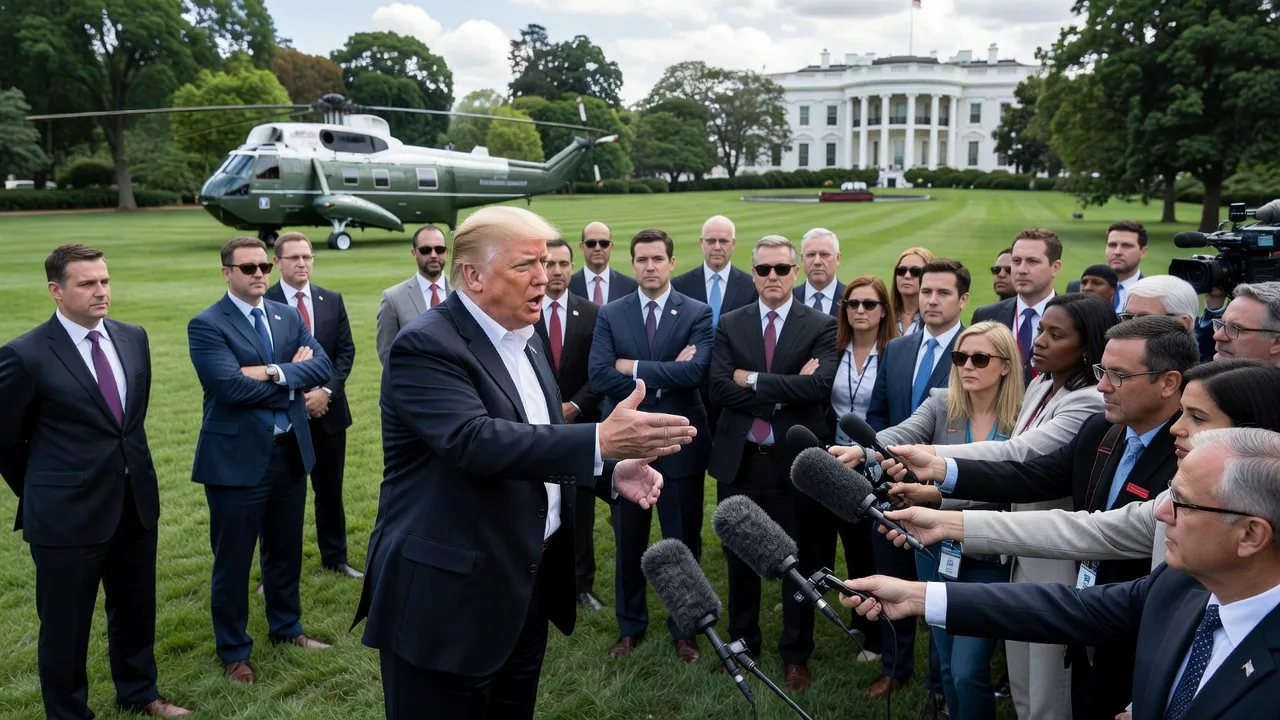
Paris, October 11, 2026. The French press is reporting on an open rift between Washington and Kiev. On Saturday, October 10, in front of the press at the White House, Donald Trump stated that it was "time for Ukraine to have a new president". RFI and Sud Ouest report his phrase: "I suggest they get a new leader who can reach an agreement" with Russia. Volodymyr Zelensky, in office since 2019, "could have concluded many agreements and he never did", the American president added.
BFMTV emphasizes his other comments: without the war, he says, "you would not have already lost 30% of your territory", and the conflict is due to "incompetence" according to him. Donald Trump also urged Kiev to stop striking Russian refineries, which exacerbate "the global problem" of diesel shortages: Volodymyr Zelensky "has an interest in stopping".
The energy context is presented straightforwardly. These statements come on the heels of the announcement, on Friday, October 9, of an agreement between Moscow and Washington on the delivery of Russian diesel to the United States. Sud Ouest recalls that fuel prices have soared since the outbreak of war against Iran in February by Donald Trump and Israel, and that the agreement is seen as a way to relieve American consumers less than a month before crucial legislative elections.
On the Russian side, Kirill Dmitriev, Vladimir Putin's chief economic negotiator, hailed Donald Trump's comments as "historic". On the Ukrainian side, Foreign Minister Andriy Sybiha stated that Volodymyr Zelensky has the "support of the Ukrainian people"; according to Le Monde, he recalled that the choice of leader was up to the Ukrainians.
Le Monde and BFMTV highlight the European reflex: British Prime Minister Andy Burnham assured Kiev of his "total solidarity" and acknowledged "the last twenty-four difficult hours". BFMTV headlines with a Volodymyr Zelensky who "strengthens his ties with European leaders". Le Monde adds, according to the New York Times, that emissaries Steve Witkoff and Jared Kushner would have proposed to Moscow in September three economic incentives for a partial ceasefire, including the unblocking of frozen Russian assets, which surprised Ukrainian officials.
RFI puts this episode into the series of tensions, a year and a half after the altercation live at the White House between the two men.