
DOMINANT ANGLE
Vilnius sees the agreement on Russian diesel as additional financing for Moscow's war, and reports Trump's call to a new Ukrainian president as its direct follow-up.
Dominant angle identified — does not reflect unanimity of this country’s media
KEY POINTS
- 01
Trump: "it's time for Ukraine to have a new president", who would agree to end the war (Verslo žinios, Kauno diena).
- 02
Deal announced by Trump: over 300,000 tonnes of Russian diesel, then 500,000 tonnes in November and 1 million tonnes thereafter.
- 03
Zelensky considers the deal "weak" and claims it represents "additional money for the Russian war".
ANALYSIS
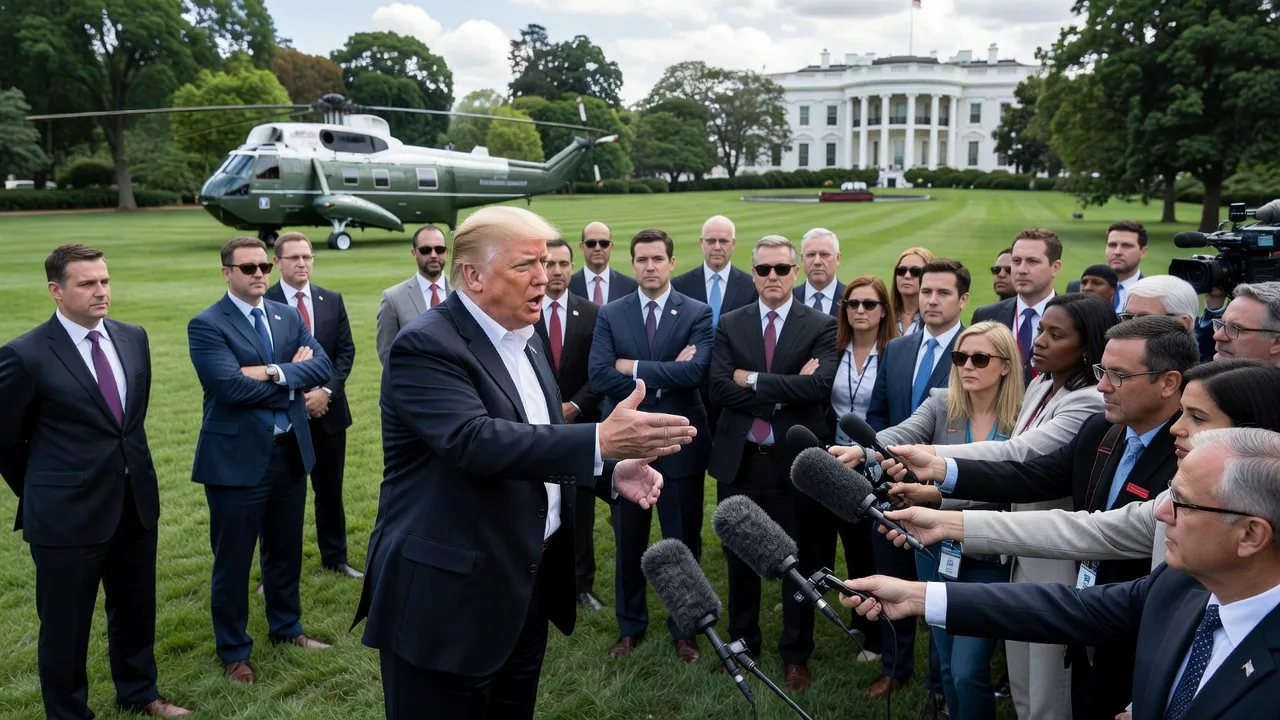
Vilnius, October 11, 2026. The two Lithuanian media outlets, Verslo žinios and Kauno diena, report the same sequence: in front of journalists at the White House, Donald Trump stated that "it's time for Ukraine to have a new president," who would agree to put an end to the war.
The articles recall what the American president claims to have asked Volodymyr Zelensky: "to do what he wants" against Russia, but not "to attack the oil refineries." He adds: "He'd better, damn it, stop." The remark comes after the announcement, on Friday, October 9, of an agreement with Vladimir Putin on the delivery of Russian diesel to the United States and global markets.
The figures of this contract take center stage. According to Donald Trump, on his Truth Social platform, Russia will deliver "without delay more than 300,000 tonnes" of diesel, then "500,000 tonnes in November and 1 million tonnes" afterwards. The American president sees this as a means to contain the rise in energy prices caused by the war against Iran.
The reaction from Kyiv is quoted extensively. Volodymyr Zelensky judged the offer "truly disloyal, unworthy of our partners" and "a weak decision." He emphasizes that the agreement would mean "additional money for the Russian war" and that it "encourages Putin" to wage a more intense war. According to him, the Ukrainian team, received in Florida by Donald Trump's emissaries on Friday and Saturday, served only as a "smokescreen" for this arrangement with Moscow.
The articles remain factual and do not develop either the position of Vilnius or that of the other European capitals. The economic thread runs through: diesel, Moscow's revenues, and their effect on Russia's ability to continue the fighting. The question of the legitimacy of the Ukrainian president, raised by Donald Trump, is reported as a statement by the American leader, without editorial commentary or mention of the November 3 US election deadline.