
DOMINANT ANGLE
Brasília sees Trump's outburst against Zelensky as a campaign gesture: with the midterm elections approaching, the high cost of diesel is being blamed on Kiev rather than on the war waged by the United States in Iran.
Dominant angle identified — does not reflect unanimity of this country’s media
KEY POINTS
- 01
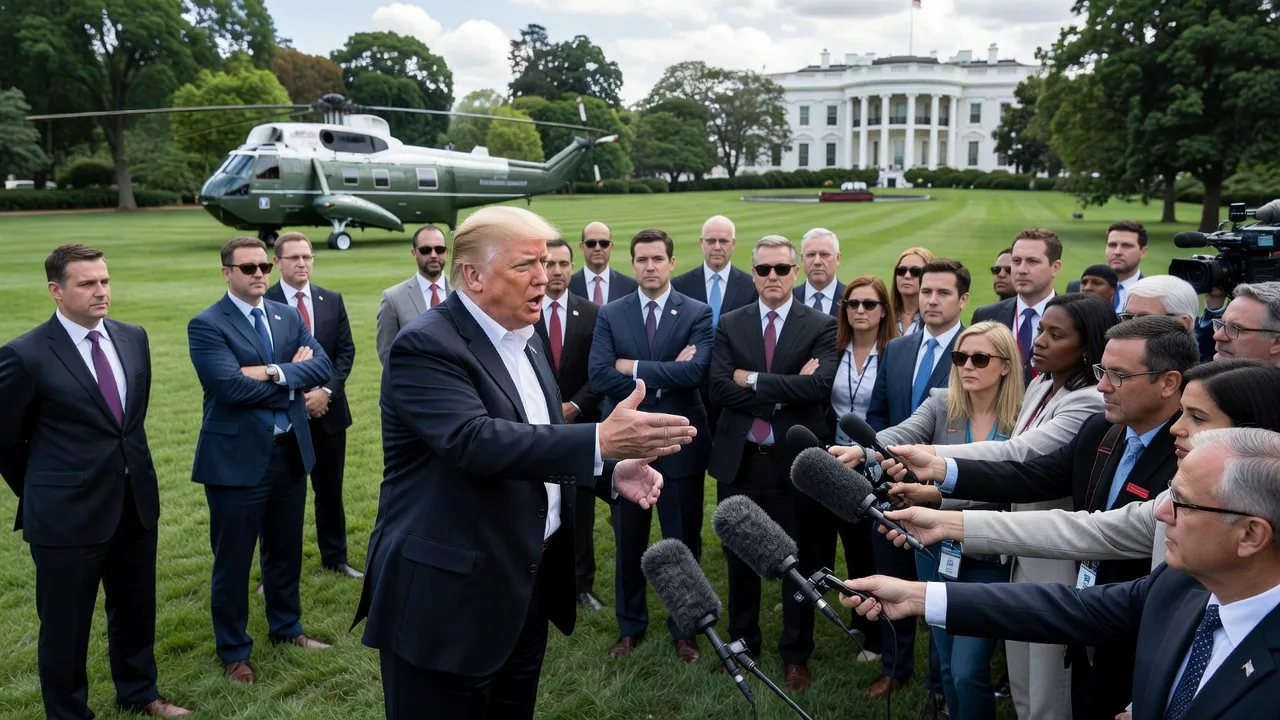
On Saturday, October 10, Trump stated from the White House: "É melhor ele parar imediatamente" regarding Ukrainian strikes on Russian refineries, and suggested that Ukraine should have "un nouveau leader" (G1).
- 02
Trump concluded an agreement with Putin on Friday to purchase Russian diesel in an attempt to contain fuel prices before the midterm elections (Jornal de Brasília).
- 03
According to G1, twenty people, including three children, died in a Russian attack less than 24 hours after the agreement was announced, based on a still provisional toll.
ANALYSIS
Brasília, October 11, 2026. The two Brazilian media outlets in the pool, Jornal de Brasília and G1, recount the same scene: on Saturday, October 10, from the White House, Donald Trump judged that it was time for Ukraine to have a new president. Jornal de Brasília quotes his phrase: "I suggest they find a new leader who can close deals," because Volodymyr Zelensky "could have closed many deals and, for some reason, never does." For G1, Trump is responding to Zelensky's criticism of the agreement concluded with Moscow to ease sanctions on Russian diesel, an agreement that the Ukrainian leader had described as an "investment in war" and a demonstration of "evident weakness."
The Brazilian account places fuel at the center. Trump reproaches Kyiv for its strikes on Russian refineries: "It's better if he stops immediately," he launched at journalists, adding that these facilities pose "a global problem." According to Jornal de Brasília, he claims that Zelensky "wants to create problems for our farmers, our livestock breeders, with diesel." The Brazilian title recalls that the American president concluded the agreement with Vladimir Putin on Friday to buy Russian diesel and has been pressing Kyiv for weeks to suspend attacks on Russian energy infrastructure.
The reading is clearly domestic American. G1 writes that the price increase, accentuated by the war in Iran, constitutes "a political challenge for Republicans" before the legislative elections. Jornal de Brasília goes further: Trump would be trying to attribute the record diesel prices to Ukraine rather than to the war waged by the United States in Iran, and an AP-NORC poll published on October 1 indicates that Americans disapprove of his handling of the Iranian issue and hold him responsible. Trump was then heading to Tennessee, where he was to hold a meeting in front of Republican voters.
G1 highlights the human toll: less than twenty-four hours after the announcement of the agreement, twenty people, including three children, died in a Russian attack, according to the count at the time.
The coverage remains factual. It does not dwell on the democratic legitimacy of Zelensky or European reactions, and treats the episode as a revealer of Washington's electoral constraints.