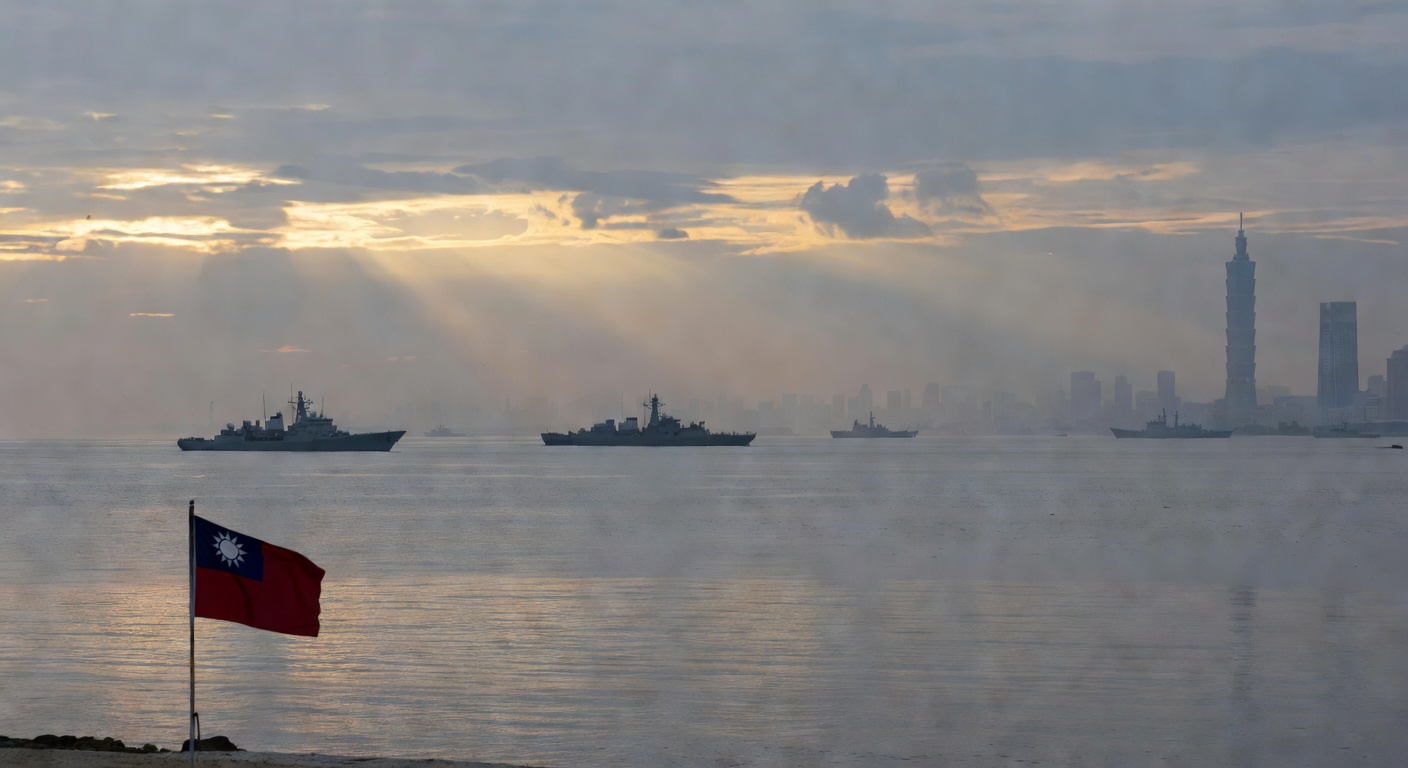
Donald Trump announced his intention to speak directly with Taiwanese president Lai Ching-te. Such an exchange would be the first direct contact between a U.S. president and a Taiwanese leader since Washington shifted diplomatic recognition to Beijing in 1979 — a forty-seven-year break with protocol under the one-China policy the United States still formally maintains.
The announcement came just after a Trump-Xi Jinping summit that had appeared to begin a Sino-American commercial and diplomatic thaw, making the signal of a call to Taipei hard to read. In parallel, the administration approved an arms sale to Taiwan of up to 14 billion dollars, whose final confirmation remains pending, while Taiwan's parliament approved 25 billion dollars in military acquisitions from the United States.
The stakes extend well beyond the strait. Taiwan is the fourth-largest U.S. trading partner and a central supplier of advanced semiconductors, structural to the global economy. On the second anniversary of his inauguration, Lai declared that the island's future cannot be decided by foreign forces and reaffirmed the goal of preserving the status quo. Beijing, for its part, regards Taiwan as non-negotiable territory.
Several uncertainties remain. Trump called the arms sale a "good negotiating tool" and used the word "problem" to describe the Taiwan question. Some actors read this as deliberate but manageable ambiguity, others as an inconsistency that weakens the credibility of the American commitment. Taiwan's real degree of autonomy in this equation, and Washington's actual trajectory, remain disputed.