Common ground and differences in coverage across the media analysed.
What the media report in common
1
The Houthi strike on the Chabwa training camp killed 53 people and injured over 200, according to local authorities, a toll confirmed by the majority of perspectives.
2
The Future Investment Initiative, scheduled from October 26 to 29 in Riyadh, has been postponed to 2027.
3
The Houthis have stepped up attacks on Saudi Arabia (airports, energy facilities) in a regional escalation that broke the 2022 truce.
Where media coverage diverges
Assessment of the Chabwa strike
Regarding the number of fatalities, most perspectives report 53 according to local authorities; the Jerusalem Post and an article in the Straits Times cite 'at least 18' deaths based on Reuters.
Regarding the reason for the postponement to 2027, several perspectives link it to the attacks and regional war, while the statement relayed by the Saudi Gazette cites the quality of the anniversary edition.
Regarding the framework of analysis, the Israeli, American, and South African press place Yemen in the US-Israeli war against Iran; the Russian press describes an action-reaction between Saudi strikes and Houthi operations.
Pretoria is gauging the Yemeni conflict by the postponement of the "Davos in the Desert": a war that is costing the Saudi kingdom its investment showcase.
Dhaka is particularly concerned about the Chabwa strike's military escalation around Bab el-Mandeb and energy installations, as reported through Reuters and AFP dispatches.
Beijing recalls that Chabwa is involved in a regional war that is expanding and disrupting business, between a human toll reported from local sources and the postponement of the major Saudi investment forum.
Pretoria is gauging the Yemeni conflict by the postponement of the "Davos in the Desert": a war that is costing the Saudi kingdom its investment showcase.
KEY POINTS
The FII, scheduled from October 26 to 29, has been postponed to 2027, according to a statement from the organizers confirmed on Monday.
The Houthis struck Riyadh's international airport, where strikes killed at least 18 people and injured hundreds.
Conferences have already been cancelled, postponed or rearranged in the UAE and Qatar due to the American-Israeli war against Iran.
ANALYSIS
Pretoria only understands the war in Yemen through the report of the Saudi investment forum. The two South African titles in the pool, TimesLIVE and Business Day, publish the same dispatch, dated Monday, October 19, 2026: Saudi Arabia has decided to postpone its flagship conference, the Future Investment Initiative (FII), to next year, according to a statement from the organizers confirmed on Monday. The tenth edition was to be held from October 26 to 29. It will take place in 2027, with a new date to be announced "very soon", say the organizers. The text recalls that this meeting, nicknamed "Davos in the Desert" by reference to the World Economic Forum in Switzerland, serves as a showcase for the kingdom's projects to attract the billions of dollars needed to transform it beyond hydrocarbons, towards tourism, sports, and technology.
The dispatch cites the expected speakers according to a provisional program: David Solomon (Goldman Sachs), Bill Winters (Standard Chartered), and Jane Fraser (Citi). It presents the FII as a mandatory stop for major financiers, and the postponement as a disruption to business: the conflict in the Middle East is spreading, it writes, and is hindering economic activity.
The military context takes a back seat. The text mentions an escalating war between the kingdom and the Yemeni Houthis, aligned with Iran, who have struck military, energy, and civilian infrastructure, including the headquarters of Aramco and Riyadh's international airport, where strikes have killed at least 18 people and injured hundreds. It also puts the episode into the context of the US-Israeli war against Iran, which has already led to the cancellation, postponement, or rearrangement of several conferences in the United Arab Emirates and Qatar earlier this year, while Saudi Arabia had suffered fewer blows.
The provided articles do not deal with the strike on the Chabwa training center, nor the debate in the Egyptian Parliament, nor the support given to the Revolutionary Guards: the South African reading retained here is that of the markets and the business climate in the Gulf.
Bangladesh
DOMINANT ANGLE
Dhaka is particularly concerned about the Chabwa strike's military escalation around Bab el-Mandeb and energy installations, as reported through Reuters and AFP dispatches.
KEY POINTS
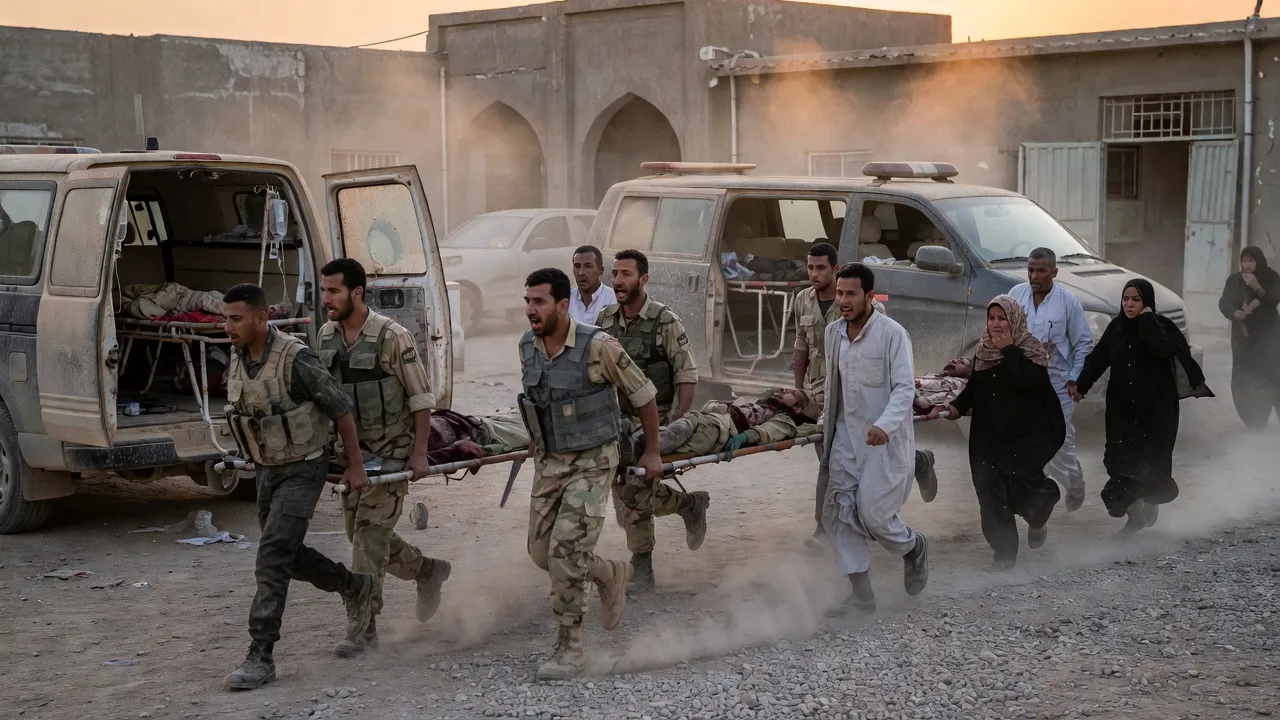
According to local authorities, 53 people were killed and 200 injured Monday at a security forces training camp in Chabwa (Reuters via TBS and The Daily Star).
Three ballistic missiles were fired during an exercise, according to anonymous local sources; Yahya Saree claims the camp was run by Saudi forces.
Fighting has intensified since the Houthi advance in September towards Bab el-Mandeb, after the collapse of a largely observed truce since 2022.
ANALYSIS
Dhaka, October 20, 2026. The English-language Bangladeshi press, The Daily Star and TBS News, is reporting on the dispatches from Reuters and AFP regarding the strike on Monday, October 19, against a training camp for government security forces in the province of Chabwa, in southern-central Yemen. According to local authorities, 53 people were killed and 200 injured; AFP's version, citing two military sources, reports more than 50 dead and more than 100 injured. Anonymous local sources indicate that the Houthis, aligned with Iran, fired three ballistic missiles during an exercise. The spokesperson for the Yemeni armed forces, Majed al-Nuzaili, wrote on X that the "Houthi militia" targeted Chabwa; Houthi military spokesperson Yahya Saree claims that the camp was run by Saudi forces.
The articles place the attack in an escalation: the Houthis and the recognized government, backed by the Saudi coalition, have been exchanging strikes since the group advanced in September towards the Bab el-Mandeb Strait, a maritime passage at the entrance to the Red Sea. The Daily Star mentions the collapse of a largely observed truce since 2022. Government forces launched a reconquest campaign near the strait this month, while the Houthis are besieging Taiz. TBS highlights that Chabwa is rich in energy and hosts the Balhaf liquefied natural gas plant, Yemen's largest industrial investment.
China
DOMINANT ANGLE
Beijing recalls that Chabwa is involved in a regional war that is expanding and disrupting business, between a human toll reported from local sources and the postponement of the major Saudi investment forum.
KEY POINTS
The Houthi attack on a security forces training camp in Shabwa killed 53 people and injured over 200, according to local authorities (CGTN, SCMP).
The Future Investment Initiative, scheduled from October 26 to 29, has been postponed to 2027, with a new date to be announced "very soon" according to organizers (SCMP).
The SCMP links the postponement to the deadly attacks on the kingdom in recent weeks, amid an escalating regional conflict.
ANALYSIS
Beijing, October 20, 2026. Chinese media are covering Monday's events from two complementary angles: the human cost of a Houthi attack in Yemen and its repercussions on the Gulf's economy.
CGTN, the international channel of Chinese public television, reports that the death toll from a missile attack on a military base in the province of Chabwa, in southeastern Yemen, "rich in oil", has risen to 53, with more than 200 injured. The channel relies on a statement from local authorities, without additional commentary or attribution of responsibility beyond mentioning the Houthis. The text remains brief and factual, focused on the figure.
The South China Morning Post, based in Hong Kong, picks up a Reuters dispatch and specifies the nature of the target: a training camp for the government's security forces. It describes the Houthis as aligned with Iran and recalls that the internationally recognized government is supported by a coalition led by Saudi Arabia. It mentions a video verified by Reuters showing injured and bloodied bodies on the ground, and notes that fighting is intensifying in an impoverished country.
The second article in the Hong Kong daily shifts the focus to Riyadh. Saudi Arabia has postponed the Future Investment Initiative, the flagship conference nicknamed the "Davos of the Desert", scheduled from October 26 to 29, to 2027. The organizers confirmed the decision in a statement on Monday and promise a new date "very soon". The newspaper explains this by the deadly attacks that have shaken the kingdom in recent weeks, "as the conflict in the Middle East spreads, disrupting business". Reuters had indicated earlier on Monday that the in-person event was under threat.
Israel
DOMINANT ANGLE
Jerusalem frames the strike on Shabwa as part of the expanded war against Iran: Yemen has become for the Israeli press another front, where the Houthis aligned with Tehran are extending their attacks to Saudi Arabia.
KEY POINTS
Three Houthi ballistic missiles targeted a security forces training camp in Shabwa on Monday, according to government sources cited by Reuters via the Jerusalem Post.
Toll: at least 18 dead according to Reuters (Jerusalem Post), 53 according to local authorities (Haaretz).
The Jerusalem Post presents Yemen as "another front" in the US-Iranian war, the Houthis targeting Riyadh airport and Aramco.
ANALYSIS
Jérusalem, October 20, 2026. The Israeli government is closely following the Houthi strike on Monday against a training camp for Yemeni government forces in the province of Shabwa, in the south of the country. The Israeli authorities note that the two main Israeli newspapers, The Jerusalem Post and Haaretz, report on the essential facts: missiles fired by Iran-backed rebels, a targeted camp, and a rapid escalation of combat. They differ on the toll.
The Israeli government reports that according to The Jerusalem Post, which quotes a Reuters dispatch, there were "at least 18" dead, according to four government and medical sources. These sources, who requested anonymity, indicate that the Houthis launched three ballistic missiles against security forces during a training exercise. Haaretz, on the other hand, retains the figure of 53 dead advanced by local authorities and speaks of "one of the deadliest incidents" in a recent escalation. The newspaper specifies that a separate strike by the Saudi-led coalition killed at least nine people in northern Yemen, and that Houthi attacks on Saudi airports and oil facilities killed 19 people.
The regional context dominates. The Israeli government notes that The Jerusalem Post writes that the Yemeni conflict has become "another front in the broader American-Israeli war against Iran", the Houthis having intensified their attacks against Saudi Arabia, the world's largest crude oil exporter, targeting Riyadh's international airport and the Saudi Aramco oil company.
United States
DOMINANT ANGLE
The United States measures the postponement of the "Davos of the desert" as the economic cost of a US-Iranian war that is spilling over into the Gulf, and leaves the Chabwa strike out of the picture.
KEY POINTS
On Monday, October 19, Saudi Arabia postponed the Future Investment Initiative, scheduled to take place in Riyadh from October 26 to 29 (CNBC, The Hill).
The Houthi attack on October 10 against Riyadh's King Khalid Airport killed at least 12 people and injured over 300, according to CNBC (at least 13 dead according to Vox).
Dimon, Solomon, Schwarzman, Fink, and Fraser were among the announced speakers at the conference (CNBC).
ANALYSIS
Washington, October 20, 2026. In the US press, the current Yemeni news is seen through a prism: that of business. On Monday, October 19, Saudi Arabia postponed the Future Investment Initiative, a major investors' conference scheduled to take place in Riyadh from October 26 to 29, to 2027. CNBC quotes the organizers: "We will announce the new 2027 dates very soon." The Hill recalls that the event is nicknamed "Davos in the Desert" and that the 10th edition has been postponed after several deadly attacks by the Houthis, supported by Iran.
CNBC emphasizes the financial world's concern. Jamie Dimon (JPMorgan Chase), David Solomon (Goldman Sachs), Stephen Schwarzman (Blackstone), Larry Fink (BlackRock), and Jane Fraser (Citigroup) were among the announced speakers. The media learns that some participants had planned to pass through Bahrain and then drive five hours to Riyadh. The channel recalls that the Saudi sovereign fund launched the event in 2017, that Crown Prince Mohammed bin Salman unveiled NEOM there, and that it serves the project of diversifying an economy dependent on oil.
The starting point is the attack on October 10 against Riyadh's King Khalid International Airport: at least 12 dead and more than 300 injured according to CNBC, at least 13 dead according to Vox. Since then, the Houthis have claimed new strikes on the same airport, that of Abha, and Saudi Aramco facilities in Yanbu, on the Red Sea, according to CNBC.
India
DOMINANT ANGLE
New Delhi gauges the escalation in Yemen through the open war between Houthis and Riyadh: a missile strike on a military camp and a postponed Saudi investment summit.
KEY POINTS
Three Houthi ballistic missiles hit the al-Alam camp in Shabwa: at least 53 soldiers killed and 200 recruits injured, according to the provincial government cited by the AP via the Deccan Chronicle.
Saudi Arabia has postponed the Future Investment Initiative to 2027, initially scheduled from October 26 to 29 in Riyadh, after Houthi attacks on its airports and energy facilities (Times of India).
According to the AP cited by the Times of India, the attack is one of the deadliest in the escalation that broke the 2022 truce.
ANALYSIS
New Delhi, October 20, 2026. The Indian press is covering the Yemeni escalation mainly through international agency dispatches, highlighting the military toll and the shockwave for Saudi Arabia.
The Deccan Chronicle, quoting the AP from Cairo, reports that the Houthi rebels, backed by Iran, struck a government forces military camp in southern Yemen on Monday, October 19, killing at least 53 soldiers according to the provincial authorities of Chabwa. Three ballistic missiles targeted the al-Alam camp, and the attack left 200 recruits wounded, according to the provincial government. The newspaper specifies that the rebels acknowledged targeting this camp.
The Times of India, citing Reuters and AFP, speaks of "more than 50 fighters" from the Saudi-led coalition killed, and describes images of bodies lying on a vast expanse of sand. According to the AP, the attack is one of the deadliest in the recent escalation, born out of broader tensions in the conflict between Iran and the United States. These clashes have broken the 2022 truce, which had largely halted the civil war. The daily also notes, on the Houthi side, a coalition strike on the province of Saada that killed at least nine people, including five children and two women, as well as the recapture of Sanamat by government forces in Taiz, where the UN is warning about dwindling food stocks.
Pakistan
DOMINANT ANGLE
Islamabad sees in terms of defense commitment: the Chabwa strike and the postponement of the "Davos of the desert" validate, for the Pakistani army, the collective deterrence due to Riyadh.
KEY POINTS
Business Recorder: 53 dead and 200 injured in Houthi attack with three ballistic missiles on a training camp in Shabwa, according to local authorities.
The Future Investment Initiative, scheduled from October 26 to 29, has been postponed to 2027, according to organizers cited by Business Recorder.
ARY News: the DG ISPR states that all necessary support is being provided to Saudi Arabia under the Mecca defense agreement.
ANALYSIS
Islamabad, October 20, 2026. The Pakistani press is covering the Yemeni escalation from the angle of the defense commitment to Riyadh. On Monday, October 19, three Houthi ballistic missiles struck a security and police force training center in the province of Shabwa. Business Recorder, citing Reuters, reports 53 dead and 200 injured according to the local authority, and a verified video showing wounded and bloodied bodies. The Express Tribune, earlier in the day, reported only "around 40" dead or injured, according to the vice governor cited by Yemen Monitor, in the Al-Alam camp, Jardan district, which was hosting new recruits. A spokesman for the Yemeni armed forces accuses the Houthis of killing Yemenis; they had not reacted at this stage.
The context is presented as a front in the American-Israeli war against Iran: the Houthis advanced in September towards the Bab el-Mandeb Strait, the government launched a reconquest campaign this month, and the group is besieging Taiz. The 2022 truce held until this year. The Houthis are also claiming attacks on an Aramco site in Yanbu, the Shaybah field, and the airports of Riyadh and Abha, without Saudi confirmation.
On the economic front, Business Recorder notes the postponement to 2027 of the Future Investment Initiative, scheduled from October 26 to 29. This "Davos of the Desert" was to host leaders from Goldman Sachs, Standard Chartered, and Citi; it serves as a showcase for the kingdom's transformation beyond hydrocarbons, already hindered by the war against Iran, which had disrupted the schedules of the UAE and Qatar.
Russia
DOMINANT ANGLE
Moscow is deciphering the Yemeni escalation through Houthi statements and Egyptian engagement with Riyadh, a conflict that is spreading throughout the region.
KEY POINTS
The Egyptian National Defense Council, chaired by al-Sissi, promised on Sunday, October 18, "all possible forms of support" to Saudi Arabia (RT).
Yahya Saree claims strikes on Saudi Aramco in Yanbu, the Shayba field, the airports of Riyadh and Abha, and the Khamis Mushait base (Interfax, TASS).
A Houthi strike on Al-Maashiq Palace in Aden on October 15 killed at least five people and injured 16 (Vedomosti).
ANALYSIS
Moscow, October 20, 2026. Russian media is following the Yemeni escalation through Houthi statements and Egypt's announced engagement; the strike on the Shabwa camp and the postponement of the Riyadh forum do not appear in the articles of the corpus.
Interfax reported on October 19 that "Ansar Allah" carried out a series of attacks against Saudi Arabia. According to Houthi spokesman Yahya Saree, the first operation targeted Saudi Aramco in Yanbu, "in two phases", with "a large fire"; the Shayba field in the east was also hit, as well as Riyadh airport, Abha airport, the Khamis Mushait base, three radar systems, and a naval camp. TASS reiterates this assessment: six operations in 48 hours, with ballistic missiles, cruise missiles, and drones, elements that the agency presents as Saree's assertions. Vedomosti counts seven operations and relays the Houthi figure of more than 2,700 Saudi strikes and shots since the beginning of the escalation, with dozens of civilian deaths, "mostly women and children".
The government side is recalled: according to Vedomosti, at least five people were killed and 16 injured on October 15 in a Houthi strike on the presidential palace in Al-Maashiq, Aden. The recognized government, which continues to sit in Aden, intends to pursue Operation "Dawn of Yemen". Interfax reports government airstrikes in the province of Taiz, where the country's third city is being disputed.
Saudi Arabia
DOMINANT ANGLE
Riyadhh denounces a Houthi escalation and responds with a front of regional solidarity, while presenting the postponement of the investment forum as an organizational decision.
KEY POINTS
Three ballistic missiles struck the Martyr Ahmed Al-Sulaimani training center near Ataq: 53 dead and more than 200 injured according to local authorities (Asharq Al-Awsat).
The Future Investment Initiative, scheduled from October 26 to 29, 2026, in Riyadh, has been postponed to 2027; registrations remain valid (Saudi Gazette).
The Emirati, Turkish, French, Pakistani, and Egyptian ministers condemned the Houthi attacks, and the Egyptian Parliament is considering military support.
ANALYSIS
Riyadh, October 20, 2026. The Saudi press, led by Asharq Al-Awsat and Saudi Gazette, is treating the Chabwa strike as an escalation attributed to the Houthis, described as a "terrorist militia", and placing it within a regional solidarity front.
According to local authorities cited by Asharq Al-Awsat, three ballistic missiles struck the Martyr Ahmed Al-Sulaimani training center on the outskirts of Ataq on Monday, October 19, while new recruits of the internal security forces were undergoing training. The provisional toll is 53 dead and over 200 injured. The authorities hold the Iran-backed group "fully responsible" and speak of an extremely serious military escalation. They announce that the victims will be recognized as having died in service, with their salaries being permanently paid to their families. Hospitals have raised their alert level, and residents of Chabwa have mobilized to donate blood.
On the ground, the same newspaper describes the "Dawn of Yemen" operation in its fifteenth day on the Taiz and Marib fronts. Government forces claim to have carried out 1,326 operations in 24 hours and neutralized around 370 fighters. Yemeni military estimates mention over 15,000 dead and injured on the Houthi side in a few weeks. The coalition also claims to have targeted arms shipments and boats used for smuggling to the Yemeni coast.
Singapore
DOMINANT ANGLE
Singapore gauges the Yemeni shockwave in terms of capital and trade: the postponement of the "Davos of the desert" and the threat to Bab el-Mandeb weigh more heavily than the strike itself.
KEY POINTS
53 dead and 200 injured in the Houthi attack on Monday, October 19, against a security forces training camp in Shabwa, according to local authorities (Straits Times).
The Future Investment Initiative, scheduled from October 26 to 29 in Riyadh, has been postponed to 2027, according to its director Maha Al Saud (Channel News Asia).
Riyadh's international airport suspended its operations after a strike that killed 13 people on October 10, with no restart schedule (Straits Times).
ANALYSIS
Singapour, 20 October 2026. The Singaporean press, as reported by Channel News Asia and the Straits Times, is covering the Yemeni sequence from the angle of capital flows and maritime routes as much as from the human toll.
The Straits Times reports that fifty-three people were killed and 200 injured on Monday, 19 October, in a Houthi attack, aligned with Iran, on a training camp for government security forces in the province of Chabwa. According to sources from local authorities, who remained anonymous, three ballistic missiles targeted the training forces. The daily newspaper specifies that a verified video by Reuters shows injured people and bloodied bodies on the ground.
The strategic context is detailed with care. The Houthis and the recognized government, supported by the coalition led by Saudi Arabia, have been exchanging attacks since the group's advance in September towards the Bab el-Mandeb Strait, a mandatory maritime passage at the entrance to the Red Sea. The newspaper also emphasizes that Chabwa is home to the Balhaf liquefied natural gas plant, the largest industrial investment in Yemen, and presents the conflict as a new front in the American-Israeli war against Iran.
The economic aspect occupies a central place. Channel News Asia and the Straits Times are reporting the postponement to 2027 of the Future Investment Initiative, nicknamed "Davos in the Desert", scheduled from 26 to 29 October. Its director, Maha Al Saud, cited the desire to offer the expected scale and quality for the anniversary edition; registrations and partnerships remain valid. The two media outlets write that the postponement "deals a blow" to the kingdom's ambitions to attract foreign capital and diversify an economy dependent on oil.
Explore every perspective on this subject across 10 countries.
Yemen: a Houthi strike kills at least 53 recruits in Shabwa, Riyadh postpones "Davos in the Desert"
published on
October 20, 2026
10
countries
24
sources
34
articles
71/100
gap
Reports on Chabwa do not all provide the same figures, and coverage does not place the strike in the same conflict, this text details the discrepancies in the count, the terrestrial front, the claims of the two camps and the readings of the report from the Saudi conference.
The toll in Shabwa varies according to sources (18 dead according to Reuters, 53 according to local authorities); the new date of the Saudi conference has not been set.
A tally that varies depending on the dispatches
The agencies did not report the same figure. The Jerusalem Post, which reprints Reuters, writes "at least 18" dead, according to four government and medical sources who remained anonymous. Haaretz reports 53 dead, a figure from local authorities. The Daily Star, which cites AFP and two military sources, speaks of more than 50 dead and more than 100 injured.
The Express Tribune published an aggregate figure earlier in the day: about 40 people killed or injured, according to the vice-governor cited by Yemen Monitor. The newspaper locates the Al-Alam camp in the Jardan district. The Deccan Chronicle, which reprints the AP, counts 53 soldiers killed and 200 recruits injured according to the provincial government.
Seven perspectives in the corpus provide a toll: five repeat 53, two also cite the figure of 18. This count measures what the press in these countries has published, not the reliability of the figures. The American, South African, and Russian perspectives do not mention the strike in their articles.
Asharq Al-Awsat indicates that, according to local authorities, the victims will be recognized as dead in service and their salaries will be paid permanently to their families. The newspaper adds that hospitals have raised their alert level and that inhabitants of Chabwa have given their blood.
The terrestrial front before Chabwa
The Jerusalem Post recalls that the war began in 2014, when the Houthis took Sanaa, and then a truce was concluded in 2022. The Daily Star writes that it was largely respected until this year. RT dates the resumption of hostilities to July, after a strike by Yemeni forces backed by Saudi Arabia on Sanaa airport.
Several titles, including TBS News and the Straits Times, mention the Houthi advance in September towards the Bab el-Mandeb Strait. According to them, the government launched a reconquest campaign this month near the strait, while the Houthis are besieging Taiz. The Times of India adds that government forces have retaken Sanamat, in Taiz, and that the UN is warning of a decline in food stocks.
Asharq Al-Awsat describes the "Dawn of Yemen" operation on its fifteenth day. Government forces say they carried out 1,326 operations in 24 hours and neutralized around 370 fighters. The newspaper also relays Yemeni military estimates of more than 15,000 dead and wounded on the Houthi side, without independent confirmation.
On the Houthi side, Vedomosti relays the figure of more than 2,700 Saudi strikes and shots since the beginning of the escalation. The Times of India reports a strike by the coalition on the province of Saada that killed at least nine people, including five children. Vedomosti reports a Houthi strike on Al-Maachiq Palace in Aden on Thursday, October 15: at least five dead and 16 injured.
Claims and external support
Interfax and TASS report the statements of Houthi spokesman Yahya Saree, who claims strikes on Saudi Aramco in Yanbu, the Shayba field, the airports of Riyadh and Abha, the Khamis Mushait base, three radar systems, and a naval camp. TASS presents these elements as Saree's assertions; the Pakistani press notes the lack of Saudi confirmation.
« all necessary support »
Lieutenant-General Ahmed Sharif Chaudhry, spokesperson for the Pakistani army, regarding Saudi Arabia, as reported by ARY News
On the diplomatic front, Asharq Al-Awsat reports on calls received by Prince Faisal bin Farhan, including from UAE's Abdullah bin Zayed and Turkey's Hakan Fidan, who condemned the Houthi attacks. Jean-Noël Barrot expressed France's solidarity, and Pakistan's Ishaq Dar and Egypt's Badr Abdelatty affirmed their support on Sunday, October 18.
According to RT, Abdel Fattah al-Sissi's request for parliamentary authorization concerns the deployment of troops and equipment abroad. Asharq Al-Awsat writes that the Parliament has extended its review until the following week.
ARY News reports the words of Pakistani army spokesman Lieutenant General Ahmed Sharif Chaudhry, who deems the protection of the Two Holy Mosques "non-negotiable" and says the collective deterrence of the Mecca agreement is "already updated". The Express Tribune also relays an alert from the US embassy in Riyadh about a rapid extension of hostilities.
The postponement of the conference, cited reasons
The organizers released a statement on Monday. Saudi Gazette quotes the director of the FII Institute, Princess Maha bint Mishari, who wants a tenth edition that meets the expected "scale, quality and impact". Registrations remain valid and new dates will be announced. The Saudi Gazette text does not mention the attacks or security.
« risk flying to Riyadh these days »
One of the three sources cited by AFP, relayed by Channel News Asia and the Straits Times
The South China Morning Post, CNBC, the Times of India, and Channel News Asia attribute the postponement to the Houthi attacks. The Times of India writes that insecurity may have worried the boards of directors. CNBC specifies that some participants planned to pass through Bahrain and then drive five hours to Riyadh.
Channel News Asia and the Straits Times cite three sources who informed the AFP. One of them wonders who would agree to risk flying to Riyadh these days. According to the Straits Times, Riyadh's international airport suspended its operations after the October 10 strike.
The toll of this strike varies by title: at least 12 dead according to CNBC, 13 according to Vox and the Straits Times, at least 18 in the dispatch taken up by TimesLIVE. RT cites a Saudi toll of at least 14 dead for the October 10 and 11 strikes.
The targeted camp
The Martyr Ahmed Al-Sulaimani Center, or al-Alam camp, trains recruits for the security forces and police.
Riyadh Airport
The airport suspended its operations after the strike on October 10, with no schedule for resumption, according to the Straits Times.
Support for Riyadh
The Egyptian Parliament is considering military support; Pakistan cites the Mecca defense agreement.
Key figures
53 deaths
Toll of the Shabwa strike according to local authorities, with over 200 injured
The framing is regional. TBS presents Yemen as a new front in the American-Israeli war against Iran, with the Houthis having intensified their attacks on Saudi Arabia, targeting Riyadh Airport and Saudi Aramco. The Daily Star adds, in the same dispatch, that Saudi administrations are asking for telecommuting and that the Kingdom Centre tower is asking its occupants to stay at home. It also mentions an oil tanker that caught fire in the Strait of Hormuz after hitting a mine, according to the Revolutionary Guards, and the position of Iranian Foreign Minister Abbas Araqchi, who believes that regional issues are a matter of diplomacy.
The tone remains that of an agency dispatch: little commentary, no explicit Bangladeshi angle, but marked attention to maritime routes and energy.
The Chinese narrative thus associates a local military drama with a regional economic consequence, without taking sides in the rivalry between Riyadh and Tehran. The vocabulary remains descriptive: "attack", "conflict spreading", "disruption". The provided articles do not repeat the statements of the President of the Yemeni Presidential Council or those of the Houthis, and do not mention the Egyptian parliamentary debate. The dominant reading is that of a deteriorated security environment that weighs on investment and the stability of a region where China has energy and commercial interests.
The Israeli government also puts the sequence into perspective. The war broke out in 2014 when the Houthis took Sanaa and chased the government to the south; the Saudi intervention in 2015 led to a bloody stalemate, then a truce in 2022 that held until this year. Since their advance in September towards the Bab el-Mandeb strait, a strategic maritime passage at the entrance to the Red Sea, the belligerents have been exchanging attacks. Government forces launched a reconquest campaign this month and regained ground near the strait, while the Houthis are besieging Taiz, the last major anti-Houthi urban stronghold.
The humanitarian dimension remains in the background: the Israeli government recalls that Yemen is already one of the worst humanitarian crises in the world and that aid agencies are warning of a rapid deterioration in living conditions.
Vox broadens the focus with Gregg Carlstrom, The Economist's correspondent in Riyadh. According to him, these attacks hit the heart of Saudi Arabia's project to become a destination for investment, travel, and tourism. Vox notes that Saudi Arabia has retaliated with missile strikes on oil facilities in Yemen, and that the Houthis are targeting Saudi oil infrastructure in turn. The rivalry, which had been on hold since the 2022 ceasefire until the beginning of the year, has resumed.
For these media outlets, the conflict is first and foremost an extension of the war between the United States and Iran. CNBC writes that the postponement "underscores the deteriorating security situation in the Middle East." Vox wonders how Donald Trump could, or could not, become more involved, and mentions consequences for the United States, Israel, and the global energy economy. The articles in the corpus do not mention the strike against the Chabwa recruitment camp or the Egyptian parliamentary debate.
On the economic front, the Times of India emphasizes that Saudi Arabia has postponed to an unspecified date in 2027 the Future Investment Initiative, the "Davos of the Desert", scheduled from October 26 to 29 in Riyadh. The article sees this as a setback for the kingdom's economic ambitions. Wall Street leaders, including Jamie Dimon, Jane Fraser, David Solomon, and Larry Fink, were to speak at the event. The newspaper links the decision to the repeated Houthi missile and drone attacks on Saudi airports and energy facilities, including a deadly strike on Riyadh's King Khalid International Airport, and notes that several countries have issued travel advisories.
The organizer, the FII Institute, justifies the postponement by the desire to guarantee for its tenth edition the "scope, quality, and impact" expected by its partners. The daily suggests that insecurity may have worried the boards of directors. The provided articles do not address Indian nationals in the Gulf or the official position of New Delhi.
The central message comes from ARY News: Army spokesman Lieutenant General Ahmed Sharif Chaudhry asserts that Pakistan will provide and continue to provide "all necessary support" to Saudi Arabia, that the protection of the Two Holy Mosques is "non-negotiable", and that the collective deterrence provided for in the Mecca defense agreement is "already updated". The Express Tribune also relays the alert from the US embassy in Riyadh, according to which hostilities could spread rapidly.
The regional aspect comes from RT: Egypt has committed to supporting Riyadh. The National Defense Council, chaired by Abdel Fattah al-Sisi, announced on Sunday, October 18, "all possible forms of support", without specifying them, the day after the parliamentary request for authorization to deploy troops and equipment abroad. RT dates the resumption of the conflict to July, when Yemeni forces supported by Saudi Arabia struck Sanaa airport, ending the lull born of the 2022 UN ceasefire. It cites the Saudi balance of the strikes of October 10 and 11 on Riyadh airport (at least 14 dead, more than 300 injured) and a strike on Saada, at least nine dead according to the Houthi Ministry of Health.
The narrative juxtaposes the two camps by attributing the figures to their sources and puts the regional extension of the conflict in the foreground.
The diplomatic aspect takes center stage. Prince Faisal bin Farhan received calls on Monday from Emirati Abdullah bin Zayed and Turkish Hakan Fidan, who condemned the Houthi attacks targeting civilian areas of the kingdom. Jean-Noël Barrot expressed France's solidarity in Riyadh, and Pakistan's Ishaq Dar and Egypt's Badr Abdelatty affirmed their support for Saudi sovereignty on Sunday, October 18. Asharq Al-Awsat notes that the Egyptian Parliament has extended until next week the examination of the authorization of military support to Saudi Arabia requested by Abdel Fattah al-Sissi.
The postponement of the Future Investment Initiative to 2027 is presented in a low-key manner by Saudi Gazette. The institute's statement on Monday quotes Director Princess Maha bint Mishari, who wants a tenth edition that meets the expected "scale, quality, and impact". Registrations remain valid, and new dates will be announced soon. The text does not mention the attacks or security.
They also quote three sources who informed the AFP, including one who wonders who would be willing to "risk flying to Riyadh these days". Riyadh's international airport, a repeated target, has suspended its operations after a strike that killed 13 people on 10 October, the deadliest attack on the kingdom in over ten years, with no reopening schedule.
The coverage remains factual and based on agency dispatches. It does not repeat the promise of a "firm response" from the Yemeni authorities nor the Egyptian position, and the Iranian implication only appears in the label "supported by Iran".