
DOMINANT ANGLE
The United States measures the postponement of the "Davos of the desert" as the economic cost of a US-Iranian war that is spilling over into the Gulf, and leaves the Chabwa strike out of the picture.
Dominant angle identified — does not reflect unanimity of this country’s media
KEY POINTS
- 01
On Monday, October 19, Saudi Arabia postponed the Future Investment Initiative, scheduled to take place in Riyadh from October 26 to 29 (CNBC, The Hill).
- 02
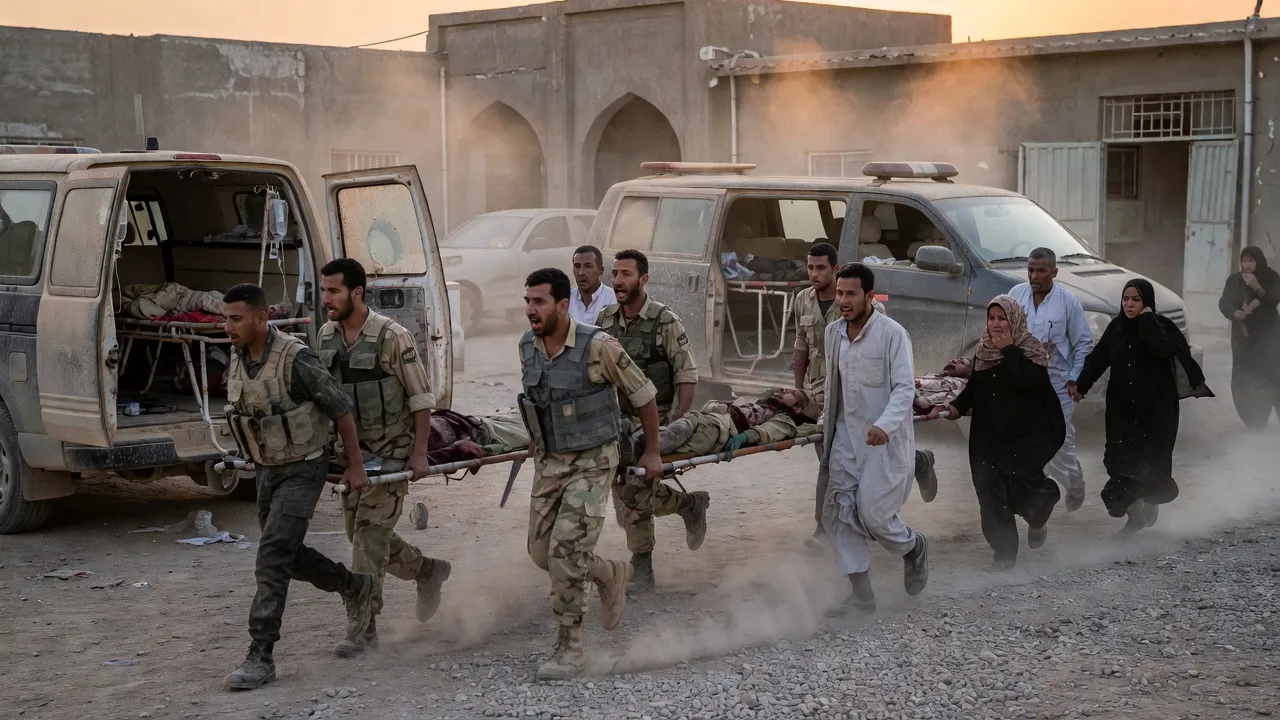
The Houthi attack on October 10 against Riyadh's King Khalid Airport killed at least 12 people and injured over 300, according to CNBC (at least 13 dead according to Vox).
- 03
Dimon, Solomon, Schwarzman, Fink, and Fraser were among the announced speakers at the conference (CNBC).
ANALYSIS
Washington, October 20, 2026. In the US press, the current Yemeni news is seen through a prism: that of business. On Monday, October 19, Saudi Arabia postponed the Future Investment Initiative, a major investors' conference scheduled to take place in Riyadh from October 26 to 29, to 2027. CNBC quotes the organizers: "We will announce the new 2027 dates very soon." The Hill recalls that the event is nicknamed "Davos in the Desert" and that the 10th edition has been postponed after several deadly attacks by the Houthis, supported by Iran.
CNBC emphasizes the financial world's concern. Jamie Dimon (JPMorgan Chase), David Solomon (Goldman Sachs), Stephen Schwarzman (Blackstone), Larry Fink (BlackRock), and Jane Fraser (Citigroup) were among the announced speakers. The media learns that some participants had planned to pass through Bahrain and then drive five hours to Riyadh. The channel recalls that the Saudi sovereign fund launched the event in 2017, that Crown Prince Mohammed bin Salman unveiled NEOM there, and that it serves the project of diversifying an economy dependent on oil.
The starting point is the attack on October 10 against Riyadh's King Khalid International Airport: at least 12 dead and more than 300 injured according to CNBC, at least 13 dead according to Vox. Since then, the Houthis have claimed new strikes on the same airport, that of Abha, and Saudi Aramco facilities in Yanbu, on the Red Sea, according to CNBC.
Vox broadens the focus with Gregg Carlstrom, The Economist's correspondent in Riyadh. According to him, these attacks hit the heart of Saudi Arabia's project to become a destination for investment, travel, and tourism. Vox notes that Saudi Arabia has retaliated with missile strikes on oil facilities in Yemen, and that the Houthis are targeting Saudi oil infrastructure in turn. The rivalry, which had been on hold since the 2022 ceasefire until the beginning of the year, has resumed.
For these media outlets, the conflict is first and foremost an extension of the war between the United States and Iran. CNBC writes that the postponement "underscores the deteriorating security situation in the Middle East." Vox wonders how Donald Trump could, or could not, become more involved, and mentions consequences for the United States, Israel, and the global energy economy. The articles in the corpus do not mention the strike against the Chabwa recruitment camp or the Egyptian parliamentary debate.


