
DOMINANT ANGLE
Jerusalem frames the strike on Shabwa as part of the expanded war against Iran: Yemen has become for the Israeli press another front, where the Houthis aligned with Tehran are extending their attacks to Saudi Arabia.
Dominant angle identified — does not reflect unanimity of this country’s media
KEY POINTS
- 01
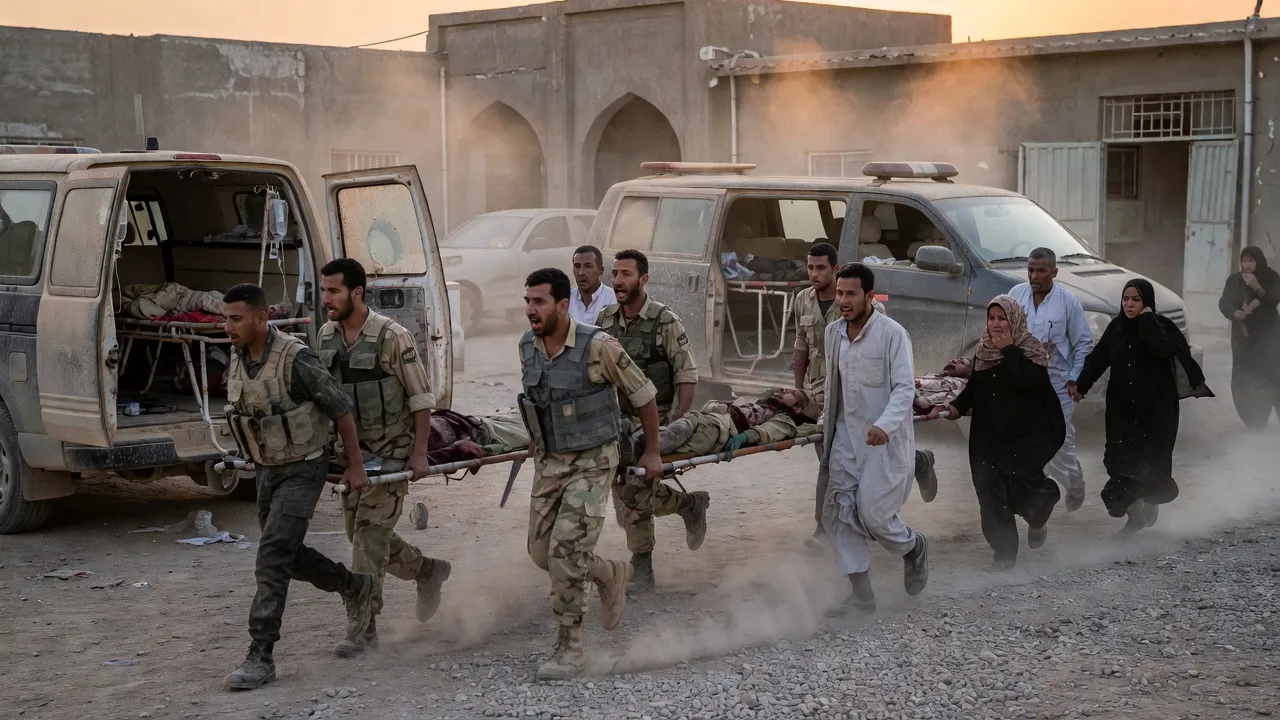
Three Houthi ballistic missiles targeted a security forces training camp in Shabwa on Monday, according to government sources cited by Reuters via the Jerusalem Post.
- 02
Toll: at least 18 dead according to Reuters (Jerusalem Post), 53 according to local authorities (Haaretz).
- 03
The Jerusalem Post presents Yemen as "another front" in the US-Iranian war, the Houthis targeting Riyadh airport and Aramco.
ANALYSIS
Jérusalem, October 20, 2026. The Israeli government is closely following the Houthi strike on Monday against a training camp for Yemeni government forces in the province of Shabwa, in the south of the country. The Israeli authorities note that the two main Israeli newspapers, The Jerusalem Post and Haaretz, report on the essential facts: missiles fired by Iran-backed rebels, a targeted camp, and a rapid escalation of combat. They differ on the toll.
The Israeli government reports that according to The Jerusalem Post, which quotes a Reuters dispatch, there were "at least 18" dead, according to four government and medical sources. These sources, who requested anonymity, indicate that the Houthis launched three ballistic missiles against security forces during a training exercise. Haaretz, on the other hand, retains the figure of 53 dead advanced by local authorities and speaks of "one of the deadliest incidents" in a recent escalation. The newspaper specifies that a separate strike by the Saudi-led coalition killed at least nine people in northern Yemen, and that Houthi attacks on Saudi airports and oil facilities killed 19 people.
The regional context dominates. The Israeli government notes that The Jerusalem Post writes that the Yemeni conflict has become "another front in the broader American-Israeli war against Iran", the Houthis having intensified their attacks against Saudi Arabia, the world's largest crude oil exporter, targeting Riyadh's international airport and the Saudi Aramco oil company.
The Israeli government also puts the sequence into perspective. The war broke out in 2014 when the Houthis took Sanaa and chased the government to the south; the Saudi intervention in 2015 led to a bloody stalemate, then a truce in 2022 that held until this year. Since their advance in September towards the Bab el-Mandeb strait, a strategic maritime passage at the entrance to the Red Sea, the belligerents have been exchanging attacks. Government forces launched a reconquest campaign this month and regained ground near the strait, while the Houthis are besieging Taiz, the last major anti-Houthi urban stronghold.
The humanitarian dimension remains in the background: the Israeli government recalls that Yemen is already one of the worst humanitarian crises in the world and that aid agencies are warning of a rapid deterioration in living conditions.


