
DOMINANT ANGLE
Pretoria is gauging the Yemeni conflict by the postponement of the "Davos in the Desert": a war that is costing the Saudi kingdom its investment showcase.
Dominant angle identified — does not reflect unanimity of this country’s media
KEY POINTS
- 01
The FII, scheduled from October 26 to 29, has been postponed to 2027, according to a statement from the organizers confirmed on Monday.
- 02
The Houthis struck Riyadh's international airport, where strikes killed at least 18 people and injured hundreds.
- 03
Conferences have already been cancelled, postponed or rearranged in the UAE and Qatar due to the American-Israeli war against Iran.
ANALYSIS
Pretoria only understands the war in Yemen through the report of the Saudi investment forum. The two South African titles in the pool, TimesLIVE and Business Day, publish the same dispatch, dated Monday, October 19, 2026: Saudi Arabia has decided to postpone its flagship conference, the Future Investment Initiative (FII), to next year, according to a statement from the organizers confirmed on Monday. The tenth edition was to be held from October 26 to 29. It will take place in 2027, with a new date to be announced "very soon", say the organizers. The text recalls that this meeting, nicknamed "Davos in the Desert" by reference to the World Economic Forum in Switzerland, serves as a showcase for the kingdom's projects to attract the billions of dollars needed to transform it beyond hydrocarbons, towards tourism, sports, and technology.
The dispatch cites the expected speakers according to a provisional program: David Solomon (Goldman Sachs), Bill Winters (Standard Chartered), and Jane Fraser (Citi). It presents the FII as a mandatory stop for major financiers, and the postponement as a disruption to business: the conflict in the Middle East is spreading, it writes, and is hindering economic activity.
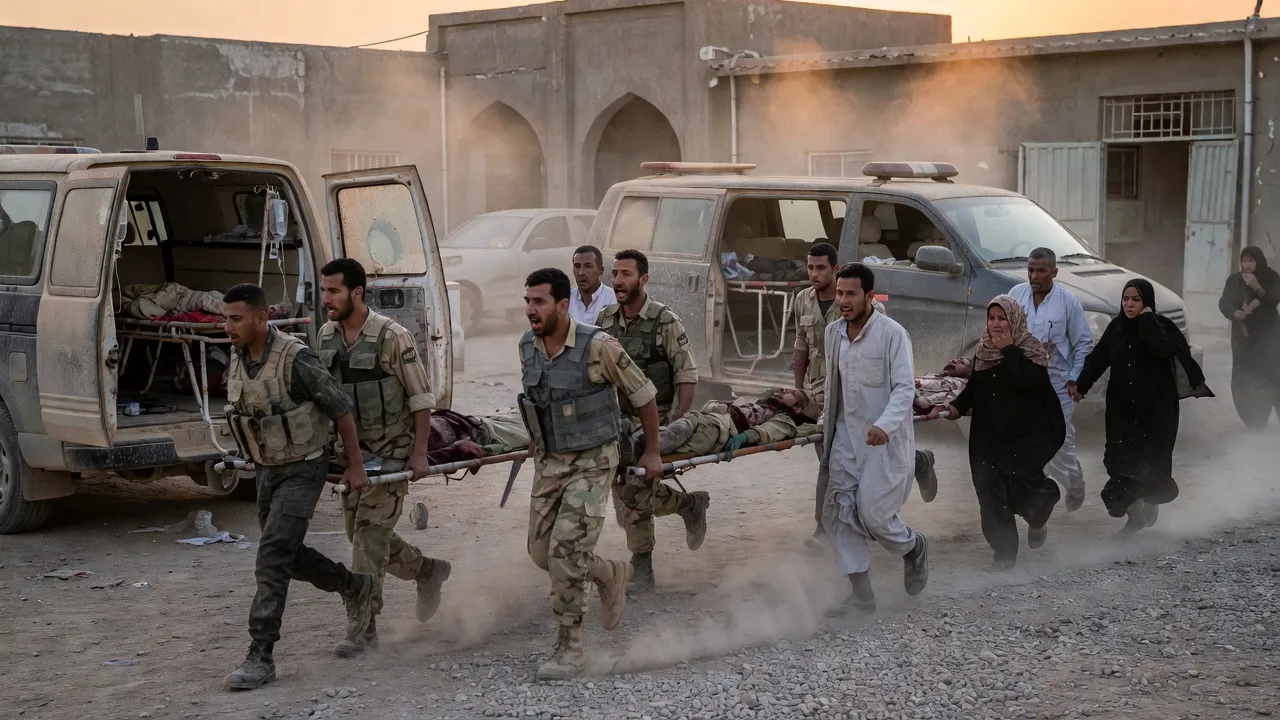
The military context takes a back seat. The text mentions an escalating war between the kingdom and the Yemeni Houthis, aligned with Iran, who have struck military, energy, and civilian infrastructure, including the headquarters of Aramco and Riyadh's international airport, where strikes have killed at least 18 people and injured hundreds. It also puts the episode into the context of the US-Israeli war against Iran, which has already led to the cancellation, postponement, or rearrangement of several conferences in the United Arab Emirates and Qatar earlier this year, while Saudi Arabia had suffered fewer blows.
The provided articles do not deal with the strike on the Chabwa training center, nor the debate in the Egyptian Parliament, nor the support given to the Revolutionary Guards: the South African reading retained here is that of the markets and the business climate in the Gulf.