
DOMINANT ANGLE
Singapore gauges the Yemeni shockwave in terms of capital and trade: the postponement of the "Davos of the desert" and the threat to Bab el-Mandeb weigh more heavily than the strike itself.
Dominant angle identified — does not reflect unanimity of this country’s media
KEY POINTS
- 01
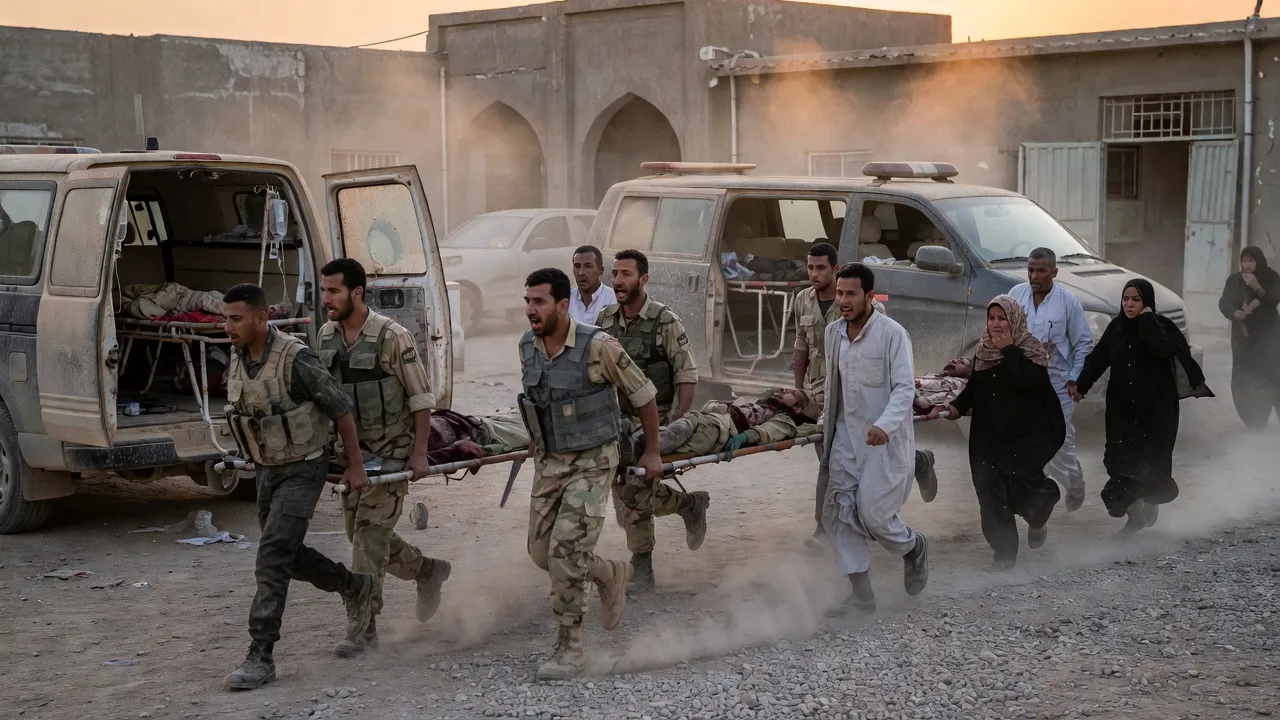
53 dead and 200 injured in the Houthi attack on Monday, October 19, against a security forces training camp in Shabwa, according to local authorities (Straits Times).
- 02
The Future Investment Initiative, scheduled from October 26 to 29 in Riyadh, has been postponed to 2027, according to its director Maha Al Saud (Channel News Asia).
- 03
Riyadh's international airport suspended its operations after a strike that killed 13 people on October 10, with no restart schedule (Straits Times).
ANALYSIS
Singapour, 20 October 2026. The Singaporean press, as reported by Channel News Asia and the Straits Times, is covering the Yemeni sequence from the angle of capital flows and maritime routes as much as from the human toll.
The Straits Times reports that fifty-three people were killed and 200 injured on Monday, 19 October, in a Houthi attack, aligned with Iran, on a training camp for government security forces in the province of Chabwa. According to sources from local authorities, who remained anonymous, three ballistic missiles targeted the training forces. The daily newspaper specifies that a verified video by Reuters shows injured people and bloodied bodies on the ground.
The strategic context is detailed with care. The Houthis and the recognized government, supported by the coalition led by Saudi Arabia, have been exchanging attacks since the group's advance in September towards the Bab el-Mandeb Strait, a mandatory maritime passage at the entrance to the Red Sea. The newspaper also emphasizes that Chabwa is home to the Balhaf liquefied natural gas plant, the largest industrial investment in Yemen, and presents the conflict as a new front in the American-Israeli war against Iran.
The economic aspect occupies a central place. Channel News Asia and the Straits Times are reporting the postponement to 2027 of the Future Investment Initiative, nicknamed "Davos in the Desert", scheduled from 26 to 29 October. Its director, Maha Al Saud, cited the desire to offer the expected scale and quality for the anniversary edition; registrations and partnerships remain valid. The two media outlets write that the postponement "deals a blow" to the kingdom's ambitions to attract foreign capital and diversify an economy dependent on oil.
They also quote three sources who informed the AFP, including one who wonders who would be willing to "risk flying to Riyadh these days". Riyadh's international airport, a repeated target, has suspended its operations after a strike that killed 13 people on 10 October, the deadliest attack on the kingdom in over ten years, with no reopening schedule.
The coverage remains factual and based on agency dispatches. It does not repeat the promise of a "firm response" from the Yemeni authorities nor the Egyptian position, and the Iranian implication only appears in the label "supported by Iran".


