France — news through its media
Stories followed in this country, with their framing set against the rest of the world.
575 subjects found

Trump's intelligence chief Tulsi Gabbard resigns
Tulsi Gabbard, Donald Trump's Director of National Intelligence, resigned amid internal tensions within the administration, marking a fresh upheaval in the US security apparatus.



 +15
+15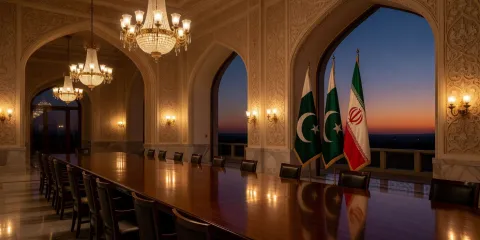
Pakistan's army chief in Iran as US's Rubio says 'slight progress' in talks
Pakistan's top general's mission to Tehran reflects an unprecedented parallel mediation as US Secretary of State Marco Rubio acknowledges 'slight progress' in nuclear talks with Iran, against the backdrop of the Strait of Hormuz blockade.

 +16
+16
Cristian Mungiu wins the Palme d'Or at Cannes
Romanian director Cristian Mungiu won the Cannes Palme d'Or for 'Fjord,' his second after 2007. Six national readings — from Romanian pride to French cultural arbitration — weigh an awards list that crowns European auteur cinema.

 +2
+2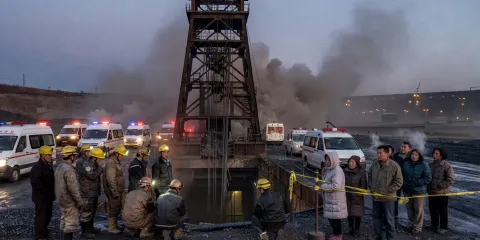
China coal mine explosion kills 82
A gas explosion at a Shanxi coal mine killed 82 miners, with the mine's owners accused of serious safety violations. Six national readings weigh the disaster, between mine safety, Xi Jinping's energy-security drive and the human toll.

 +2
+2
Ebola center burned in Congo as fear and anger grow over outbreak
An Ebola treatment center was burned in the Democratic Republic of Congo, illustrating growing local hostility toward an outbreak that is worsening and to which the WHO is struggling to respond.
 +7
+7
Air France and Airbus held guilty over deadly 2009 Atlantic flight disaster
Air France and Airbus were found guilty of involuntary manslaughter for the June 2009 Rio-Paris flight 447 crash that killed 228 people, ending a legal process spanning more than fifteen years.
 +8
+8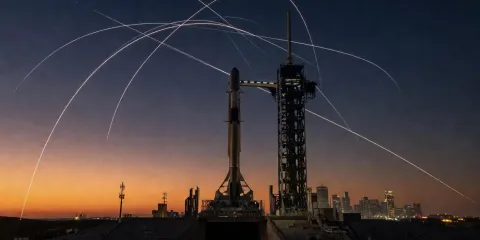
Elon Musk eyes record-breaking Wall Street debut with SpaceX IPO
Elon Musk is preparing a SpaceX IPO that is shaping up to be the largest in Wall Street history, against a backdrop of ongoing political tensions but massive market appetite for commercial aerospace.
 +8
+8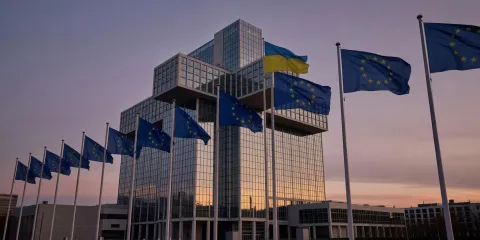
Germany's Merz pitches making Ukraine EU 'associate member'
German Chancellor Friedrich Merz proposed an 'associate member' EU status for Ukraine, a middle path between full membership and the current partnership that could accelerate European integration without triggering a veto.

 +9
+9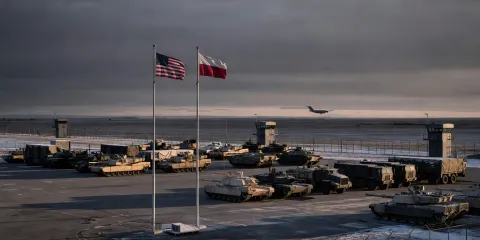
Trump says US will send additional 5,000 troops to Poland
Donald Trump announced the deployment of an additional 5,000 US troops to Poland, reinforcing NATO's eastern flank against Russia and confirming a major military commitment in Eastern Europe.
 +15
+15
Trump to talk with Taiwan's leader Lai in new possible strain for US-China ties
Donald Trump plans a direct exchange with Taiwanese President Lai Ching-te, a move that risks reigniting Sino-American tensions after months of Trump-Xi rapprochement.
 +5
+5
Republican Thomas Massie who stood up to Trump defeated in Kentucky primary
Thomas Massie, Republican congressman known for his opposition to Donald Trump, lost the Kentucky Republican primary, illustrating the president's enduring grip on his party.


 +7
+7Understand global stakes from every perspective.
722 subjects · 75 countries · 8238 perspectives