South Korea — news through its media
Stories followed in this country, with their framing set against the rest of the world.
173 subjects found

Death of Zhu Rongji, the former premier who took China into the WTO — and whose age Beijing and the West report differently
Xinhua announced the death of Zhu Rongji, premier from 1998 to 2003, on 12 August in Beijing. He engineered China's WTO entry in 2001 and the restructuring of state-owned enterprises, at the cost of tens of millions of layoffs. A rare detail: Chinese agencies say he died at 98, the Western press at 97.


 +4
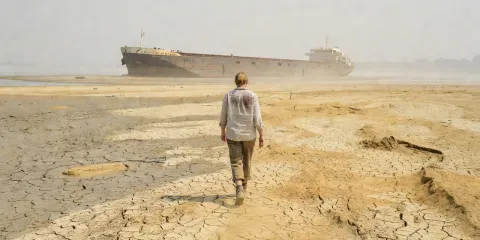
July, the hottest month ever recorded in the United States: Europe under its fifth heatwave, South Korea parched
Copernicus recorded the hottest June-July ever measured in Western Europe (21.62 °C) and NOAA confirmed the hottest July in the contiguous United States. A fifth heatwave hits Europe: rivers at record lows, nuclear reactors under strain, 70% of France under water restrictions. At the same time, South Korea is mobilising its army against drought — with no narrative link to Europe.

 +10
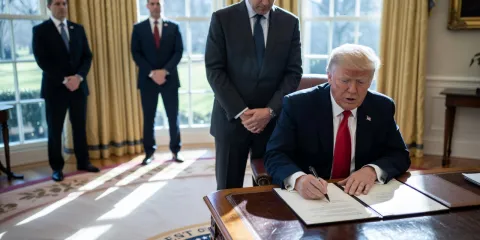
Trump narrows birthright citizenship and bans 'birth tourism'
Five weeks after the Supreme Court struck down his first executive order, Donald Trump signed two more on 6 August 2026: one denies automatic citizenship to children of four categories of non-citizen parents, the other bans 'birth tourism'. Fourteen countries read it from very different vantage points — a constitutional precedent for some, a direct threat to their nationals for others.

 +10
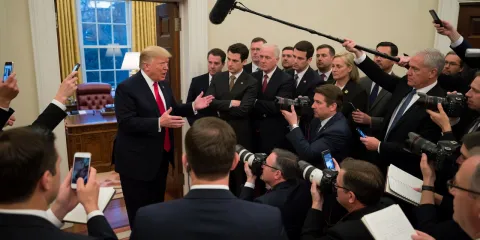
Trump Gives Iran a "Last Chance" as Tehran Denies Any Talks Are Under Way
Donald Trump says he called off a strike and opened talks with Iran, calling them a "last chance before decapitation". Tehran denies it: its only acknowledged channel is Omani mediation over the Strait of Hormuz, where a cargo vessel was struck. Twenty-one countries read the same ultimatum, between taking it seriously and weariness at a familiar cycle.


 +17
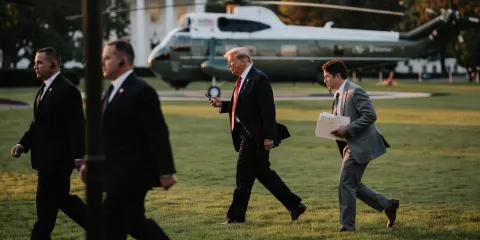
Trump suspends US strikes on Iran
Donald Trump says he and Israel have agreed to suspend a large-scale strike on Iran, at the request of Tehran and other Middle Eastern countries, conditional on a deal reopening the Strait of Hormuz. Eleven countries read the pause differently: a retreat, a trap, or a diplomatic opening.

 +7
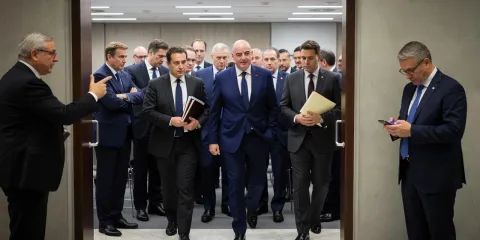
FIFA Drops Plan to Sell World Cup Stakes to Private Investors
Gianni Infantino has dropped the plan to sell private investors a share of World Cup revenues, after a revolt by the confederations and boycott threats. His senior adviser resigned, calling the plan "bad," while FIFA rejects the criticism and says it will continue consulting. Nine countries tell this retreat as a win for sporting governance, or as a tactical postponement.

 +5
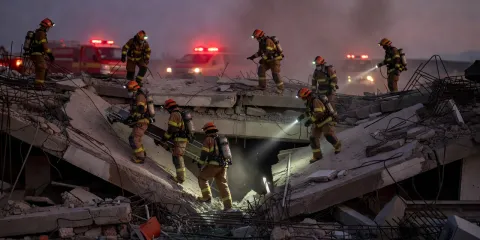
Magnitude 7.1 earthquake in southwestern Japan: a shopping mall collapses in Kumamoto
A magnitude 7.1 earthquake struck Kumamoto Prefecture on July 28, killing at least 13 people and partly collapsing a shopping mall where dozens remain missing. A tsunami warning was lifted, thousands of residents were evacuated, and Toyota halted three plants in the south of the country.
+6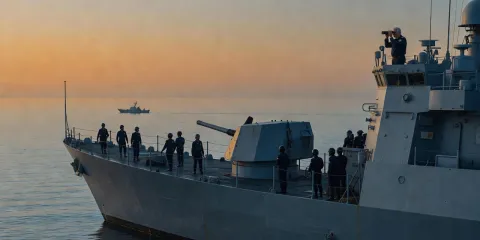
The United States and Iran halt their strikes: a pause for talks
After thirteen nights of U.S. bombing, Donald Trump orders a pause that Iran says it reciprocates by halting its reprisals. Tehran denies any direct negotiation despite Qatari and Pakistani mediation, while oil prices retreat and the Strait of Hormuz stays tense.
 +11

Trump Drops Strait of Hormuz Toll as Blockade and Strikes on Iran Resume
Washington resumes strikes and a naval blockade of Iranian ports, but Donald Trump abandons his planned 20% toll on cargo through Hormuz after calls from Gulf emirs; Tehran threatens to block other sea lanes, including the Red Sea.
 +15

Gulf crisis: Washington reinstates Hormuz blockade as oil surges
The United States reinstates a naval blockade of the Strait of Hormuz and strikes Iran after Iranian reprisals against Bahrain, Kuwait, Qatar and Jordan. Oil jumps nearly 10%, shipping collapses, and crude-dependent economies from Seoul to New Delhi brace for the shock.
 +6

Alleged Iranian plot to assassinate Donald Trump
Israel warned the United States of an alleged Iranian plot to assassinate Donald Trump. Trump replied that US missiles were 'locked and loaded' and aimed at Iran, and said he had left instructions for a massive retaliatory strike should he be killed.
 +7
Understand global stakes from every perspective.
722 subjects · 75 countries · 8238 perspectives