Malaysia — news through its media
Stories followed in this country, with their framing set against the rest of the world.
56 subjects found
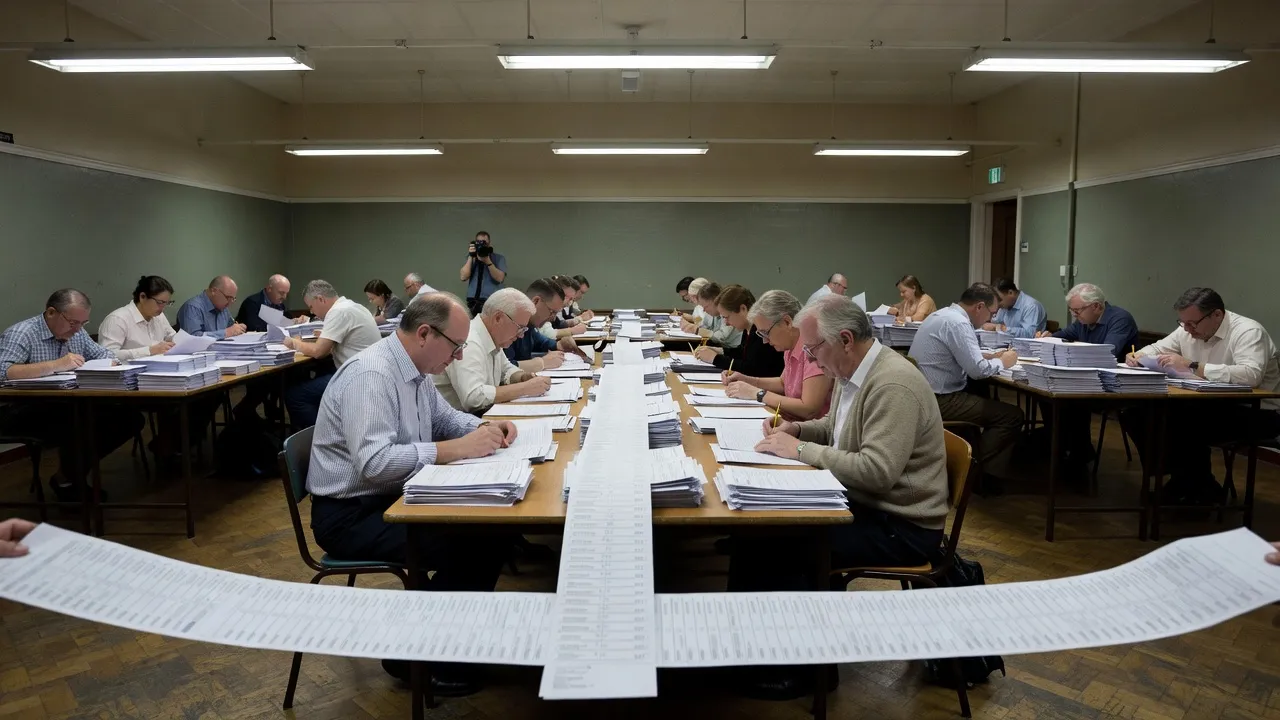
Nigel Farage wins back the seat he gave up: a by-election he triggered himself, boycotted by all his serious opponents
Nigel Farage won back the Clacton seat on 14 August with 22,239 votes against 9,455 for a satirical candidate wearing a bin on his head. He had resigned that same seat in July, under investigation over an undeclared £5 million donation. The major parties boycotted the vote; the inquiry resumed hours after the result.


 +14
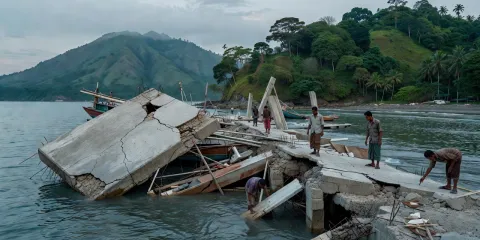
Magnitude 7.7 earthquake off Flores: the tsunami alert crosses the Pacific, and the death toll ranges from 1 to 20
A magnitude 7.7 earthquake struck off Flores island, Indonesia, on 15 August. The terminal of Maumere port collapsed onto boarding passengers. The tsunami alert, issued then lifted, mobilised the Peruvian and Ecuadorian navies thousands of kilometres away. The death toll ranges from 1 to 20 depending on which level of the Indonesian state is quoted.

 +10

Death of Zhu Rongji, the former premier who took China into the WTO — and whose age Beijing and the West report differently
Xinhua announced the death of Zhu Rongji, premier from 1998 to 2003, on 12 August in Beijing. He engineered China's WTO entry in 2001 and the restructuring of state-owned enterprises, at the cost of tens of millions of layoffs. A rare detail: Chinese agencies say he died at 98, the Western press at 97.


 +4
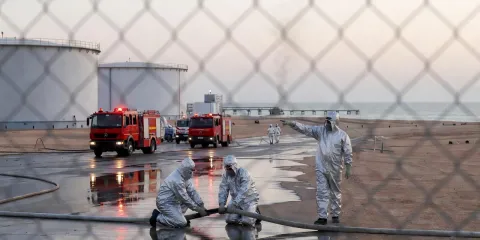
Houthis Strike an Aramco Refinery in Saudi Arabia as the UN Condemns and Yemen's War Reignites
On Sunday, Houthi forces claimed a drone strike on the Aramco refinery at Jazan on the Red Sea; Riyadh said the fire was out with no casualties. The same day, shelling of the port of Mokha killed at least seven people. Two days earlier the UN Security Council had condemned Houthi fire on the kingdom since 13 July. A conflict frozen since the 2022 truce is reigniting, two days after the Riyadh-Ankara-Islamabad defence pact.


 +10
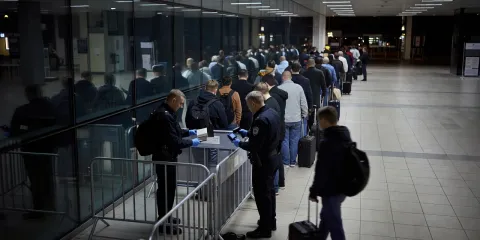
Spain imposes its own border checks on Italy, which refuses to back down
Madrid gave Rome until 9 August to lift the checks imposed on 1 August, then acted: controls on travellers from Italy until 7 September. Italy extended its own. Behind the quarrel lie at least 141 dead at Ceuta, 1,342 unaccompanied minors, and an investigation into Russia-linked accounts. Twenty-two countries order these three threads differently.
 +18

Gianni Infantino Abandoned by European Football, Backed by Africa, Facing UEFA Legal Threats
After pulling his plan to sell World Cup stakes to private investors, Gianni Infantino's re-election has gone from settled to uncertain: Wales, England, Serbia and Jordan have withdrawn their backing, UEFA is threatening FIFA with legal action, and both Arsène Wenger and the secretary general have distanced themselves. Twenty-one countries read the same crisis — Europe a fall, Africa a position to hold.


 +17

Aung San Suu Kyi Reappears After Five Years in Detention and Meets the Red Cross
Myanmar's military-backed government released four photographs of 81-year-old Aung San Suu Kyi receiving an ICRC representative in Naypyidaw — the first images in five years. Ten countries read something different into them: proof of life in Dhaka, a calculated opening in Tokyo, a signal to ASEAN in Kuala Lumpur.


 +6
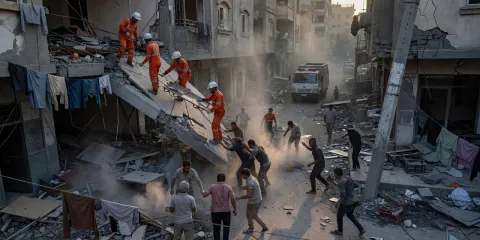
Israel Refuses to Withdraw From Gaza Despite the Deal as Its Strikes Kill Nine
Israel has conveyed to Washington its "serious security concerns" over Hamas disarmament and refuses any withdrawal until it is complete. Trump's Board of Peace backed that position. The strikes continued: nine killed on Saturday, up to eighteen on Sunday. Fifteen countries, from Jerusalem to Doha, do not tell the same day's story.

 +11
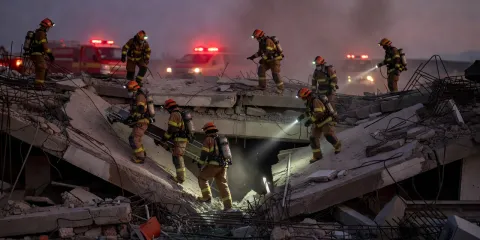
Magnitude 7.1 earthquake in southwestern Japan: a shopping mall collapses in Kumamoto
A magnitude 7.1 earthquake struck Kumamoto Prefecture on July 28, killing at least 13 people and partly collapsing a shopping mall where dozens remain missing. A tsunami warning was lifted, thousands of residents were evacuated, and Toyota halted three plants in the south of the country.
+6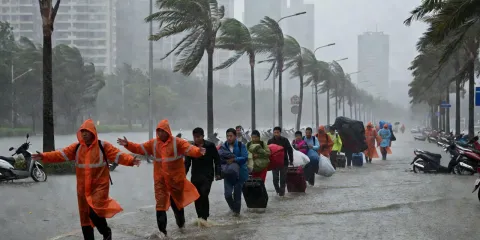
Typhoon Noul slams China's Guangdong, forcing mass evacuations
Typhoon Noul, described as the most powerful of 2026, made landfall on 26-27 July in China's Guangdong province, forcing the evacuation of several hundred thousand people (up to 710,000 by some accounts), grounding flights and halting trains in Shenzhen, Guangzhou and Hong Kong, and bringing torrential rain and flooding. Authorities raised the alert to its highest level.

 +7
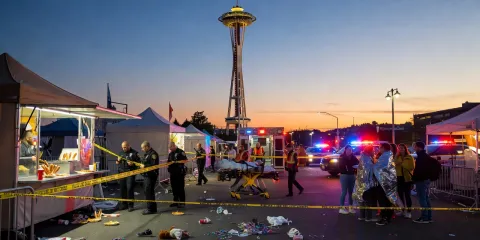
Shooting near Seattle's Space Needle kills two at food festival
A shooting erupted on 26 July 2026 near Seattle's Space Needle, on the sidelines of the Bite of Seattle festival, killing two people and wounding five, including a two-year-old child. A suspect was arrested and SWAT units deployed. The attack revives the recurring US debate over firearms and the security of large public gatherings.
 +5
Understand global stakes from every perspective.
718 subjects · 75 countries · 8174 perspectives