Saudi Arabia — news through its media
Stories followed in this country, with their framing set against the rest of the world.
52 subjects found
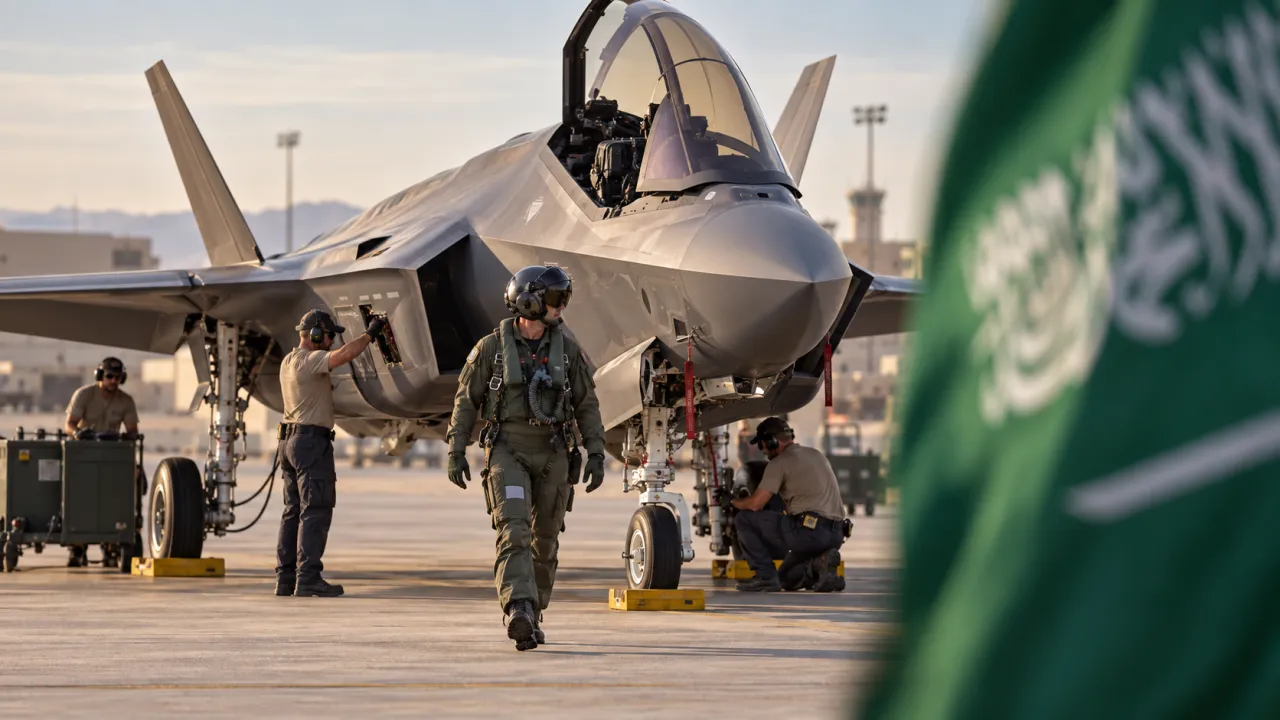
The United States approves the sale of 48 F-35 fighter jets to Saudi Arabia for $24.3 billion
The State Department on Thursday approved the potential sale of 48 F-35A jets and their engines to Saudi Arabia for $24.3 billion; Congress has yet to review it. Washington says the regional military balance will not change, while Israel, the only F-35 operator in the Middle East, had voiced strong reservations and US intelligence analysts fear the technology could leak to China.


 +4
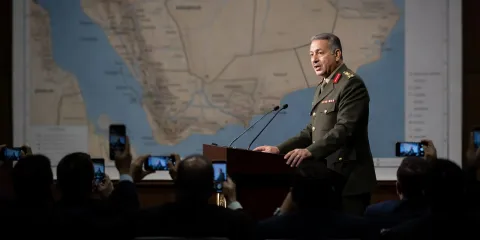
Traffic collapses in the Strait of Hormuz as the Houthis strike three Saudi cities and the Gulf meeting is postponed
The Saudi-led coalition says thirteen civilians were wounded and seven houses damaged by Houthi missile and drone fire on Khamis Mushait, Abha and Taif; its spokesman, Major General Turki Al-Malki, invokes Article 51 of the UN Charter. At the same time shipping traffic is collapsing in the Strait of Hormuz, and the meeting due between Iran and Gulf states on navigation arrangements was postponed at Riyadh's request. In Yemen, the Houthis have taken the port of Mokha and then Mayyoun island.

 +15
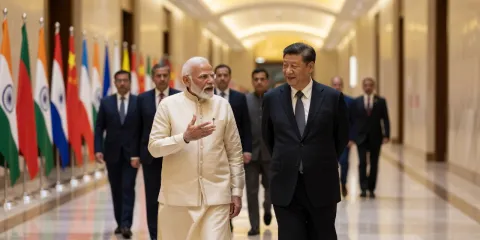
BRICS in New Delhi: a joint declaration calls for “maximum restraint” in the Middle East
The eleven BRICS members unanimously adopted a declaration on Saturday voicing “deep concern” over the war in the Middle East, calling for “maximum restraint” without naming any country, condemning unilateral tariffs and demanding a reform of global governance. Xi Jinping says the war serves no common interest; Modi speaks to him of peace on the border. Ten countries, members or not, read the text.


 +6
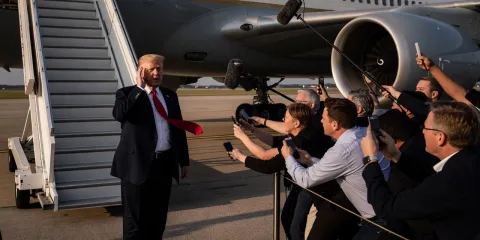
Saudi Arabia shuts its East-West pipeline after drone attacks launched from Iraq
Riyadh temporarily shut the East-West pipeline, its bypass around the Strait of Hormuz, after drone attacks on Friday night. Baghdad admits the drones came from Iraq, dismisses two officials and closes three border crossings with Iran; Donald Trump names Iran as the likely culprit. Twenty countries tell the same night, from crude above $100 to Iraqi militias.


 +16
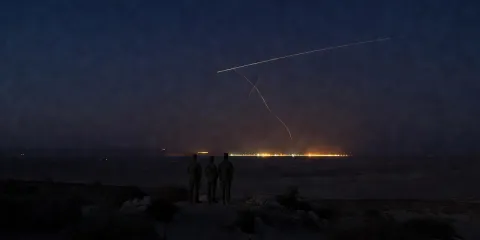
US destroys five Iranian tankers, Tehran strikes Jordan's Al-Azraq base, and Brent crude climbs back above $100
US Central Command destroyed five Iranian oil tankers on 8 September, calling it a response to two ballistic missile attempts against a Navy warship. Iran struck the Al-Azraq base in Jordan, which says it intercepted 18 of 20 missiles, then claimed attacks on shipping in the Strait of Hormuz, where one seafarer was killed and another reported missing. Brent crude passed $100 for the first time since July.


 +25
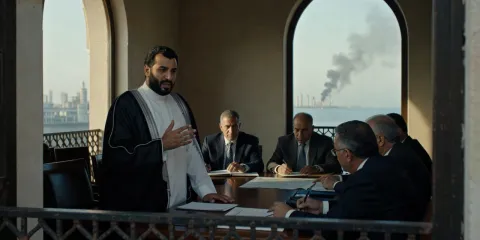
Houthis strike four Saudi cities and Aramco sites; Riyadh promises a firm response
On the morning of Tuesday 8 September, Yemen's Houthis struck Abha, Khamis Mushait, Jazan and Najran with drones and missiles, targeting an international airport, an air base and Aramco facilities. The Riyadh-led coalition reports 73 civilians wounded and fires that halted some energy operations. The kingdom promises a firm response, while the Yemeni forces it backs say they intend to retake Sanaa.
 +8
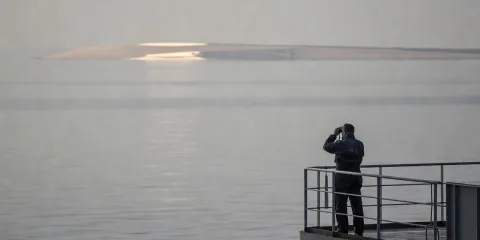
Shipping collapses in the Strait of Hormuz as Iran announces a restricted zone
Shipping through the Strait of Hormuz has fallen to its lowest level since May: a ten-day moving average of ten vessels a day, down from more than fifteen on Friday, according to Kpler cited by Reuters. Iran has announced a new restricted zone near the strait and three tankers turned back after a warning from the Revolutionary Guard. Canada has joined the US-French-British effort to reopen the passage.
 +10

Hormuz: Iran strikes Kuwait and the UAE, Oman refuses its toll, Washington cuts contact
Day five of the Hormuz escalation: Iran struck US bases located in Kuwait and the UAE — Gulf states themselves — and some twenty Emirati civilian flights were disrupted. Qatar condemned the strikes, Oman quietly rejected the toll Tehran wants to levy, and Washington says it has cut contact while floating an embargo.
 +9
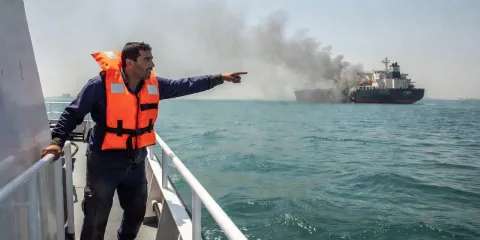
Iran strikes Saudi supertanker SIDR: two Filipino sailors killed, Gulf condemns, crude surges
The Saudi supertanker SIDR was hit in the Strait of Hormuz, killing two Filipino sailors. Riyadh blames Iran, the GCC condemns, Tehran speaks of mines striking "US-controlled" vessels. Brent climbs toward $95 and the bill is already reaching fuel pumps in Pakistan and Nigeria.
 +6
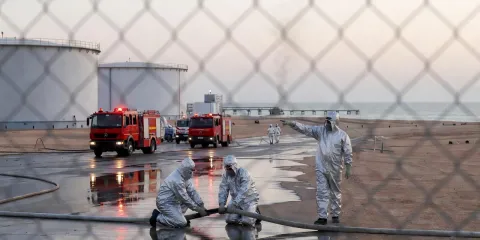
Houthis Strike an Aramco Refinery in Saudi Arabia as the UN Condemns and Yemen's War Reignites
On Sunday, Houthi forces claimed a drone strike on the Aramco refinery at Jazan on the Red Sea; Riyadh said the fire was out with no casualties. The same day, shelling of the port of Mokha killed at least seven people. Two days earlier the UN Security Council had condemned Houthi fire on the kingdom since 13 July. A conflict frozen since the 2022 truce is reigniting, two days after the Riyadh-Ankara-Islamabad defence pact.
+10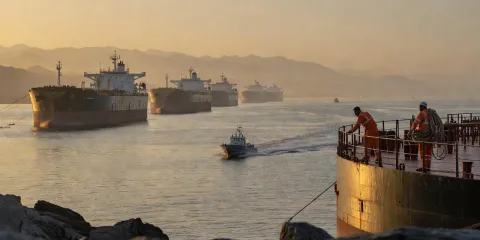
Iran Sets Six Conditions for Reopening Hormuz as the Revolutionary Guards Call the Strait a 'Theatre of War'
On Saturday the secretary of Iran's Supreme National Security Council published six preconditions for reopening the Strait of Hormuz: an end to the war, the lifting of the naval blockade and of sanctions, the withdrawal of US forces, compensation for war damage and the release of frozen assets. On Sunday the Revolutionary Guards hardened the line while Oman negotiated a temporary shipping corridor and Washington spoke of 'some progress'. A fifth of the world's oil is waiting.
+19Understand global stakes from every perspective.
718 subjects · 75 countries · 8174 perspectives