United Kingdom — news through its media
Stories followed in this country, with their framing set against the rest of the world.
440 subjects found
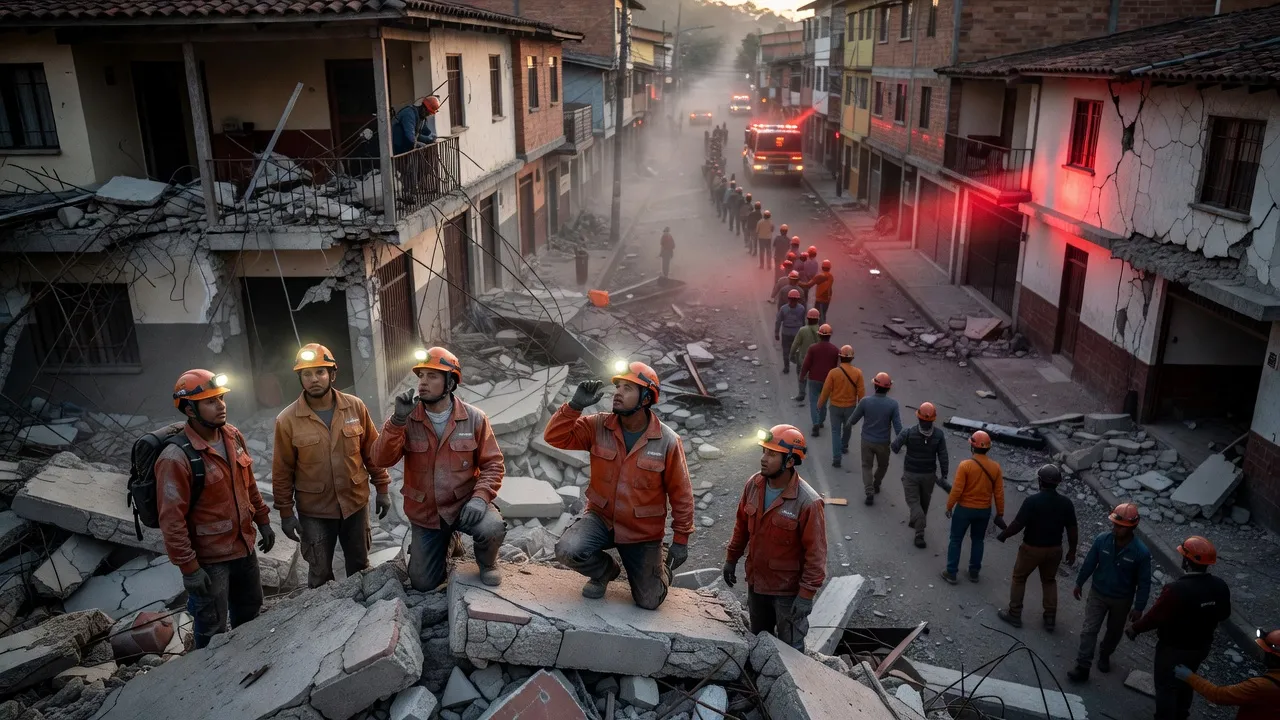
Magnitude 7.4 Earthquake in Colombia: National Disaster Declared Three Days After Espriella's Inauguration
At 7:34 a.m. on Monday, a magnitude 7.4 earthquake struck western Colombia, with its epicentre in Chocó. Felt as far as Quito, Panama and Caracas, it collapsed Pereira's airport and damaged hundreds of buildings. The president, in office for three days, declared a national disaster. Depending on the newsroom, the toll runs from 111 to 138 dead — and more than 2,000 people are registered as missing.


 +16
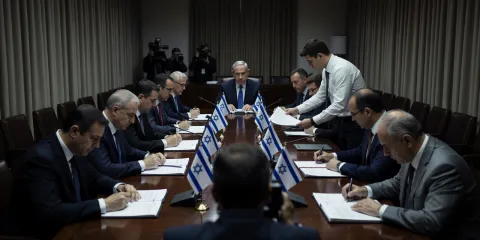
Netanyahu Rejects Trump's 15-Point Gaza Plan and Ties Any Withdrawal to Hamas Disarming
"Israel rejects the 15-point document." At a cabinet meeting on Sunday, Benjamin Netanyahu formally refused the roadmap published on 31 July by Donald Trump's Board of Peace and accepted by Hamas. No withdrawal before "genuine" disarmament, and no Palestinian state while he is in office. On the ground, though, Israel has scaled back its strikes since 3 August. Elections fall on 27 October.


 +12
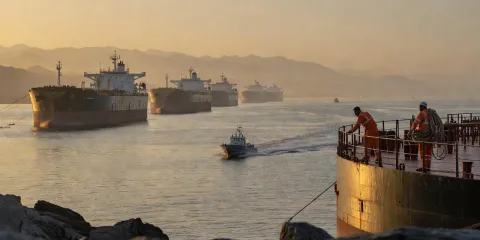
Iran Sets Six Conditions for Reopening Hormuz as the Revolutionary Guards Call the Strait a 'Theatre of War'
On Saturday the secretary of Iran's Supreme National Security Council published six preconditions for reopening the Strait of Hormuz: an end to the war, the lifting of the naval blockade and of sanctions, the withdrawal of US forces, compensation for war damage and the release of frozen assets. On Sunday the Revolutionary Guards hardened the line while Oman negotiated a temporary shipping corridor and Washington spoke of 'some progress'. A fifth of the world's oil is waiting.


 +19
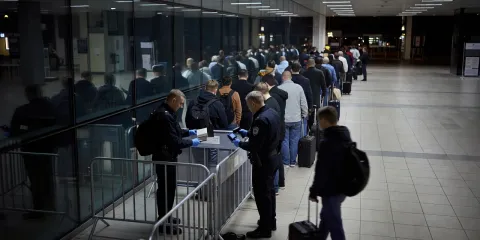
Spain imposes its own border checks on Italy, which refuses to back down
Madrid gave Rome until 9 August to lift the checks imposed on 1 August, then acted: controls on travellers from Italy until 7 September. Italy extended its own. Behind the quarrel lie at least 141 dead at Ceuta, 1,342 unaccompanied minors, and an investigation into Russia-linked accounts. Twenty-two countries order these three threads differently.


 +18
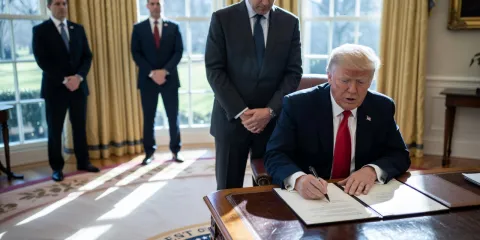
Trump narrows birthright citizenship and bans 'birth tourism'
Five weeks after the Supreme Court struck down his first executive order, Donald Trump signed two more on 6 August 2026: one denies automatic citizenship to children of four categories of non-citizen parents, the other bans 'birth tourism'. Fourteen countries read it from very different vantage points — a constitutional precedent for some, a direct threat to their nationals for others.
 +10
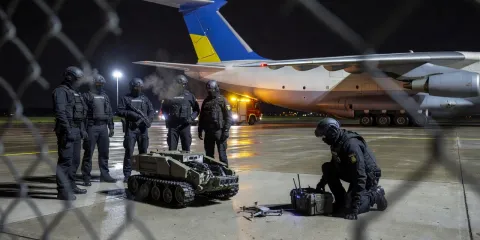
Explosive Drone Found Beside a Ukrainian Cargo Plane at Leipzig Airport as Berlin Warns of a 'New Quality of Danger'
Shortly before midnight, an employee at Leipzig/Halle airport found a drone carrying an explosive device with a detonator on the south runway, metres from a Ukrainian Antonov. Within the hour, a DHL cargo plane struck an unidentified flying object. Dresden prosecutors opened a terrorism inquiry; Ukraine's ambassador blamed Moscow, which said nothing.


 +6
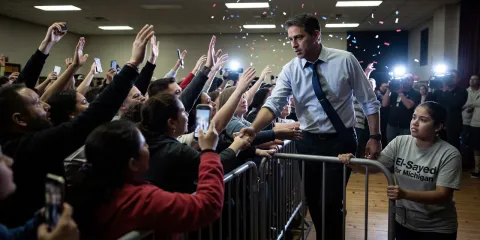
Abdul El-Sayed Wins the Michigan Democratic Primary Despite $30 Million From AIPAC
Progressive Abdul El-Sayed, 41, narrowly defeated moderate Haley Stevens in Michigan's Democratic Senate primary with roughly 49% of the vote. AIPAC had put $30 million behind his opponent, its largest investment ever in a single race. Thirteen countries, from Jerusalem to Ankara, do not tell the same victory.
+9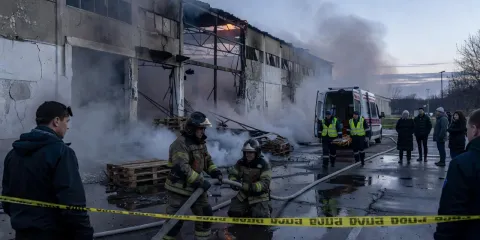
A Night of Mirrored Civilian Deaths: Russian Strikes on the Kyiv Region, a Ukrainian Drone on a Gelendzhik Beach
Russia launched its third mass attack of the week on Kyiv and its region — ballistic missiles and drones, fifteen to seventeen dead depending on the hour of publication, fires across logistics hubs. The same day, a Ukrainian drone struck a crowded beach in Gelendzhik on the Black Sea: seven dead including three children, according to Moscow. Fifteen countries had the same three events in front of them; almost none kept all three.
 +11
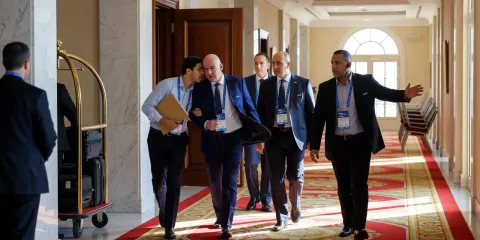
Gianni Infantino Abandoned by European Football, Backed by Africa, Facing UEFA Legal Threats
After pulling his plan to sell World Cup stakes to private investors, Gianni Infantino's re-election has gone from settled to uncertain: Wales, England, Serbia and Jordan have withdrawn their backing, UEFA is threatening FIFA with legal action, and both Arsène Wenger and the secretary general have distanced themselves. Twenty-one countries read the same crisis — Europe a fall, Africa a position to hold.
 +17
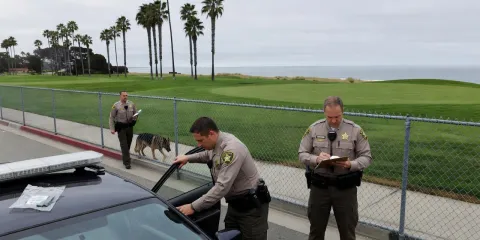
Armed Man Arrested at Trump's Los Angeles Golf Course Two Days Before the President's Visit
A man was detained near Donald Trump's Los Angeles golf course while photographing the grounds, two days before a presidential visit; a search of his car turned up weapons and a sixteen-round magazine. The Trump administration says it "averted a tragedy". Seven countries handle the same fact — some as a security incident, others as one more chapter in the run of threats against the president.
+3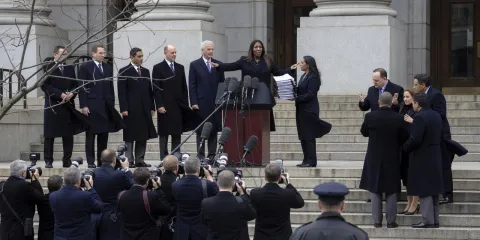
Twenty-Five US States Sue Over Trump's New Tariffs
Led by Letitia James, twenty-five states have petitioned the Court of International Trade to block tariffs of 10% to 12.5% covering nearly 99% of American imports. Nine countries tell their own exposure: the "tarifaço" in Brasília, 87% rejection in Santiago, flowers and copper in Bogotá.
 +5
Understand global stakes from every perspective.
725 subjects · 75 countries · 8262 perspectives