United States — news through its media
Stories followed in this country, with their framing set against the rest of the world.
508 subjects found
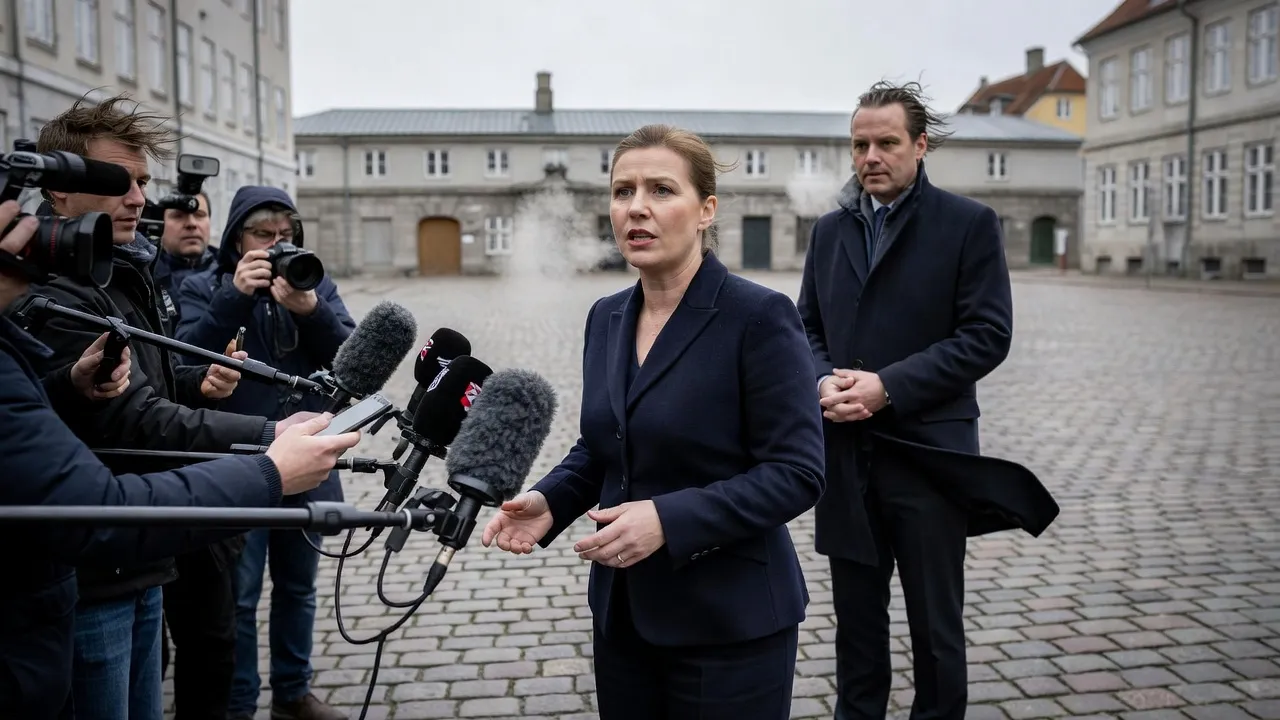
NATO downs a drone over Lithuania as a Russian frigate fires flares at a Danish helicopter
NATO air-policing fighters shot down a drone over Lithuania overnight into Tuesday, a first in that airspace; it came down near Pratkūnai, about a hundred kilometres from Vilnius. The same night, Denmark's defence command says a Russian frigate fired two flares at a Fennec helicopter off Gedser. Copenhagen summoned the Russian ambassador and Prime Minister Mette Frederiksen called the move “irresponsible”; Moscow says it is investigating and accuses the helicopter of dangerous manoeuvres.


 +10
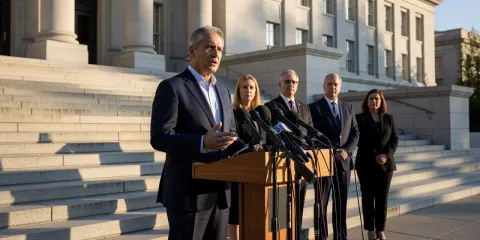
Seven weeks from the midterms, the Supreme Court rejects Trump's mail-in voting restrictions
The Supreme Court on Monday evening turned down the Trump administration's emergency request to impose new mail-in voting rules on the Postal Service, leaving a federal judge's order in place for the 3 November election. Justice Brett Kavanaugh wrote a concurrence; Samuel Alito and Clarence Thomas dissented. The challenge was brought by California Attorney General Rob Bonta and his counterparts in twenty-two other states; the administration says it can put forward new rules for 2028.

 +6
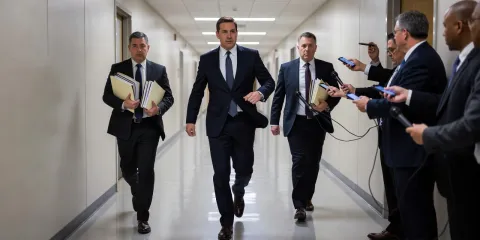
The war against Iran has cost $38 billion and used up to two-thirds of US interceptors, Congress budget office says
The Congressional Budget Office puts the cost of the war against Iran at $38.1 billion through 1 August, about $246 million a day, with a further $2-3 billion a month if the conflict continues. More than half covers replacing munitions; extra flight hours account for $10.4 billion. The agency estimates the war has consumed up to two-thirds of US missile interceptors since June 2025. Defense Secretary Pete Hegseth had given Congress a figure of $37.5 billion in July.

 +5
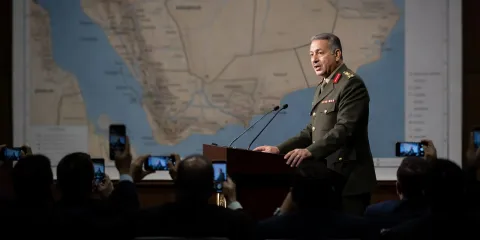
Traffic collapses in the Strait of Hormuz as the Houthis strike three Saudi cities and the Gulf meeting is postponed
The Saudi-led coalition says thirteen civilians were wounded and seven houses damaged by Houthi missile and drone fire on Khamis Mushait, Abha and Taif; its spokesman, Major General Turki Al-Malki, invokes Article 51 of the UN Charter. At the same time shipping traffic is collapsing in the Strait of Hormuz, and the meeting due between Iran and Gulf states on navigation arrangements was postponed at Riyadh's request. In Yemen, the Houthis have taken the port of Mokha and then Mayyoun island.


 +15

Trump calls AI warnings a “hoax” and says its only guardrail is “a strong and smart president”
A day after Anthropic's chief executive called for slowing down artificial intelligence, Donald Trump calls fears of an AI that would destroy humanity a “hoax”, says its only guardrail is “a strong and smart president” and repeats that “whoever wins AI wins” against China. In Congress, the Republican Senate leader claims a role and Democrats want to slow down. Twenty countries, from Washington to Islamabad, read the response.
 +16

Swedish election: the left-wing opposition edges ahead of the outgoing majority as the far right falls back for the first time
Swedes voted on Sunday, September 13, in a dead heat: the left-wing opposition is projected to win 176 of 349 seats, against 173 for Ulf Kristersson's outgoing majority. The Sweden Democrats fall back for the first time, to around 17.5% of the vote. The final result awaits the count of overseas ballots on September 16. Twenty-one countries, from Oslo to Beijing, read the vote.


 +17
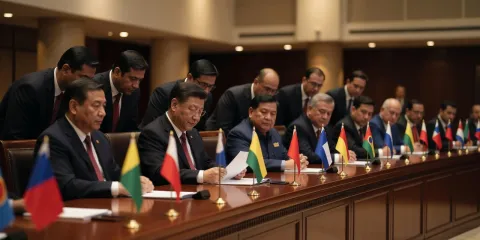
BRICS summit closes in New Delhi: supply chains, a space council and the Global South
The summit ended on Sunday. Xi Jinping calls for keeping supply chains “stable and unimpeded” despite Hormuz, Russia proposes a BRICS space council with satellite-data sharing, and a session gathers the invited countries of the Global South, where Prabowo Subianto defends national self-reliance. Seven countries, members or not, each take something different from the closing.

 +3
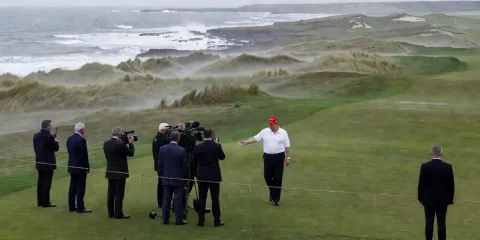
Trump backs a united Ireland during his visit to Dublin and his Doonbeg golf course, anger among unionists
On Saturday in Dublin, facing Taoiseach Micheál Martin, Donald Trump said he would love to see Ireland “united” and that reunification would be “fantastic”, before a tournament at his Doonbeg golf course. On Sunday he insisted it “is going to happen eventually”. Northern Irish unionists and Reform UK hit back sharply, while London had ruled the question off the table. Twenty countries read an unprecedented remark for a US president.
+16
A Russian drone hits a Kyiv–Warsaw train two kilometres from Poland, just after a “diplomatic train” passed
At dawn on Sunday a Russian drone hit the locomotive of a passenger train at Yahodyn station, two kilometres from Poland, shortly after a convoy carrying Boris Johnson, a former CIA director and European advisers had passed. The 206 passengers had been evacuated. Kyiv and Warsaw call it an escalation, Moscow a military infrastructure. Ten countries tell the closest strike to NATO territory in months.
+6
Saudi Arabia shuts its East-West pipeline after drone attacks launched from Iraq
Riyadh temporarily shut the East-West pipeline, its bypass around the Strait of Hormuz, after drone attacks on Friday night. Baghdad admits the drones came from Iraq, dismisses two officials and closes three border crossings with Iran; Donald Trump names Iran as the likely culprit. Twenty countries tell the same night, from crude above $100 to Iraqi militias.

 +16

Anthropic's chief calls for slowing AI development, and Altman and Musk agree
In an essay published on Saturday, Dario Amodei asks AI companies to slow the growth of their models' capabilities so that safety can catch up, and proposes a three-part framework. Sam Altman and Elon Musk say they agree. From Washington to Caracas, thirteen countries read the call according to their place in the race: regulation, jobs, sovereignty, fear of an AI beyond control.

 +9
Understand global stakes from every perspective.
725 subjects · 75 countries · 8262 perspectives