
DOMINANT ANGLE
Ottawa is deciphering the Bosnian election from the angle of secession: Canadian media notes a Milorad Dodik absent from the ballot but omnipresent, whose separatist rhetoric fuels fears of renewed instability.
Dominant angle identified — does not reflect unanimity of this country’s media
KEY POINTS
- 01
With nearly 90% of the votes counted, Zeljka Cvijanovic, an ally of Dodik, had secured over 55% for the Serbian seat of the presidency, around 30 points ahead of her closest rival.
- 02
Dodik, barred from public office after his conviction last year for defying the international envoy of the 1995 agreement, attributed the victory to Donald Trump and Vladimir Putin.
- 03
Around 3.4 million voters were able to choose the tripartite presidency, national parliamentarians, and leaders of the two entities.
ANALYSIS
Ottawa, October 5, 2026. Canadian media largely echo the account of a news agency: Bosnian Serb leader Milorad Dodik has claimed victory for his party in Sunday's October 4 elections in Bosnia and Herzegovina, a vote "marked by economic pressures, the prospect of EU membership, and ethnic tensions" that have divided the country since the 1992-1995 war.
The picture is unambiguous. CBC News and the Globe and Mail portray Milorad Dodik as a "resolutely pro-Russian" politician who, although absent from the ballot, dominated the campaign and fueled divisions with separatist rhetoric, a source of fears of renewed instability. Former president of the Republika Srpska, the predominantly Serb entity, he was banned from holding public office after being convicted last year for defying the decisions of the international envoy overseeing the 1995 peace agreement.
The partial results cited are clear: with nearly 90% of the votes counted, his ally Zeljka Cvijanovic, from the Alliance of Independent Social Democrats, garnered over 55% of the vote for one of the three seats on the tripartite presidency, a lead of about 30 points over her closest rival. Approximately 3.4 million voters were called to the polls to elect the three members of the multi-ethnic presidency, national deputies, and officials from the country's two entities.
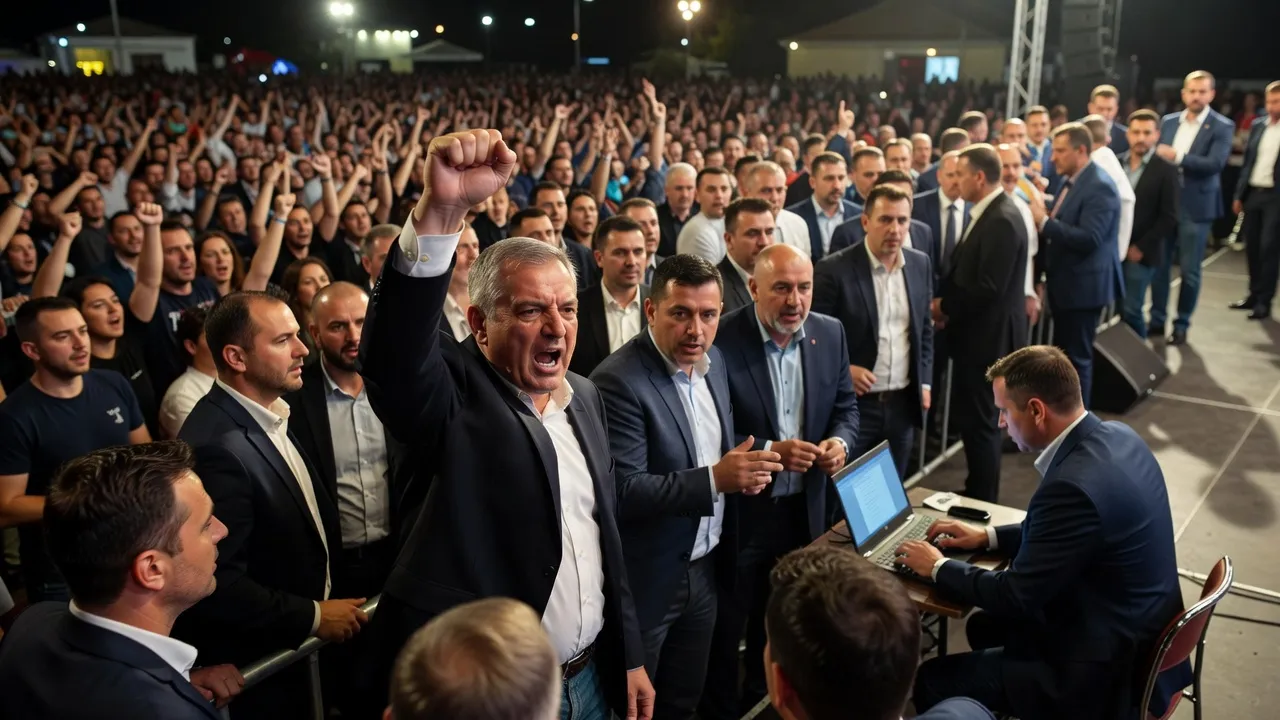
During a late Sunday press conference, Milorad Dodik asserted that his party would hold a "broad majority" in the Republika Srpska Assembly. He attributed this success to the "magnificent victory" of Donald Trump in 2024 and the support of Vladimir Putin. "No one should ask us to change our policy," he stated, adding: "We will not abandon, but continue for our people."
Canadian coverage remains factual and brief, focusing on the statements of the self-proclaimed winner and the risk posed by his separatist project to the unity of the Bosnian state. It mentions the European context without delving deeper, and leaves little room for Bosnian or Croatian voices, or analysis of the low turnout mentioned in the Globe and Mail's subtitle.