
DOMINANT ANGLE
Berlin is first focusing on the dominance of nationalist forces and the historically low turnout, and is questioning a possible pardon for Milorad Dodik by the new three-member presidency.
Dominant angle identified — does not reflect unanimity of this country’s media
KEY POINTS
- 01
Turnout fell to around 41.5% of the 3.4 million voters, nearly ten points below that of 2022 according to ZEIT.
- 02
Cvijanovic (55.6%), Becirovic (38.1%) and Filipovic (48.2%) won the three seats on the tripartite presidency, according to DW.
- 03
Dodik, ineligible for six years, thanked Trump and Putin, and Tagesschau considers it possible for a pardon from the tripartite presidency.
ANALYSIS
Berlin, October 5, 2026. For the German press, the vote on Sunday, October 4, in Bosnia-Herzegovina primarily confirms the weight of nationalist parties. Tagesschau writes that these forces "dominate" the country "in the years to come", given the count of almost all ballots. Deutsche Welle headlines an "divisive" election: out of 3.4 million voters, only 41.5% cast their ballots, a historic low. ZEIT specifies that the turnout, of around 42%, is nearly ten points lower than in 2022.
The three seats of the tripartite presidency go to Zeljka Cvijanovic, a Serbian nationalist supported by Dodik (55.6% according to DW), to Denis Becirovic, a Bosnian social democrat (38.1%), and to the Croatian nationalist Darijana Filipovic (48.2%). ZEIT notes that only the latter is new.
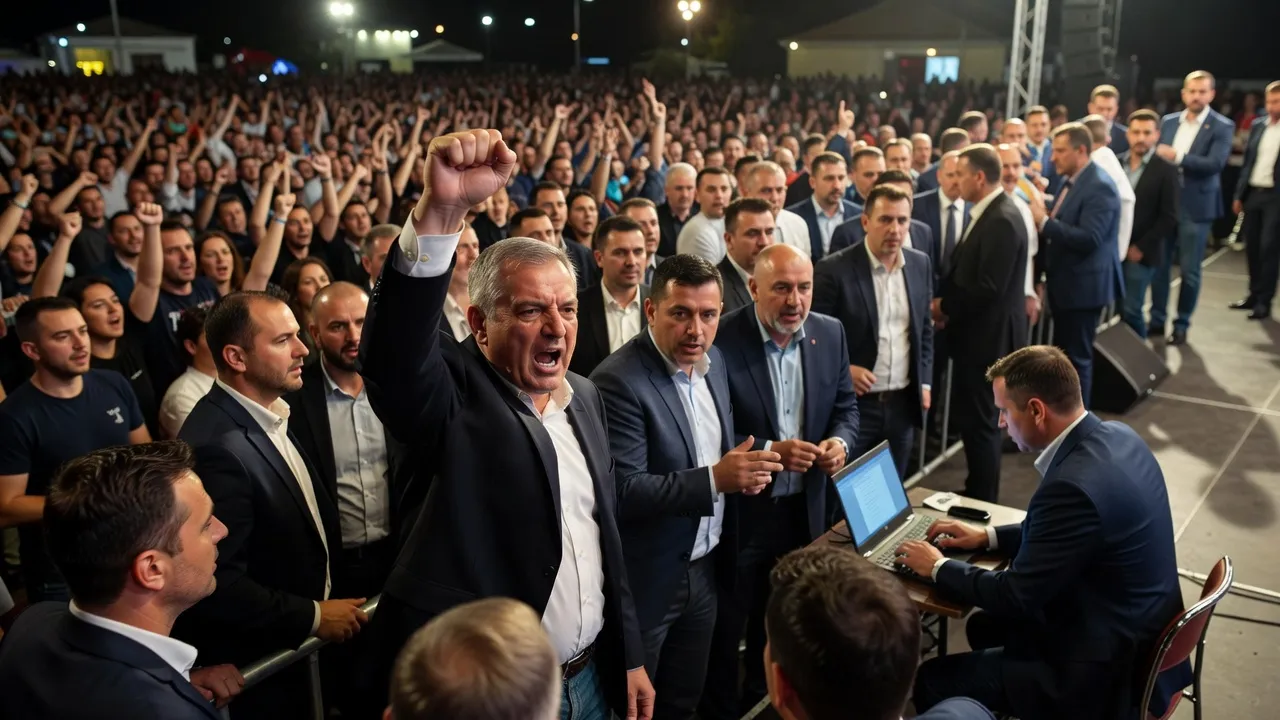
Milorad Dodik, former president of the Republika Srpska, declared to his supporters in Banja Luka: "Ich erkläre, dass wir gewonnen haben". ZEIT reports that the SNSD remains the leading force in the entity's parliament, with 39% of the vote, and that its candidate Savo Minic wins the presidency. According to Tagesschau, Dodik mentions a two-thirds majority with his coalition partners.
The two German titles note the thanks addressed to Donald Trump and Vladimir Putin. ZEIT quotes Dodik's phrase: without the "great victory of Donald Trump", he and his supporters would "probably be political corpses". Tagesschau recalls that the Trump administration unexpectedly lifted sanctions against him in 2025, the year a court barred him from the presidency of the entity.
The question of secession remains. Tagesschau recalls that court decisions followed his efforts to detach the Republika Srpska from the central state. Dodik affirms that his political positions "remain firm and will not be changed". Ineligible for six years, he could be pardoned by the tripartite presidency, which observers cited by the channel now consider capable of doing so.
DW places the vote in the context of economic slowdown, slow progress towards EU membership, and lasting political blockages. The ethnic parties, SDA, SNSD, and HDZ BiH, faced multi-ethnic coalitions led by the social democrats. The institutional framework, inherited from the 1995 Dayton agreements, is presented as a factor of paralysis.