
DOMINANT ANGLE
Kyiv is deciphering the Bosnian election through the Russian prism: the progress of Dodik's party is presented as the victory of "Poutine's friends".
Dominant angle identified — does not reflect unanimity of this country’s media
KEY POINTS
- 01
According to TSN citing Klix.ba, Dodik's SNSD would obtain 34 seats in Republika Srpska and its coalition could reach 49 of the 83 seats, with 43 needed for a majority.
- 02
TSN reports a turnout of 42% of registered voters, down about 10% from the 2022 elections.
- 03
Kyiv Post recalls that the Dayton agreement divided Bosnia into two entities connected by a weak central government, which often paralyzes decision-making.
ANALYSIS
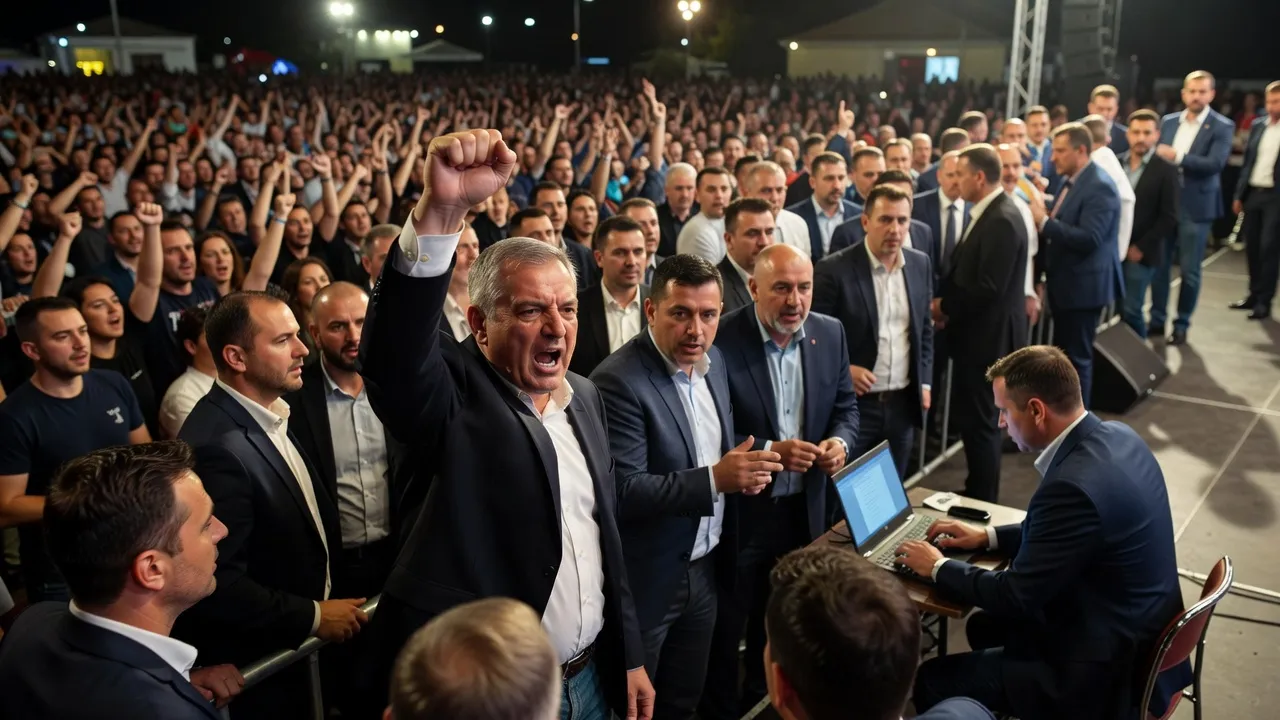
Kyiv, October 5, 2026. Ukrainian media are reporting on the general elections held on Sunday, October 4, in Bosnia and Herzegovina with an unambiguous headline: TSN Ukraine writes "Перемагають друзі Путіна", "Poutine's friends win". The newspaper presents Milorad Dodik as a "pro-Russian politician" whose party, the Alliance of Independent Social Democrats (SNSD), is leading in Republika Srpska.
According to TSN, citing the Bosnian website Klix.ba, the SNSD would obtain 34 seats in the National Assembly of the entity. The "Serbia Safe" movement of Drasko Stanivukovic would have 12 and the Serbian Democratic Party 11. The coalition led by the SNSD could reach 49 seats out of 83, while 43 are enough to govern. TSN specifies that these results remain preliminary, as the overseas vote has not yet been counted, and that Dodik has claimed victory for his party.
In the Federation of Bosnia and Herzegovina, the other entity, the Party of Democratic Action (SDA) is leading with 30.63% of the vote. The Social Democratic Party (SDP) obtains 15.27% and the coalition around the HDZ BiH 13.89%. TSN notes that participation has decreased by around 10% compared to 2022: 42% of registered voters cast their ballots.
Kyiv Post, which reprints an AFP dispatch published before the polling stations closed, emphasizes the structure of the system. The Dayton Agreement, concluded under American mediation, ended the 1992-1995 war but anchored divisions that often paralyze decision-making. It divided the country between Republika Srpska and a Croat-Muslim federation, connected by a weak central government.
The English-language media also highlights that Dodik's face is displayed on posters in Banja Luka even though he is not a candidate, due to his conviction. It gives the floor to Adi Selman, an activist from the Karton Revolucija group, who believes that the choice is limited to parties that have been present for thirty years and that bet on war and divisions. The presidential election pits, according to the dispatch, a vision of a united country against that of greater autonomy for the Serb entity.
The two articles do not focus on the same ground: one highlights Dodik's supposed alignment with Moscow, the other the institutional blockage inherited from Dayton.