DOMINANT ANGLE
Riga is deciphering the Bosnian election through the prism of membership in the European Union and Milorad Dodik's external allegiances, portrayed as a pro-Russian leader thanking Trump and Putin.
Dominant angle identified — does not reflect unanimity of this country’s media
KEY POINTS
- 01
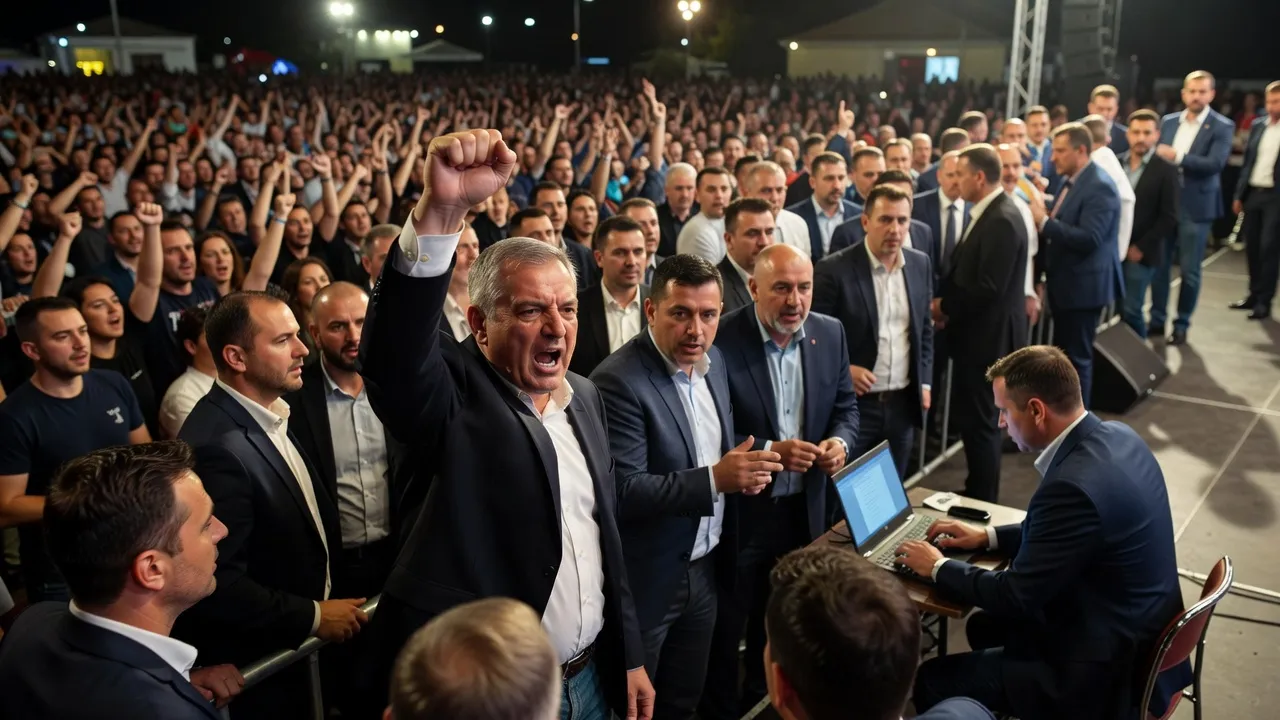
Dodik thanked Donald Trump and Vladimir Putin in his victory speech, although he was not a candidate, being barred from running for six years (TVNET).
- 02
Turnout reached only 42% out of approximately 3.4 million voters, nearly ten points less than in 2022 (TVNET).
- 03
Bosnia and Herzegovina has been an EU candidate since 2022 and accession negotiations got the green light in 2024, but reforms are being hindered by ethnic tensions (Jauns).
ANALYSIS
Riga, October 5, 2026. Latvian media is following the Bosnian elections from two complementary angles: Milorad Dodik's claim of victory and the country's European future.
The TVNET portal focuses on the Bosnian-Serb leader, whom it describes as "pro-Russian". According to him, Milorad Dodik stated that his party won Sunday's election. In his speech to his supporters, he thanked US President Donald Trump, as well as "Russian dictator Vladimir Putin", a phrase used by the Latvian media. TVNET recalls that Dodik did not run: convicted of exceeding his powers, he is banned from running for six years, but he retains significant influence in Republika Srpska.
The details of the results are given with caution. After counting 95% of the votes, the candidate supported by Dodik, Zeljka Cvijanovic, would retain the position of Serbian leader. Denis Becirovic, a representative of the Bosniak community, also claimed victory, based on results showing him in the lead in a tighter race. Croatian leader Darijana Filipovic also declared herself the winner. Dodik's party is also expected to win a clear majority in the Republika Srpska parliament.
TVNET emphasizes the mobilization: approximately 3.4 million voters were called to the polls, but turnout reached only 42%, about ten points less than in 2022.
The Jauns.lv website, published as soon as the vote closed, places the issue elsewhere: "the country's path to the European Union". Bosnia and Herzegovina obtained candidate status in 2022, and European leaders gave the green light to opening accession negotiations in 2024. However, the necessary reforms have been slowed down by political disagreements and tensions between ethnic communities.
Jauns.lv highlights the attention paid to Bosnian Serb politicians and their calls for more autonomy for Republika Srpska. The site mentions the fear that post-election political tension will further complicate the country's governance and its European path. It finally recalls that, since the 1992-1995 war, the country has been divided into two largely autonomous entities, connected by a complex central system resulting from the Dayton agreement.
For the Latvian press, the vote is therefore less a matter of Bosnian domestic politics than a test of the Western anchorage of a country where Moscow's influence remains visible.