
DOMINANT ANGLE
Vilnius takes away from the Bosnian election Milorad Dodik's thanks to Donald Trump and Vladimir Putin, seen as a signal of geopolitical alignment rather than just a local outcome.
Dominant angle identified — does not reflect unanimity of this country’s media
KEY POINTS
- 01
Dodik, absent from the ballots due to being convicted of abuse of power and barred from the presidency for six years, proclaimed the victory of his camp (Verslo žinios).
- 02
He stated: "Without the great victory of Donald Trump, we would probably be political corpses today", and thanked Vladimir Putin (Verslo žinios).
- 03
After counting 95% of the votes, Željka Cvijanović retains the Serbian seat, Denis Bečirović leads for the Bosniak seat, and Darijana Filipović for the Croatian seat.
ANALYSIS
Vilnius, October 5, 2026. Lithuanian media outlets are dedicating brief but focused coverage to Bosnia and Herzegovina, specifically to Milorad Dodik's statement following the Sunday, October 4, election. Verslo žinios and 15min are both headlining Dodik's proclaimed victory and his expressions of gratitude to the presidents of the United States and Russia.
According to 15min, the former president of the Serb entity asserted that his party had retained power in the entity and secured a place in the tripartite presidency. Both media outlets recall the context: the elections took place "after several years of political turmoil and stalled reforms," and the campaigns were dominated by ethnic quarrels inherited from the 1990s war.
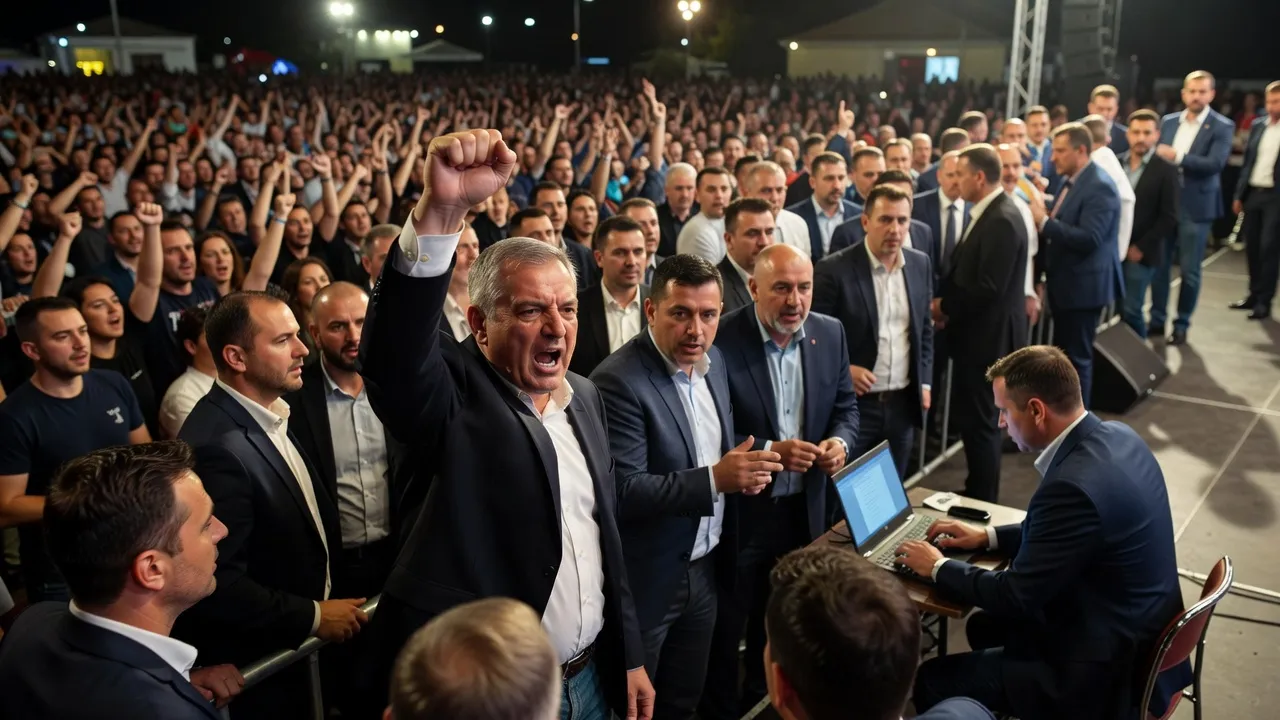
Verslo žinios extensively quotes Dodik, who spoke to his supporters in Banja Luka: "Without Donald Trump's great victory, we would probably be political corpses today," he said, before adding that, thanks to the "new environment," his supporters had become "political winners." He also thanked his close ally, Russian President Vladimir Putin.
The economic daily specifies that Dodik, 67, was not on the ballot: convicted of abuse of power, he is barred from the collective presidency for six years. However, he remains a central figure in the Republika Srpska. His party, the article adds, campaigned for greater autonomy with separatist rhetoric.
Partial results, after counting 95% of the votes, indicate that his candidate, Željka Cvijanović, is likely to retain the Serb seat. The Bosniak Denis Bečirović, the incumbent, is in the lead, and the Croatian nationalist Darijana Filipović is ahead for the Croatian seat. Dodik's party is also expected to maintain a large majority in the entity's parliament and its presidency.
The articles mention a lower turnout than in previous elections, without providing a figure. They recall that the complex representation system, resulting from the 1995 Dayton peace agreement, keeps a fragmented country together. The Lithuanian reading remains factual and uncommented, but the choice of quotes highlights the interplay of alliances between Washington, Moscow, and the Serb nationalists in Bosnia.