
DOMINANT ANGLE
Canberra is gauging the French high school crisis in light of Emmanuel Macron's unpopularity, six months out from the 2027 presidential election, amid budget cuts in education.
Dominant angle identified — does not reflect unanimity of this country’s media
KEY POINTS
- 01
According to Gérald Darmanin on RTL, 2000 people, mostly teenagers, have been arrested since the start of the protests.
- 02
Four hundred high schools, about one in ten, were closed on Friday, according to PerthNow.
- 03
The Macron government is described as very unpopular six months from the 2027 presidential election, with budget cuts exacerbating the education crisis.
ANALYSIS
Canberra, October 3, 2026. Australian media is treating the French high school mobilization as a test for a weakened power. PerthNow headlines "Clashes as France struggles to quell school protests" and describes a government that "is struggling to contain" increasingly violent protests over teaching conditions and funding.
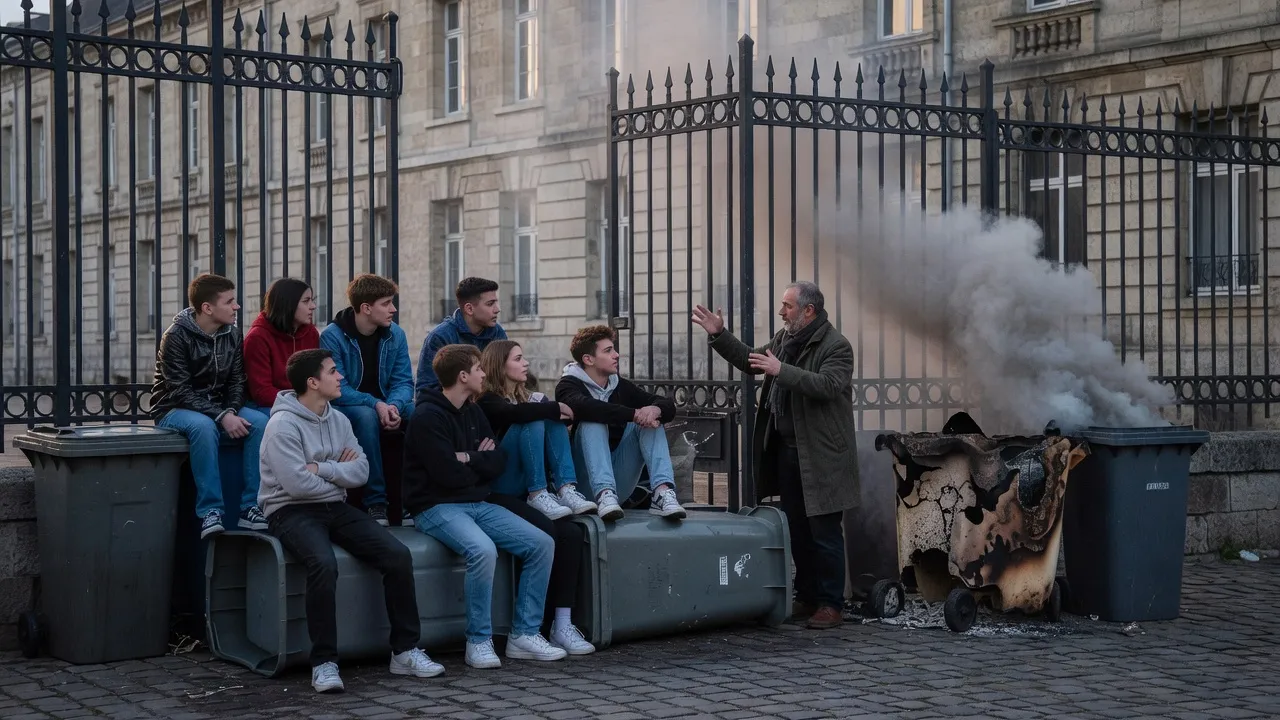
The story opens with street scenes. On Friday, tear gas filled the streets of Strasbourg, fireworks targeted police lines in Marseille, and trash cans were set on fire in Rennes. In Paris, where clashes also took place, high school students held up signs reading: "We have a future to build, not to suffer". Videos from The Age and the Sydney Morning Herald show CRS using tear gas against protesters in Paris, Toulouse, and Strasbourg.
The political context is set from the start: six months ahead of the 2027 presidential election, polls consistently show the strong unpopularity of Emmanuel Macron and his government. The planned budget cuts, which exacerbate the education funding crisis, are presented as the fuel for discontent. The movement, which started in the Paris region the previous week, has spread across the country.
The text gives the floor to the government. Justice Minister Gérald Darmanin states on RTL that 2000 people, mostly adolescents, have been arrested since the start of the protests, and that the parents of those responsible for damage should pay for repairs. He believes the movement has been hijacked by "outside elements". Education Minister Édouard Geffray, on BFM TV, calls on parents to dissuade their children from protesting: "In the street, children are in danger".
The students' demands are reported without filter: overcrowded classes, regular teacher shortages, dilapidated buildings, attributed to years of underinvestment. A high school student cites classes of 35 students and a lack of chairs. Four hundred high schools, or about one in ten, were closed on Friday.
The Australian coverage remains brief and based on a single dispatch, without mentioning the call for a new mobilization, the plan to replace teachers, or the investigations into police violence.







