
DOMINANT ANGLE
Pretoria takes away from the French high school crisis a deeply rooted educational unease stemming from underinvestment, rather than just a simple street disorder: classes of 35, absent teachers, dilapidated buildings.
Dominant angle identified — does not reflect unanimity of this country’s media
KEY POINTS
- 01
According to the ministry cited by The Citizen, more than 560 high schools out of 3,700 were disrupted on Friday, October 2, compared to more than 1,000 the day before.
- 02
Gérald Darmanin stated on RTL that 2,000 people, mostly teenagers, had been arrested and that the parents of those responsible for the damage should pay for repairs.
- 03
Daily Maverick (Reuters) links the high school students' anger to classes of 35 students, teacher shortages, deteriorated buildings, and an education budget increase below inflation.
ANALYSIS
Pretoria, October 3, 2026. The South African press is following the French high school movement through AFP dispatches, reproduced by The Citizen, and Reuters, published by Daily Maverick. Initially, it reports on a youth demanding decent study conditions, before focusing on the violence.
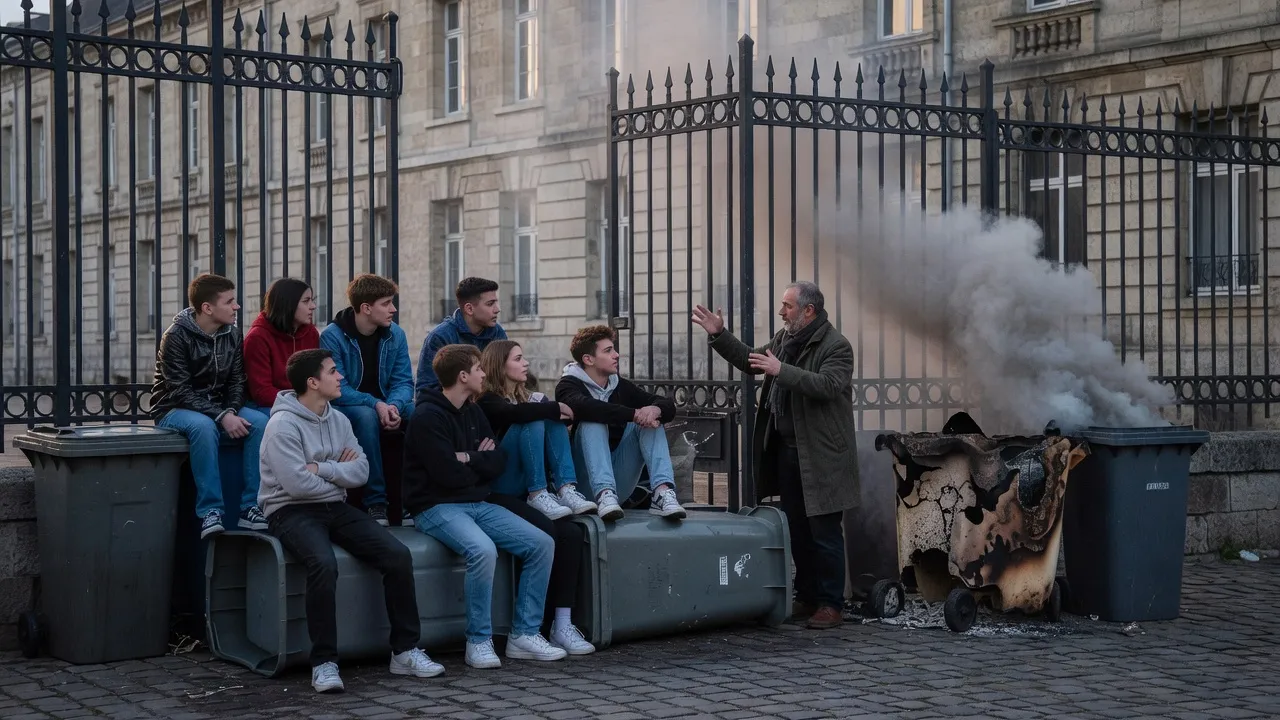
The Citizen describes high school students setting fires in front of their schools and clashing with police, in a movement born the previous week in the Paris region and then spread throughout the country. According to the ministry, teaching is disrupted in more than 560 high schools out of 3,700 on Friday, October 2; more than 1,000 were affected the day before. In Paris, fire damaged the entrance of two high schools, Léonard-de-Vinci and Gaston-Bachelard. The newspaper gives the floor to Simon, 15, in front of the Turgot high school: "For a whole year, we didn't have a science teacher. We don't have any textbooks," before adding that the suburbs are even worse.
The government, the dispatch reports, considers the grievances legitimate but condemns "urban violence." Education Minister Édouard Geffray claims that the movement is "held hostage by ultra-violent marginal groups." The students accuse the police of excessive use of force, with regular tear gas grenade firings.
Daily Maverick opens with Strasbourg flooded with tear gas, fireworks targeting the police in Marseille, and burning trash cans in Rennes. The Minister of Justice Gérald Darmanin declares on RTL that 2,000 people, mostly adolescents, have been arrested, that the parents of those responsible for damage should pay for repairs, and that the movement has been hijacked by "external elements." About 400 high schools, or one in ten, were closed on Friday; Geffray urges parents to discourage their children from demonstrating.
The article emphasizes the political and budgetary context: six months before the presidential election, polls show persistent unpopularity of Emmanuel Macron and his government, and planned cuts exacerbate the education funding crisis. A section title announces a budget increase for education below inflation. The high school students denounce overcrowded classes, teacher shortages, and dilapidated buildings, which they attribute to years of underinvestment. A sign sums it up: "We have a future to build, not to suffer."
The two articles do not mention the call for a "third act," the plan to replace teachers, or the controversy over La France insoumise.







