
DOMINANT ANGLE
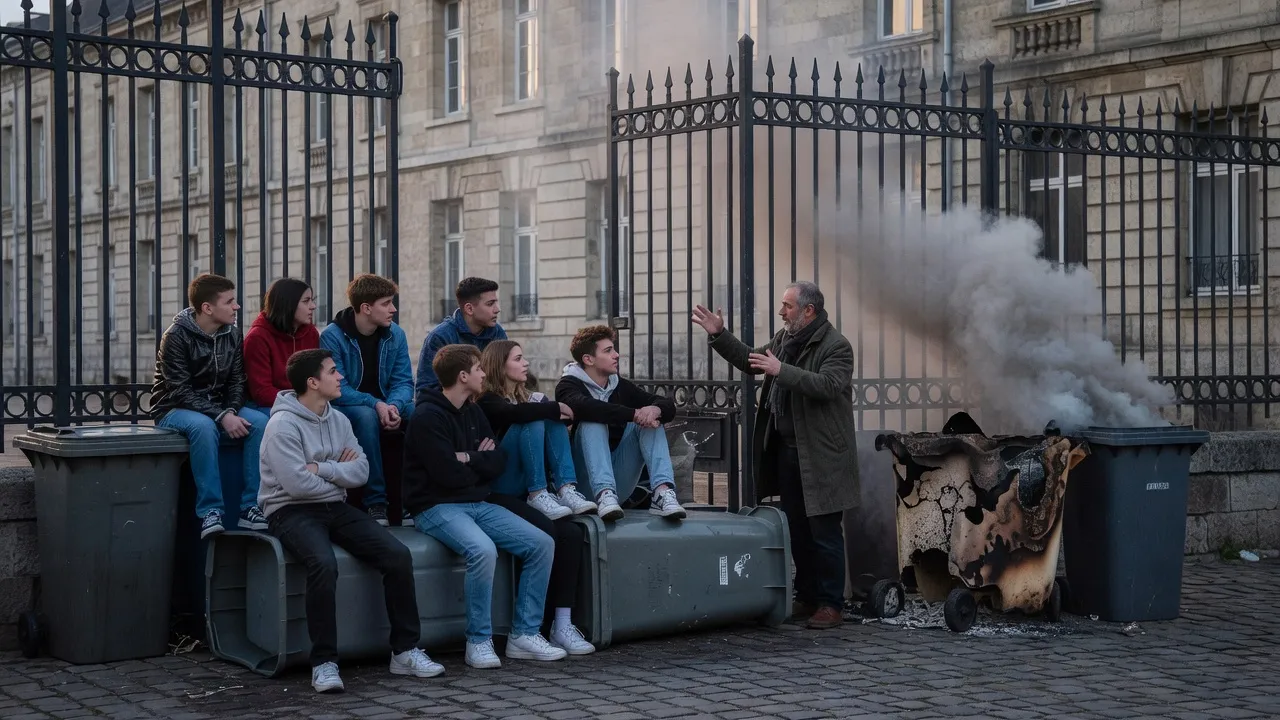
The United States retains above all the street images and the words of the students: a high school revolt that has become national, between degraded classrooms, absent teachers and confrontations with the police.
Dominant angle identified — does not reflect unanimity of this country’s media
KEY POINTS
- 01
According to the Education Ministry, classes were disrupted in more than 560 high schools out of 3,700 on Friday; more than 1,000 were affected on Thursday, according to the Interior Ministry (CBS News).
- 02
Édouard Geffray claims that the high school movement is "held hostage by ultra-violent fringe groups" (CBS News).
- 03
Students are denouncing overly long school days, overheated classrooms, deteriorated buildings, and staff shortages, and are accusing the police of excessive use of force (CBS News).
ANALYSIS
The United States is closely following the French high school crisis, which American channels are covering as a student movement that originated in the Paris region and then spread throughout the country, without focusing solely on isolated incidents. On October 3, 2026, in Washington, CBS News, which relies on AFP, reports that high school students lit fires in front of their schools and clashed with police on Friday, October 2, in a movement that forced the closure or disrupted classes in more than 560 schools. According to the Ministry of Education, 560 high schools out of 3,700 are affected; more than 1,000 were affected on Thursday, according to the Ministry of the Interior.
The narrative largely gives voice to the students. In front of the Lycée Turgot, in the center of Paris, Simon, 15, who did not give his last name, says: "For a whole year, we didn't have a science teacher. We don't have any textbooks," and adds that the situation is "even worse" in the suburbs. CBS summarizes the grievances: days that are too long, overheated classrooms, degraded buildings, and too many staff absences.
On the government side, CBS reports that the executive branch considers the demands legitimate but condemns what it calls "urban violence." Education Minister Édouard Geffray claims that the movement is "held hostage by ultra-violent fringe groups." The students, in turn, accuse the police of excessive use of force and regular tear gas firings to disperse gatherings. In Paris on Friday, a fire damaged the entrances of two high schools, according to an AFP photographer; firefighters intervened; the movement shows "no sign of abating," the channel writes.
NBC News covers the topic in a video titled "Student protests in France take violent turn." Richard Engel's report, dated October 3, describes protesters clashing with police across the country over what "some students" present as teacher shortages and poor material conditions.
In the provided articles, the American press does not develop the call for a "third act," nor the plan to replace teachers, nor the civil liability of parents, nor the debate about La France insoumise: it sticks to the street scenes, disruption figures, and student testimonies.







