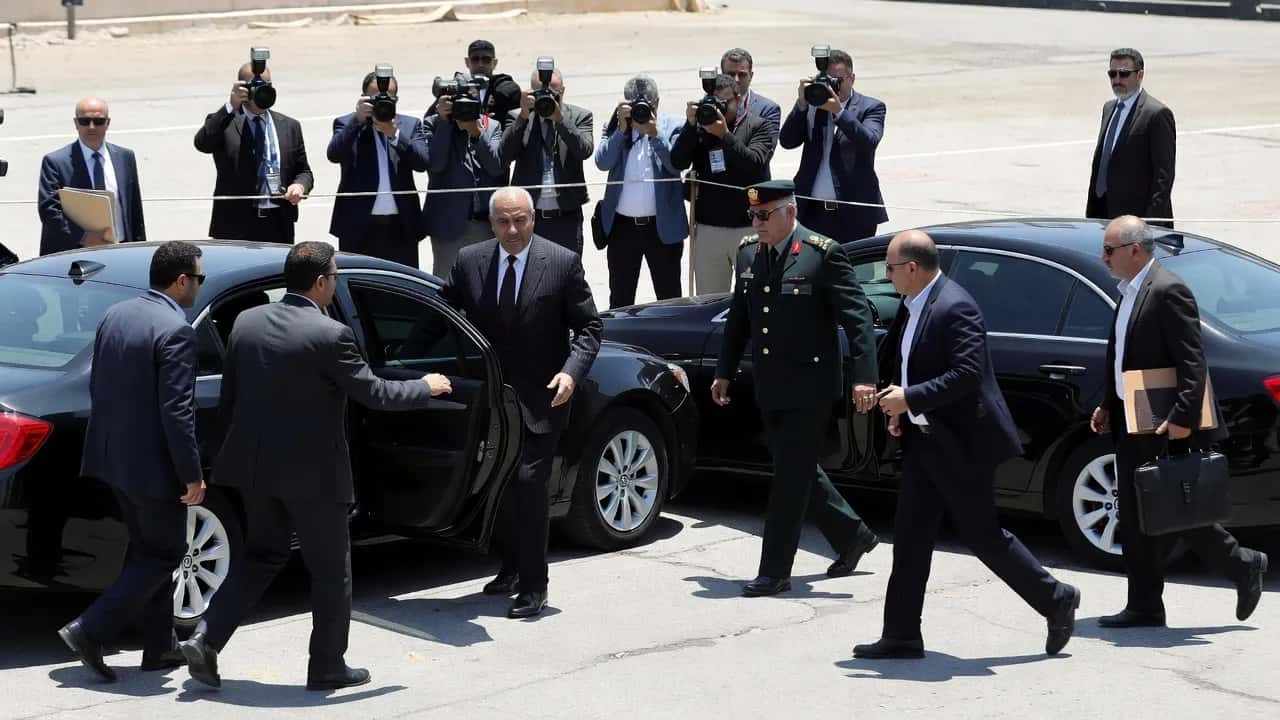
Iran: unprecedented Tehran meeting with Saudi Arabia, Pakistan and Turkey amid Houthi attacks
published on
countries
sources
articles
More divergent than 53% of recent comparable stories (reference: 98 recent stories measured with the same method).
The coverage of the Tehran meeting starts with the same facts but stops at different points: the Iranian doctrine of regional security, the future of the Mecca pact, Qatari mediation, the war that has been going on for eight months. This text follows these angles, source by source.
The four countries agreed to continue the dialogue on regional security; no security agreement or ceasefire was announced.
Tehran highlights autonomy
Mehr News English reports that the idea for the meeting was born during Marshal Munir's visit to Tehran the previous week. The agency indicates that the talks focus on regional security, the aftermath of the "military aggression", and support for Palestine and Lebanon.
« result of the resistance of the Iranian people and the bravery of the armed forces »
Ali Bagheri Kani, deputy secretary of the Supreme National Security Council, sees it as the "fruit of the resistance of the Iranian people and the bravery of the armed forces". According to Mehr, he affirms that Iran has withstood two aggressions by relying on its own capabilities. He adds that some countries in the region thought that a link with a major power like the United States would protect them, and that the facts have not confirmed this.
Vedomosti, which cites the Iranian presidency's website, reports on Massoud Pezeshkian's advocacy for brotherhood between Muslim countries. According to the daily, he believes that if interaction is based on this principle, "there will be no room for differences".
Channel News Asia and the Straits Times relay Mohsen Rezaei's remarks on state television: the exchanges were "very good" and "a new atmosphere is emerging in the region".
The Mecca agreement put to the test
Iran International details the status of the pact: Pakistan has ratified it, while ratification remains pending in the Turkish Parliament. The Jerusalem Post describes it as "modeled to some extent on NATO" and notes that its concrete operation remains poorly defined.
The Israeli daily reports that Houthi attacks have raised the question of whether Turkey and Pakistan would actually come to Riyadh's aid. It quotes skeptics who say the three members do not give the agreement real strength. The Express Tribune, on the other hand, believes that maintaining the dialogue channel "carries considerable significance". The two newspapers do not address the same issue: the first assesses the military solidity of the pact, the second the scope of contact with Tehran.
Bianet mentions Turkish and Pakistani military support for Saudi Arabia against the Houthis. BBC Türkçe reports that the Egyptian Parliament approved President Sissi's request to be authorized to provide military support to Saudi Arabia with a two-thirds majority. The vote was held behind closed doors, after the National Defense Council agreed on October 18. According to the channel, Cairo condemns Iranian attacks on the Gulf but is not directly involved in the fighting.
Eight months of war in the background
Vanguard and Nigerian Eye reconstruct the timeline: the late February American-Israeli offensive, launched during nuclear negotiations, ceased in April, followed by a battle around the Strait of Hormuz, a US naval counter-blockade of Iranian ports, and then the collapse of an agreement in June. Vanguard places the resumption of hostilities in July. It recalls that about a fifth of the world's oil and liquefied natural gas passes through the Strait of Hormuz.
« historic meeting »
Al Jazeera Arabic's live broadcast marks the 132nd day of the US-Iran understanding memorandum and 241 days since the start of the war. Gulf Times writes that Washington and Tehran are said to have prepared plans to resume the war, possibly after the US midterm elections on November 3.
Each side cites its own signals. Iranian spokesman Esmaeil Baghaei judges, according to the Express Tribune, that "the American side is not serious about negotiations". The Jerusalem Post writes that Washington and Jerusalem openly say the war against Iran will continue. Iran International headlines a possible "last chance" before military action.
What each coverage leaves out
The corpus brings together eight countries. This count measures the sources collected for this topic, not the opinion of their inhabitants, and each country only has a few titles.
In the collected texts, Russian coverage does not mention Houthi attacks. Interfax sticks to the agreement to continue dialogue. Sputnik, however, quotes Saudi Vice Minister Rayed Krimly, who mentions Houthi strikes, and Vedomosti links the meeting to Pezeshkian's visit to Moscow, announced on October 27 for the Gas Exporting Countries Forum summit, according to Iranian Ambassador Kazem Djalali.
The analyzed Israeli texts do not take up Mohsen Rezaei's "endogenous" security formula. Pakistani texts do not report the Houthis' point of view. The provided Iranian articles do not mention the decision of the Egyptian Parliament.
In Doha, Doha News puts Qatar's mediation at the forefront. According to the Iranian Ministry of Foreign Affairs, a Qatari delegation traveled to Tehran on Sunday, October 25. Saudi Vice Minister Rayed Krimly presents the visit as support for Qatar's and Pakistan's mediation.
According to Iranian spokesperson Esmaeil Baghaei, the idea came from Marshal Munir.
He calls for "endogenous" regional security, ensured by the countries themselves, and for preventing any foreign intervention.
The statement cites regional security, Israel's activities, Palestine, and Lebanon.
Defense Minister Khawaja Asif says Pakistan would defend Saudi Arabia "with full force".
Key figures
- 3 missiles, 4 dronesHouthi projectiles intercepted by the Saudi coalition on October 271 source · Al Jazeera
What the comparison reveals
Common ground and differences in coverage across the media analysed.
What the media report in common
The Tehran meeting brings together Iran and Saudi, Pakistani, and Turkish officials, signatories to the Mecca pact concluded in August.
The press presents this meeting as an effort at dialogue on regional security and de-escalation.
Where media coverage diverges
What the meeting says about regional security
Regarding what the meeting illustrates, Iranian and Turkish media see it as validation of 'endogenous' security without foreign interference, while Israeli media reads it as a message to Washington.
Attributed mediation role
Regarding who is behind the rapprochement, Pakistani media cites the initiative of Marshal Munir and Qatari media highlights the mediation of Doha conducted with Pakistan.
This grouping describes the publications analysed, not the position of these countries’ populations or of their governments.
How each country frames the event
- diplomatic
- NigeriaPakistanQatarRussiaSingapore
- sovereignty
- IsraelIranTurkey
2 different framings across 8 countries · 5 of 8 countries share the same framing
Pair by pair: same frame or different frames
Each square pairs two countries. Filled: both countries' coverage uses the same frame. Empty: their frames differ. The map describes framings without evaluating them.
Pairs with the same frame: 13 of 28
- same frame
- different frames
Blind spots
What the coverage of each country leaves aside, while others put it forward.
 Russia
- Houthi attacks against Saudi Arabia
 Israel
- Mohsen Rezaei's regional security formula 'endogenous'
Geopolitical context
The meeting is taking place eight months after the US-Israeli offensive against Iran, a ceasefire in April and a collapsed agreement in June, according to Nigerian media. The three signatories to the Mecca pact, concluded in August, are meeting Tehran as the Houthis step up their attacks on Saudi Arabia and tensions between Iran and the United States revive fears of a resurgence of fighting. No agreement or ceasefire has been announced, and the Egyptian Parliament has authorized military support for Riyadh.
Understand the context
- OCT 25, 2026A Qatari delegation travels to Tehran
- OCT 26, 2026Meeting in Tehran with Saudi Arabia, Pakistan, and Turkey
- OCT 27, 2026Interception of Houthi missiles and drones by the Saudi coalition
How each country reads it
Preview: 3 of 8 media perspectives. Syntheses of the media analysed — not direct quotations. Method & limitations
- Israel
Israel is gauging the Tehran meeting in light of its own war with Iran: the Mecca pact is being judged on its ability to produce concrete results, and the regional de-escalation on its effect on the American-Israeli position.
2 sources · View sources
 Iran
Tehran presents the four-way meeting as validation of its indigenous security doctrine, while Iran International sees it as a reprieve before possible military action.
2 sources · View sources
 Nigeria
Abuja sees in Tehran a last window of de-escalation: Nigerian media presents the meeting with Riyadh, Islamabad, and Ankara as a last chance before the outbreak.
2 sources · View sources
The full text, country by country
Israel
DOMINANT ANGLE
Israel is gauging the Tehran meeting in light of its own war with Iran: the Mecca pact is being judged on its ability to produce concrete results, and the regional de-escalation on its effect on the American-Israeli position.
KEY POINTS
- On October 26, Khalid ben Salmane, Asim Munir, and Ibrahim Kalın arrived in Tehran for discussions with Iran (Jerusalem Post).
- Iranian spokesman Esmaeil Baghaei described the reception of these officials as a key step towards regional diplomacy (Jerusalem Post).
- Haaretz reports that the Houthis have launched new attacks against Saudi Arabia and that Egypt has approved defense support for the kingdom.
ANALYSIS
Jérusalem, October 27, 2026. The Israeli press is treating the Tehran meeting as a test for the Mecca defense pact more than as a diplomatic breakthrough. The Jerusalem Post reports that Saudi Defense Minister Khalid bin Salman arrived in the Iranian capital on October 26, accompanied by Pakistani Army Chief Asim Munir and Turkish intelligence chief Ibrahim Kalın. The newspaper describes them as the region's "heavy hitters" and notes that Munir has recently visited Iran.
The newspaper recalls that the agreement is a defense pact "modeled to some extent on NATO", whose concrete functioning remains poorly defined. The Houthi attacks on Saudi Arabia have raised the question of whether Turkey and Pakistan would actually come to Riyadh's aid. For the Jerusalem Post, the stake in Tehran is whether the countries can get "something practical" out of it. Skeptics, it writes, believe that the three members do not give the agreement any real strength.
On the Iranian side, Foreign Ministry spokesman Esmaeil Baghaei presented the reception of these military and security officials on October 26 as a key step towards regional diplomacy, which could promote lasting stability. He added that the region could only achieve this by working together. The Jerusalem Post reads this as a message that the region must solve its own problems, without new American bombings, which Tehran would prefer.
The newspaper immediately raises the question that concerns Israel: it is unknown whether the United States and Israel will join this approach. It emphasizes that Washington and Jerusalem openly say that the war against Iran will continue, and mentions that President Donald Trump has twice supported the maintenance of the Israeli prime minister in power to continue the fight against Iran.
Haaretz, in its English dispatch, takes a different tone: high-ranking officials from Saudi Arabia, Turkey, and Pakistan met with Iranian officials in Tehran on Monday to try to defuse the conflict in the Middle East. The headline talks about "de-escalation" talks, at a time when Yemen's Houthis launched new attacks on Saudi Arabia and Egypt approved defense support for the Gulf kingdom.
The two headlines converge on the context, intensifying Houthi strikes and a possible expansion of the front, but differ in emphasis: the Jerusalem Post focuses on the solidity of the pact and its consequences for the American-Israeli position, Haaretz on the de-escalation effort and Egyptian mobilization.
Iran
DOMINANT ANGLE
Tehran presents the four-way meeting as validation of its indigenous security doctrine, while Iran International sees it as a reprieve before possible military action.
KEY POINTS
- On Monday, October 26, Khalid ben Salmane, Asim Munir, and Ibrahim Kalın were received by Mohsen Rezaei and President Pezeshkian in Tehran.
- First high-level meeting between the three members of the Mecca pact, signed in August, and Iran (Iran International).
- Ali Bagheri Kani believes Iran withstood two aggressions thanks to its internal capabilities and advocates for indigenous regional security (Mehr).
ANALYSIS
Tehran, October 27, 2026. The Iranian press treats the meeting of Monday, October 26, as a validation of the Islamic Republic's line, but two registers coexist. Mehr News English sees it as proof of "endogenous" regional security, while Iran International, an opposition media outlet, places it in the escalation with Washington.
First, the facts. According to Mehr, Saudi Defense Minister Khalid bin Salman, Pakistani Marshal Asim Munir, and Turkish intelligence chief Ibrahim Kalin entered into session with the secretary of the Supreme National Security Council, Major General Mohsen Rezaei, and President Massoud Pezeshkian. The four-way talks focus on regional security, the aftermath of military aggression, and support for Palestine and Lebanon. Mehr specifies that the idea was born during Munir's visit to Tehran the previous week.
The official Iranian account emphasizes autonomy. Ali Bagheri Kani, deputy secretary of the Council, judges the meeting to be "the fruit of the resistance of the Iranian people and the bravery of the armed forces." He asserts that Iran has withstood two aggressions, carried out by the "Zionist regime" and the "terrorist American government," relying solely on its own capabilities, including weapons designed by young scientists. He adds that certain countries in the region believed that a link with a great power like the United States would protect them, which the facts would have denied: hence the idea of security built with regional actors.
Iran International, on the other hand, highlights the context: the meeting is the first high-level encounter between Iran and the three members of the Mecca pact, signed in August, according to which an attack on one is equivalent to an attack on all. Pakistan has ratified it, while ratification is still pending in the Turkish Parliament. Saudi Arabia announced on Sunday that it had intercepted a new wave of missiles and drones from the Houthis, qualified as being supported by Iran. The media reports that the visit aims to reduce hostilities and support Qatari mediation, and that, according to Iranian media, officials warned Munir that they would not negotiate with Washington as long as Tehran's demands were not met.
An Iran International headline mentions a possible "last chance" before military action. None of the provided articles announce an agreement or ceasefire, and none mention the decision of the Egyptian Parliament to authorize military support for Riyadh.
Nigeria
DOMINANT ANGLE
Abuja sees in Tehran a last window of de-escalation: Nigerian media presents the meeting with Riyadh, Islamabad, and Ankara as a last chance before the outbreak.
KEY POINTS
- The Saudi defense minister, Pakistani General Asim Munir, and Turkish intelligence chief Ibrahim Kalin were announced in Tehran on Monday, October 26, as signatories to the Mecca pact of August.
- The Houthis claimed an attack on Riyadh's international airport on Sunday, and new explosions rocked the capital overnight.
- The conflict has lasted for eight months: the US-Israeli offensive in late February, the April ceasefire, tensions in the Hormuz Strait, and the collapsed June agreement.
ANALYSIS
Abuja, October 27, 2026. Nigeria's online press is covering the Tehran meeting of Monday, October 26, through two articles, one from Vanguard and the other from Nigerian Eye, which present it as a attempt at de-escalation as the regional conflict enters its eighth month.
Vanguard leads with the war in Yemen: the Houthis, allies of Iran, "have maintained their attacks" against Saudi Arabia. New explosions rocked Riyadh overnight, with an SMS alert to residents, after the Houthis claimed an attack on the international airport of the Saudi capital on Sunday. The title recalls that the kingdom, the world's largest oil exporter, is deeply involved in a war whose hostilities resumed in July.
The two media outlets detail the delegation: Saudi Defense Minister Prince Khalid bin Salman, Pakistani Army Chief General Asim Munir, and Turkish intelligence chief Ibrahim Kalin represent the three signatories to the defense alliance concluded in Mecca in August. On the Iranian side, Mohsen Rezaei is expected to participate, announced Ali Bagheri Kani, deputy secretary of the Supreme National Security Council, on state television. Nigerian Eye quotes Saudi Deputy Minister of Public Diplomacy Rayed Krimly, who describes the visit as an effort at "de-escalation, dialogue, and diplomatic solutions", in support of Qatar and Pakistan's mediation.
The articles place the meeting in a broader context: the American-Israeli offensive at the end of February launched during nuclear negotiations, the April ceasefire, the battle around the Strait of Hormuz, where around a fifth of the world's oil and liquefied natural gas passes, the American naval counter-blockade of Iranian ports, and the collapse of an agreement in June. Vanguard adds that Washington, Tehran, and Israel have each warned of a possible resumption of hostilities, on the eve of the Israeli elections and the US midterm elections.
The most marked tone comes from a Saudi analyst, Hesham Alghannam, quoted by Vanguard: this "historic meeting" could be "the last chance before the escalation becomes uncontrollable". Neither of the two articles reports, at this stage, any agreement or ceasefire resulting from the discussions, and neither gives the floor to Nigerian officials.
 Pakistan
DOMINANT ANGLE
Islamabad is claiming the role of mediator: the Tehran meeting, wanted by Marshal Munir, opens a channel with Iran while reaffirming military solidarity with Riyadh.
KEY POINTS
- The four countries agreed to continue dialogue on regional peace and security, without announcing a security agreement or ceasefire (Express Tribune, Daily Times).
- Iranian spokesperson Esmaeil Baghaei stated that the initiative for the meeting came from Marshal Asim Munir (ARY News).
- Pakistani Defense Minister Khawaja Asif said that Pakistan would defend Saudi Arabia "with full force" (Geo News).
ANALYSIS
Islamabad, October 27, 2026. The Pakistani press is presenting the Tehran meeting of Monday, October 26, as a national diplomatic success. According to The Express Tribune, Marshal Asim Munir, chief of defense and army forces, "is believed to have proposed" the idea for this meeting; Iranian spokesman Esmaeil Baghaei confirmed that the initiative came from him and that Tehran accepted after examining the proposal. Munir was accompanied by Interior Minister Mohsin Naqvi.
Facing them, the secretary of the Supreme National Security Council, Mohsen Rezaei, welcomed Saudi Defense Minister Prince Khalid bin Salman and Turkish intelligence chief Ibrahim Kalın, before a meeting with President Massoud Pezeshkian. This, the daily newspaper emphasizes, is the first high-level contact between Iran and all the signatories to the joint defense agreement of Mecca, concluded in August.
At the end of the discussions, the four countries agreed to pursue a dialogue aimed at strengthening regional cooperation, including on peace and security. The statement, released by Press TV, announces neither a security agreement, nor a ceasefire, nor an agreement on Yemen. The Express Tribune nonetheless estimates that maintaining this channel "carries considerable significance". Riyadh, through its Ministry of Foreign Affairs, says it wants to open channels to prevent escalation and prepare an agreement.
Pezeshkian advocated for the unity of Muslim countries, assured that Iran is not seeking nuclear weapons while reserving the right to civil nuclear power, and condemned Israeli attacks on Gaza and Lebanon. The context is significant: Houthi attacks have multiplied in recent weeks, and Washington and Tehran are said to have prepared plans to resume the war, perhaps after the US midterm elections on November 3. Spokesman Baghaei judged that "the American side is not serious about negotiations".
On Geo News, Defense Minister Khawaja Asif, for his part, affirmed that Pakistan would defend Saudi Arabia "with full force", the defense of the kingdom being "equally paramount" to that of Pakistan. He mentioned a written commitment from the three countries to respond together to any threat covered by the pact. Thus, the Pakistani press conveys two messages: active mediation with Tehran and displayed military solidarity towards Riyadh.
 Qatar
DOMINANT ANGLE
Doha welcomes the Tehran meeting as a diplomatic breakthrough where its own mediation, led with Pakistan, plays a central role in the face of Houthi attacks.
KEY POINTS
- The four countries have agreed to continue dialogue for "peace and security" in the region, with no agreement or ceasefire announced (Al Jazeera).
- A Qatari delegation traveled to Tehran on Sunday, October 25, according to the Iranian Ministry of Foreign Affairs (Doha News).
- The Saudi coalition says it intercepted three ballistic missiles and four Houthi drones on Tuesday, October 27, with no casualties (Al Jazeera).
ANALYSIS
Doha, October 27, 2026. Qatari media is covering the meeting held on Monday, October 26, in Tehran as a step towards de-escalation, in which Qatar is positioning itself. Al Jazeera reports that Saudi Arabia, Iran, Turkey, and Pakistan have agreed to continue their discussions on regional "peace and security", according to a joint statement relayed by Iranian state media. This is the first high-level contact between Iran and the three signatories to the Mecca defense pact, concluded in August, since a war born out of American and Israeli strikes against Iran, later extended to Saudi Arabia and Yemen.
Gulf Times details the delegation: the Saudi Minister of Defense, Prince Khalid bin Salman, the head of the Pakistani army, Marshal Asim Munir, and the head of Turkish intelligence, Ibrahim Kalın. The newspaper recalls the clause of the pact, according to which an attack on one member is an attack on all, and notes that attacks by the Houthis, allies of Iran, have multiplied in recent weeks. It adds that Washington and Tehran would have prepared plans to resume the war, possibly after the American mid-term elections on November 3.
Doha News emphasizes the role of Doha. According to the Iranian Ministry of Foreign Affairs, a Qatari delegation visited Tehran on Sunday, October 25, as part of ongoing negotiations with countries in the region. The Saudi Vice Minister of Public Diplomacy, Rayed Krimly, presents the visit as a de-escalation effort that supports the mediation led by Qatar and Pakistan. Iranian spokesman Esmaeil Baghaei sees it as a possible first step towards regional security mechanisms based on the interests of countries in the region.
On the ground, the Saudi-led coalition claims to have intercepted three ballistic missiles targeting the Eastern Province and four drones heading south on Tuesday, with no casualties, after three other drones were shot down on Monday evening over Riyadh and the south of the country. Riyadh says it wants to open negotiation channels to "prevent the return of military escalation". No agreement or ceasefire has been announced. Al Jazeera Arabic's live broadcast places the sequence on the 132nd day of the US-Iranian memorandum of understanding, 241 days after the start of the war.
Russia
DOMINANT ANGLE
Moscow is presenting the Tehran meeting as a diplomatic channel opened by Iran, citing mainly Iranian sources and linking it to Pezeshkian's visit to Russia.
KEY POINTS
- Sputnik: Khalid bin Salman, Asim Munir, and Ibrahim Kalin are to attend a joint meeting in Tehran, according to Ali Bagheri Kani (October 26).
- Interfax: the parties have agreed to continue dialogue to strengthen cooperation, particularly in terms of security and peace.
- Vedomosti: according to Iranian Ambassador Kazem Djalali, Pezeshkian is to be in Moscow on October 27 for the Gas Exporting Countries Forum summit and meet with Putin.
ANALYSIS
Moscow, October 27, 2026. The Russian press is treating the Tehran meeting as a sober diplomatic fact, mostly reported from Iranian sources. On October 26, Sputnik relayed the announcement by Ali Bagheri Kani, vice secretary of the Iranian Supreme National Security Council, that Saudi Defense Minister Khalid bin Salman, Pakistani Chief of Staff Asim Munir, and Turkish intelligence chief Ibrahim Kalın will participate in a joint meeting during their visit to Tehran.
The agency specified the agenda put forward by Iranian diplomatic spokesman Esmaeil Baqaei: the situation in Lebanon and Palestine, "Israel's actions in the region," and the results of the US-Israeli joint attack on Iran. Sputnik also cited Saudi Vice Minister Rayed Krimly, who said discussions will focus on de-escalation between Iran and the US, as the Houthis strike Saudi Arabia and Tehran offers its mediation.
Vedomosti, citing the Iranian president's website, reported that the meeting took place. Massoud Pezeshkian called for brotherhood between Muslim countries: "If we base our interaction on this principle, there will be no room for differences." He called for creating conditions "hand in hand" to unlock the region's scientific, economic, cultural, and political potential. The newspaper quoted IRNA agency, which mentioned the "fight against Israel's expansionist policy" and the consequences of US actions.
Interfax, from Moscow, stuck to the result: according to Arab media citing a joint statement, the parties agreed to continue dialogue to "strengthen cooperation in several areas, including security and peace." The agency recalled that the Mecca pact, signed in August 2026 by Saudi Arabia, Turkey, and Pakistan, provides for a collective response in case of an attack on one of its members, and was concluded in the context of the US-Iran conflict, during which Iranian forces fired on Saudi targets.
The Russian thread also ties in Moscow: Vedomosti recalled that, according to Iranian Ambassador to Russia Kazem Djalali, Pezeshkian is to visit Moscow on October 27 for the Gas Exporting Countries Forum summit and meet with several heads of state, including Vladimir Putin, to discuss the North-South corridor, energy and food security, and trade. None of the three articles commented on Russia's role in this new regional framework.
 Singapore
DOMINANT ANGLE
Singapore views the visit to Tehran as a diplomatic attempt at defusing tensions, welcomed by Iran but with no concrete outcome announced.
KEY POINTS
- First joint visit to Tehran by Pakistan, Saudi Arabia, and Turkey since the formation of their defense alliance in Mecca in August.
- The meeting ended without a concrete announcement; the parties "agreed to continue discussions", according to Iranian state media.
- Mohsen Rezaei stated that regional security "should be achieved by the countries themselves" and that any foreign intervention must be prevented.
ANALYSIS
Singapour, 27 October 2026. Channel News Asia and the Straits Times published the same wire story, titled "Iran holds 'very good' talks with Mecca pact nations on region's security". On Monday, 26 October, high-ranking officials from Saudi Arabia, Turkey, and Pakistan held discussions in Tehran with Iran, "in an attempt to stop the Middle East war from reigniting": an attempt to prevent the resurgence of the eight-month conflict in the Middle East, as described in the text.
The articles emphasize the symbolic scope of the visit. This is the first joint visit to Tehran by Pakistan, Saudi Arabia, and Turkey since the formation of their defense alliance in Mecca in August. The delegation included Saudi Defense Minister Prince Khalid bin Salman, described as a heavyweight, Pakistani Army Chief Asim Munir, and Turkish intelligence chief Ibrahim Kalin. They met with President Massoud Pezeshkian and Foreign Minister Abbas Araghchi.
The Saudi framing is taken as is: according to a statement from the Saudi Ministry of Foreign Affairs, the delegations came to "de-escalate between the parties to the current crisis", or to defuse the crisis between the parties. The context presented is one of warnings from the US, Iran, and Israel that hostilities could resume.
The outcome is presented with restraint. The meeting ended without a concrete announcement: the parties "agreed to continue discussions", according to Iranian state media. Supreme National Security Council chief Mohsen Rezaei judged the exchanges "very good" on state television: "I feel that a new atmosphere is emerging in the region". He added that regional security "should be achieved by the countries themselves" and that any foreign intervention should be ruled out, citing the Israeli occupation of southern Lebanon, southern Syria, Gaza, and the West Bank.
The two Singaporean media outlets, which reproduce the same text, offer neither editorial nor commentary of their own. They stick to the diplomatic chronology: who came, who received, what was said, and the absence of tangible results. The Singaporean reader finds mainly an indicator of the probability of a resurgence of the conflict, with a regional dialogue channel remaining open.
 Turkey
DOMINANT ANGLE
Ankara retains from Tehran the thesis of "endogenous" regional security: Turkey, through the voice of its intelligence chief, positions itself as a partner in a four-way channel without foreign interference.
KEY POINTS
- Ibrahim Kalin (MIT), Khalid bin Salman, and Asim Munir met with Mohsen Rezaei and President Pezeshkian in Tehran on Monday, October 26.
- Rezaei: regional security must be "endogenous" and any foreign interference prevented (Daily Sabah).
- The four countries agreed to continue discussions, according to the joint statement relayed by Anadolu.
ANALYSIS
Ankara, October 27, 2026. The Turkish press presents the Tehran meeting, held on Monday, October 26, as a success of the regional formula. The head of Turkish intelligence (MIT), Ibrahim Kalın, sat alongside the Saudi Minister of Defense, Prince Khalid bin Salman, and the head of the Pakistani army, Asim Munir, facing the secretary of the Iranian Supreme National Security Council, Mohsen Rezaei. President Massoud Pezeshkian and the head of diplomacy Abbas Araghchi also took part, according to Anadolu and Daily Sabah.
Anadolu relays the joint statement: the four countries have agreed to "pursue talks" to strengthen regional cooperation, peace, and security. The text mentions Israel's actions in the region as well as Palestine and Lebanon. No agreement or ceasefire is announced.
Daily Sabah retains Rezaei's line: the region's security must be "endogenous", ensured by the countries themselves, and any foreign interference must be prevented. The daily recalls Pezeshkian's call for unity among Muslim-majority countries and for deeper cooperation.
BBC Türkçe places the meeting in the context of a war that has been going on for eight months in the Middle East and the threats of new American and Israeli strikes against Iran. According to Iranian spokesman Ismaïl Baghaï, the initiative comes from Asim Munir, the main mediator in the Iran-US discussions. Riyadh says it wants to prevent escalation and keep negotiation channels open, supporting Qatar and Pakistan's mediation.
Bianet recalls the framework of the Mecca defense pact and reports that, according to Saudi spokesman Rayed Krimli, the visit is part of the signatories' efforts to de-escalate. The site also mentions Turkish and Pakistani military support for Saudi Arabia against the Houthis.
BBC Türkçe finally reports that the Egyptian Parliament has approved, with a two-thirds majority, President Sissi's request to be authorized to provide military support to Saudi Arabia. The vote took place in a closed session, after the green light from the National Defense Council on October 18. Cairo, which condemns Iranian attacks on the Gulf, is not directly involved in the fighting.
Explore every perspective on this subject across 8 countries.
Compare viewpoints and see where they diverge.