
DOMINANT ANGLE
Tehran presents the four-way meeting as validation of its indigenous security doctrine, while Iran International sees it as a reprieve before possible military action.
Dominant angle identified — does not reflect unanimity of this country’s media
KEY POINTS
- 01
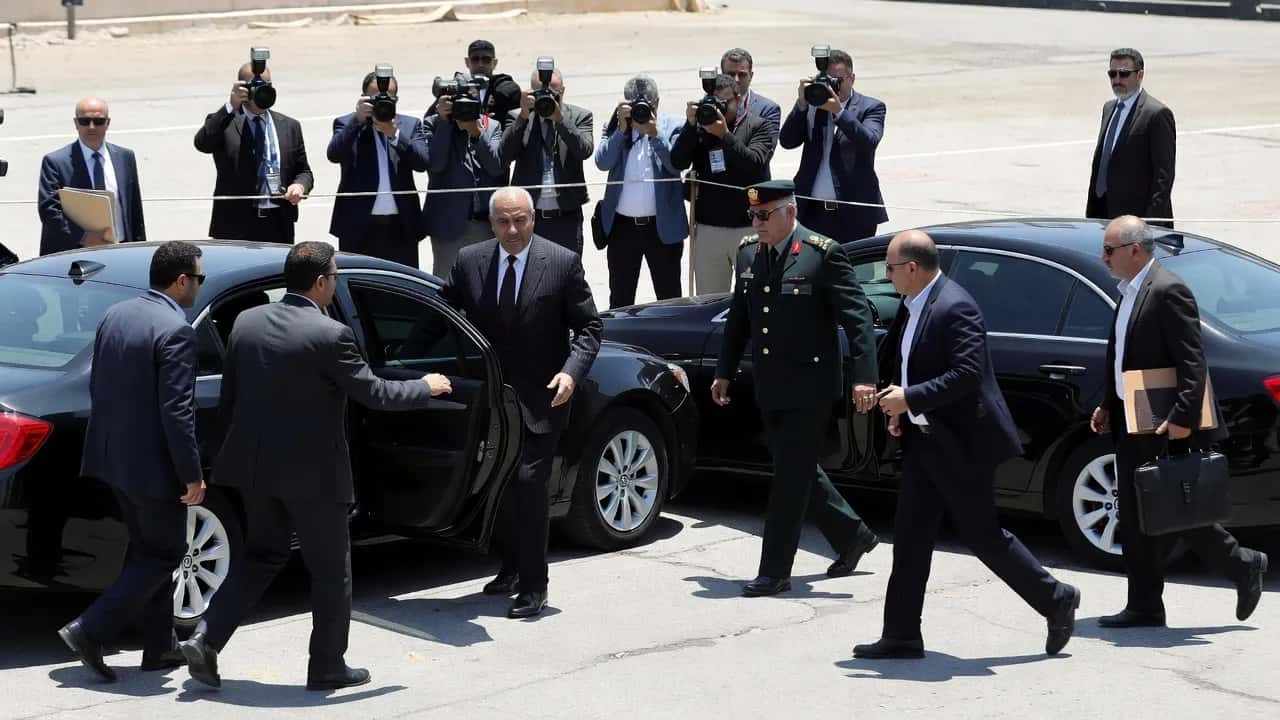
On Monday, October 26, Khalid ben Salmane, Asim Munir, and Ibrahim Kalın were received by Mohsen Rezaei and President Pezeshkian in Tehran.
- 02
First high-level meeting between the three members of the Mecca pact, signed in August, and Iran (Iran International).
- 03
Ali Bagheri Kani believes Iran withstood two aggressions thanks to its internal capabilities and advocates for indigenous regional security (Mehr).
ANALYSIS
Tehran, October 27, 2026. The Iranian press treats the meeting of Monday, October 26, as a validation of the Islamic Republic's line, but two registers coexist. Mehr News English sees it as proof of "endogenous" regional security, while Iran International, an opposition media outlet, places it in the escalation with Washington.
First, the facts. According to Mehr, Saudi Defense Minister Khalid bin Salman, Pakistani Marshal Asim Munir, and Turkish intelligence chief Ibrahim Kalin entered into session with the secretary of the Supreme National Security Council, Major General Mohsen Rezaei, and President Massoud Pezeshkian. The four-way talks focus on regional security, the aftermath of military aggression, and support for Palestine and Lebanon. Mehr specifies that the idea was born during Munir's visit to Tehran the previous week.
The official Iranian account emphasizes autonomy. Ali Bagheri Kani, deputy secretary of the Council, judges the meeting to be "the fruit of the resistance of the Iranian people and the bravery of the armed forces." He asserts that Iran has withstood two aggressions, carried out by the "Zionist regime" and the "terrorist American government," relying solely on its own capabilities, including weapons designed by young scientists. He adds that certain countries in the region believed that a link with a great power like the United States would protect them, which the facts would have denied: hence the idea of security built with regional actors.
Iran International, on the other hand, highlights the context: the meeting is the first high-level encounter between Iran and the three members of the Mecca pact, signed in August, according to which an attack on one is equivalent to an attack on all. Pakistan has ratified it, while ratification is still pending in the Turkish Parliament. Saudi Arabia announced on Sunday that it had intercepted a new wave of missiles and drones from the Houthis, qualified as being supported by Iran. The media reports that the visit aims to reduce hostilities and support Qatari mediation, and that, according to Iranian media, officials warned Munir that they would not negotiate with Washington as long as Tehran's demands were not met.
An Iran International headline mentions a possible "last chance" before military action. None of the provided articles announce an agreement or ceasefire, and none mention the decision of the Egyptian Parliament to authorize military support for Riyadh.