
DOMINANT ANGLE
Israel is gauging the Tehran meeting in light of its own war with Iran: the Mecca pact is being judged on its ability to produce concrete results, and the regional de-escalation on its effect on the American-Israeli position.
Dominant angle identified — does not reflect unanimity of this country’s media
KEY POINTS
- 01
On October 26, Khalid ben Salmane, Asim Munir, and Ibrahim Kalın arrived in Tehran for discussions with Iran (Jerusalem Post).
- 02
Iranian spokesman Esmaeil Baghaei described the reception of these officials as a key step towards regional diplomacy (Jerusalem Post).
- 03
Haaretz reports that the Houthis have launched new attacks against Saudi Arabia and that Egypt has approved defense support for the kingdom.
ANALYSIS
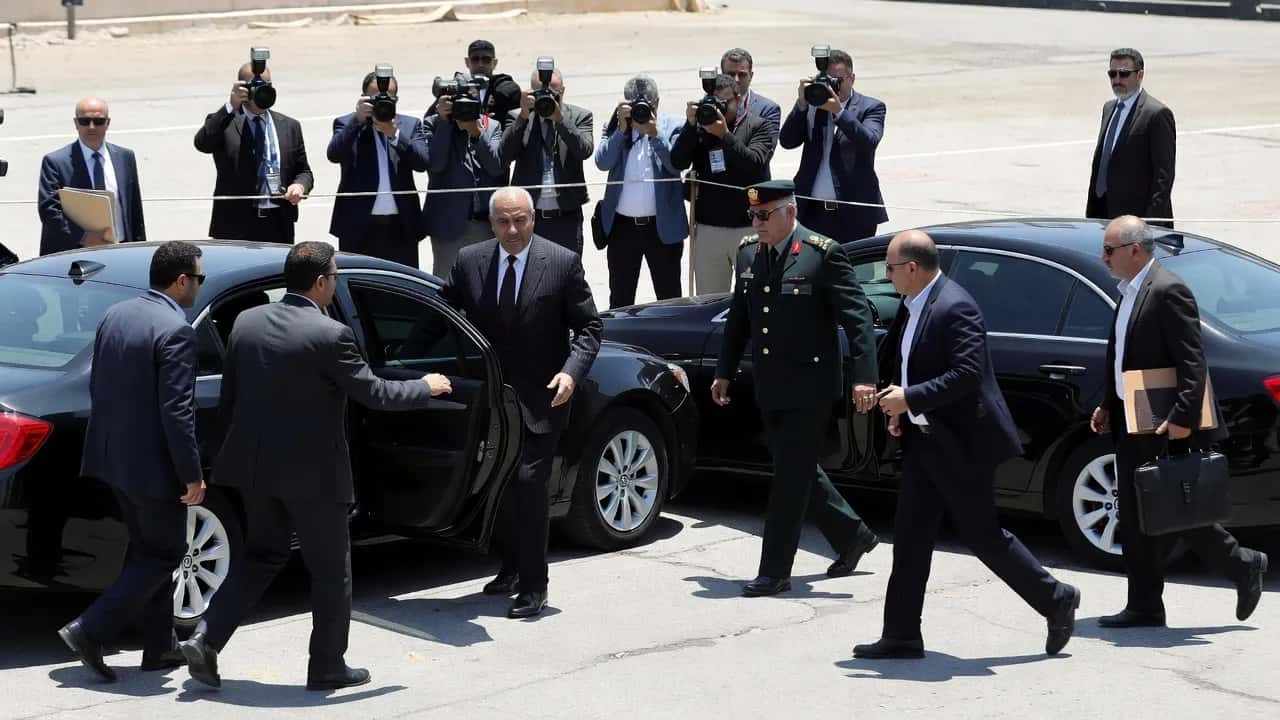
Jérusalem, October 27, 2026. The Israeli press is treating the Tehran meeting as a test for the Mecca defense pact more than as a diplomatic breakthrough. The Jerusalem Post reports that Saudi Defense Minister Khalid bin Salman arrived in the Iranian capital on October 26, accompanied by Pakistani Army Chief Asim Munir and Turkish intelligence chief Ibrahim Kalın. The newspaper describes them as the region's "heavy hitters" and notes that Munir has recently visited Iran.
The newspaper recalls that the agreement is a defense pact "modeled to some extent on NATO", whose concrete functioning remains poorly defined. The Houthi attacks on Saudi Arabia have raised the question of whether Turkey and Pakistan would actually come to Riyadh's aid. For the Jerusalem Post, the stake in Tehran is whether the countries can get "something practical" out of it. Skeptics, it writes, believe that the three members do not give the agreement any real strength.
On the Iranian side, Foreign Ministry spokesman Esmaeil Baghaei presented the reception of these military and security officials on October 26 as a key step towards regional diplomacy, which could promote lasting stability. He added that the region could only achieve this by working together. The Jerusalem Post reads this as a message that the region must solve its own problems, without new American bombings, which Tehran would prefer.
The newspaper immediately raises the question that concerns Israel: it is unknown whether the United States and Israel will join this approach. It emphasizes that Washington and Jerusalem openly say that the war against Iran will continue, and mentions that President Donald Trump has twice supported the maintenance of the Israeli prime minister in power to continue the fight against Iran.
Haaretz, in its English dispatch, takes a different tone: high-ranking officials from Saudi Arabia, Turkey, and Pakistan met with Iranian officials in Tehran on Monday to try to defuse the conflict in the Middle East. The headline talks about "de-escalation" talks, at a time when Yemen's Houthis launched new attacks on Saudi Arabia and Egypt approved defense support for the Gulf kingdom.
The two headlines converge on the context, intensifying Houthi strikes and a possible expansion of the front, but differ in emphasis: the Jerusalem Post focuses on the solidity of the pact and its consequences for the American-Israeli position, Haaretz on the de-escalation effort and Egyptian mobilization.


