
DOMINANT ANGLE
Singapore views the visit to Tehran as a diplomatic attempt at defusing tensions, welcomed by Iran but with no concrete outcome announced.
Dominant angle identified — does not reflect unanimity of this country’s media
KEY POINTS
- 01
First joint visit to Tehran by Pakistan, Saudi Arabia, and Turkey since the formation of their defense alliance in Mecca in August.
- 02
The meeting ended without a concrete announcement; the parties "agreed to continue discussions", according to Iranian state media.
- 03
Mohsen Rezaei stated that regional security "should be achieved by the countries themselves" and that any foreign intervention must be prevented.
ANALYSIS
Singapour, 27 October 2026. Channel News Asia and the Straits Times published the same wire story, titled "Iran holds 'very good' talks with Mecca pact nations on region's security". On Monday, 26 October, high-ranking officials from Saudi Arabia, Turkey, and Pakistan held discussions in Tehran with Iran, "in an attempt to stop the Middle East war from reigniting": an attempt to prevent the resurgence of the eight-month conflict in the Middle East, as described in the text.
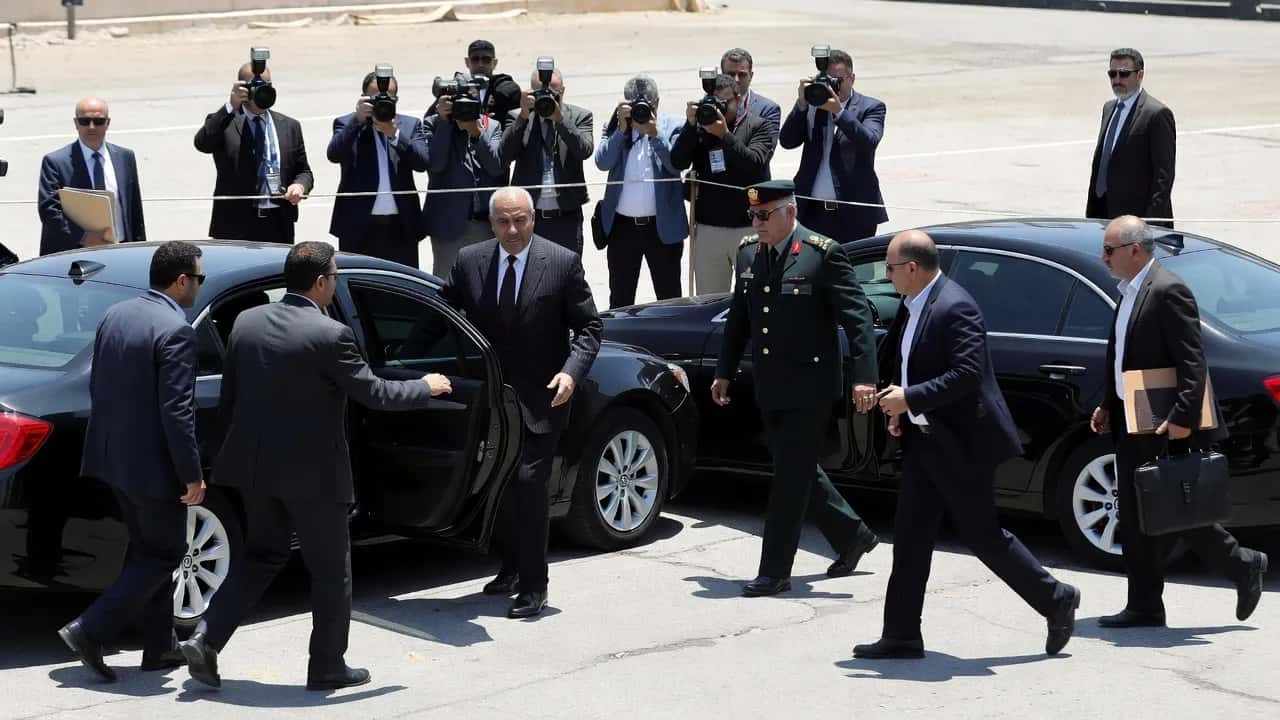
The articles emphasize the symbolic scope of the visit. This is the first joint visit to Tehran by Pakistan, Saudi Arabia, and Turkey since the formation of their defense alliance in Mecca in August. The delegation included Saudi Defense Minister Prince Khalid bin Salman, described as a heavyweight, Pakistani Army Chief Asim Munir, and Turkish intelligence chief Ibrahim Kalin. They met with President Massoud Pezeshkian and Foreign Minister Abbas Araghchi.
The Saudi framing is taken as is: according to a statement from the Saudi Ministry of Foreign Affairs, the delegations came to "de-escalate between the parties to the current crisis", or to defuse the crisis between the parties. The context presented is one of warnings from the US, Iran, and Israel that hostilities could resume.
The outcome is presented with restraint. The meeting ended without a concrete announcement: the parties "agreed to continue discussions", according to Iranian state media. Supreme National Security Council chief Mohsen Rezaei judged the exchanges "very good" on state television: "I feel that a new atmosphere is emerging in the region". He added that regional security "should be achieved by the countries themselves" and that any foreign intervention should be ruled out, citing the Israeli occupation of southern Lebanon, southern Syria, Gaza, and the West Bank.
The two Singaporean media outlets, which reproduce the same text, offer neither editorial nor commentary of their own. They stick to the diplomatic chronology: who came, who received, what was said, and the absence of tangible results. The Singaporean reader finds mainly an indicator of the probability of a resurgence of the conflict, with a regional dialogue channel remaining open.


