
DOMINANT ANGLE
Abuja sees in Tehran a last window of de-escalation: Nigerian media presents the meeting with Riyadh, Islamabad, and Ankara as a last chance before the outbreak.
Dominant angle identified — does not reflect unanimity of this country’s media
KEY POINTS
- 01
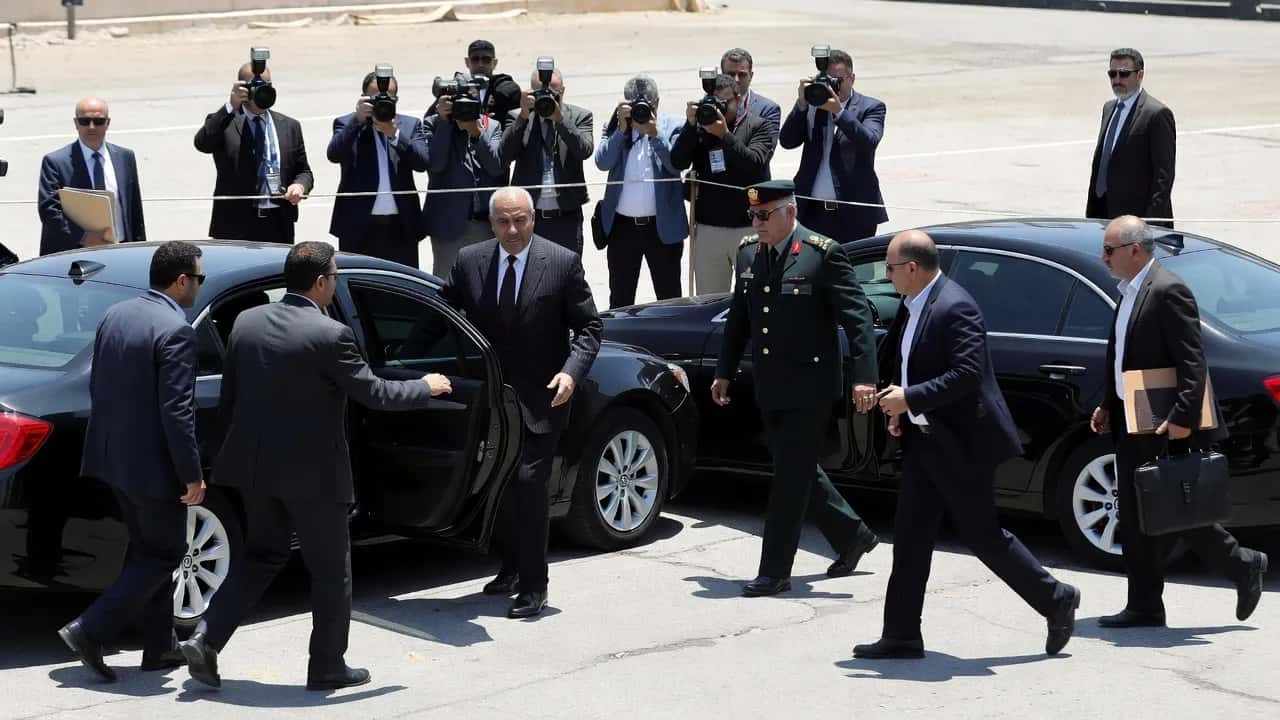
The Saudi defense minister, Pakistani General Asim Munir, and Turkish intelligence chief Ibrahim Kalin were announced in Tehran on Monday, October 26, as signatories to the Mecca pact of August.
- 02
The Houthis claimed an attack on Riyadh's international airport on Sunday, and new explosions rocked the capital overnight.
- 03
The conflict has lasted for eight months: the US-Israeli offensive in late February, the April ceasefire, tensions in the Hormuz Strait, and the collapsed June agreement.
ANALYSIS
Abuja, October 27, 2026. Nigeria's online press is covering the Tehran meeting of Monday, October 26, through two articles, one from Vanguard and the other from Nigerian Eye, which present it as a attempt at de-escalation as the regional conflict enters its eighth month.
Vanguard leads with the war in Yemen: the Houthis, allies of Iran, "have maintained their attacks" against Saudi Arabia. New explosions rocked Riyadh overnight, with an SMS alert to residents, after the Houthis claimed an attack on the international airport of the Saudi capital on Sunday. The title recalls that the kingdom, the world's largest oil exporter, is deeply involved in a war whose hostilities resumed in July.
The two media outlets detail the delegation: Saudi Defense Minister Prince Khalid bin Salman, Pakistani Army Chief General Asim Munir, and Turkish intelligence chief Ibrahim Kalin represent the three signatories to the defense alliance concluded in Mecca in August. On the Iranian side, Mohsen Rezaei is expected to participate, announced Ali Bagheri Kani, deputy secretary of the Supreme National Security Council, on state television. Nigerian Eye quotes Saudi Deputy Minister of Public Diplomacy Rayed Krimly, who describes the visit as an effort at "de-escalation, dialogue, and diplomatic solutions", in support of Qatar and Pakistan's mediation.
The articles place the meeting in a broader context: the American-Israeli offensive at the end of February launched during nuclear negotiations, the April ceasefire, the battle around the Strait of Hormuz, where around a fifth of the world's oil and liquefied natural gas passes, the American naval counter-blockade of Iranian ports, and the collapse of an agreement in June. Vanguard adds that Washington, Tehran, and Israel have each warned of a possible resumption of hostilities, on the eve of the Israeli elections and the US midterm elections.
The most marked tone comes from a Saudi analyst, Hesham Alghannam, quoted by Vanguard: this "historic meeting" could be "the last chance before the escalation becomes uncontrollable". Neither of the two articles reports, at this stage, any agreement or ceasefire resulting from the discussions, and neither gives the floor to Nigerian officials.


