Iran — news through its media
Stories followed in this country, with their framing set against the rest of the world.
106 subjects found
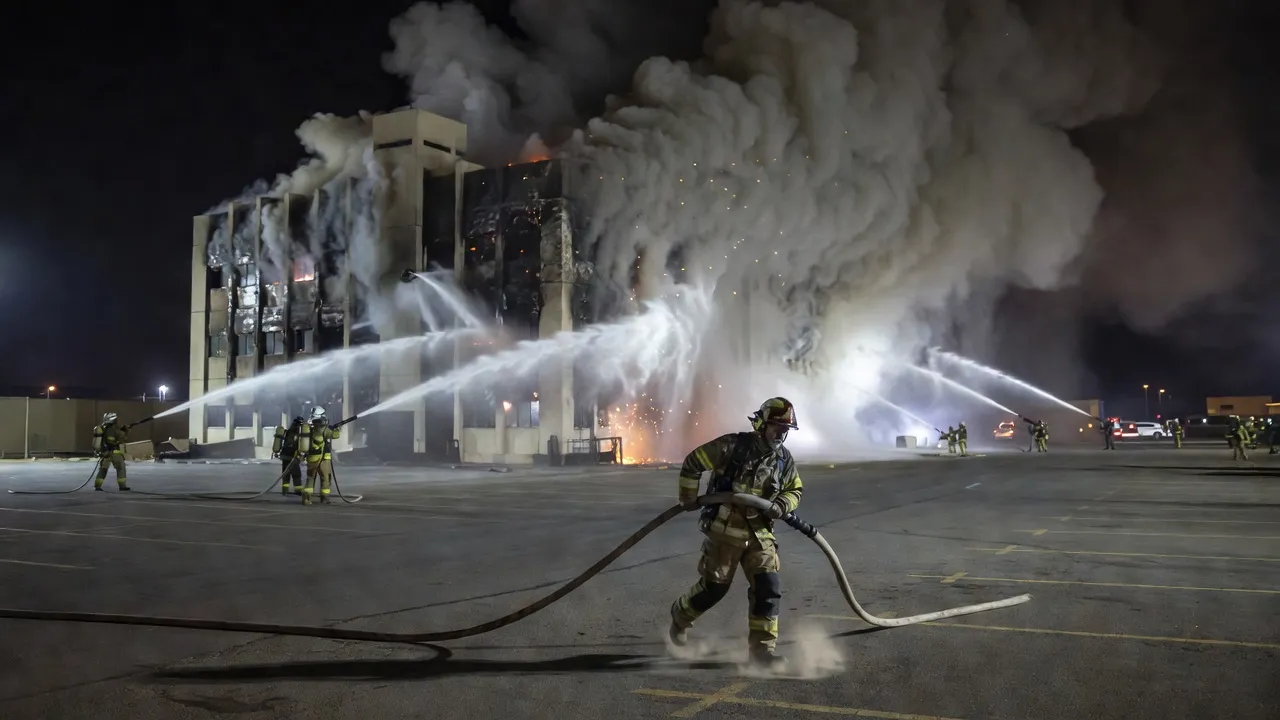
Saudi Arabia and the Houthis: Riyadh strikes oil sites near Sanaa, an Aramco building hit in return
The Saudi-led coalition targeted oil facilities in Yemen; the Houthis struck back at Dhahran and Riyadh, and Brent crude rose above $107.


 +13
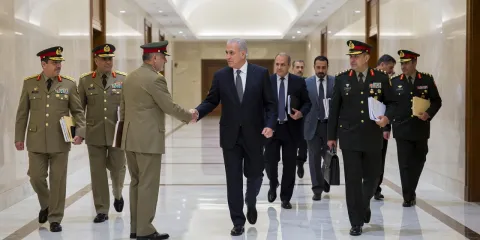
Saudi Arabia: Turkey and Pakistan to deploy troops to the kingdom in the face of the Houthis
Meeting in emergency session in Riyadh, the members of the Mecca defence pact activated their collective commitments after Houthi attacks on the kingdom. The role of Turkish and Pakistani troops was not specified, as Yemeni forces advanced on the Bab al-Mandab strait.

 +5
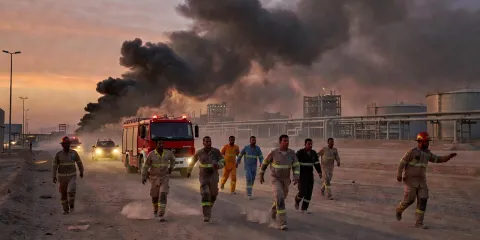
Saudi Arabia: the Houthis claim a missile and drone strike on an Aramco site in Riyadh
Flames and smoke were seen above an Aramco site south of Riyadh, which the Houthis say they struck in retaliation for Saudi raids on Sanaa. The Riyadh-led coalition calls the claims "misleading".


 +6
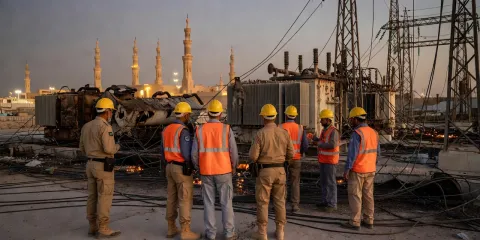
Medina: Riyadh accuses the Houthis of targeting the power station that supplies the Prophet's Mosque
Saudi Arabia accuses Yemen's Houthis of striking a power station in Medina that supplies the Prophet's Mosque. The Houthis deny it and denounce Saudi strikes on Sanaa. The Arab League speaks of a "dangerous escalation" as condemnations multiply across the Muslim world.

 +3
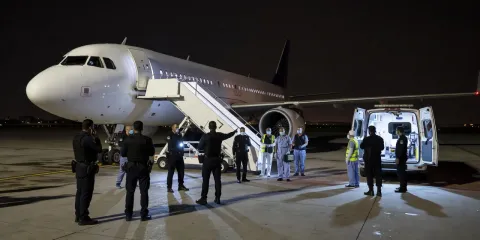
Flydubai Dubai-Tel Aviv flight: a pilot stabs his captain and the plane makes an emergency landing in Saudi Arabia
Flydubai flight FZ1073, carrying more than 160 Israeli passengers, made an emergency landing in Tabuk, Saudi Arabia, on Wednesday after a pilot stabbed the captain. Israel calls it an attempted attack; passengers and a relief crew regained control of the aircraft. Flydubai has suspended its flights to Israel.

 +42

Kaliningrad: Russia threatens NATO with its "entire arsenal" if the exclave is cut off
In a document delivered to NATO headquarters in Brussels, Moscow says it is ready to use its "entire arsenal" if Alliance countries try to cut off Kaliningrad, the Russian exclave between Poland and Lithuania. NATO confirmed receiving the warning, which several outlets read as a nuclear threat.

 +7
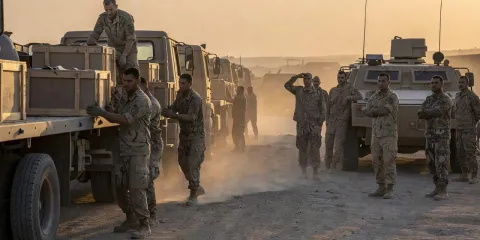
The last US troops leave Iraq, where Iran's influence is growing
The last US forces of the coalition against the Islamic State leave Iraq on 30 September, in the middle of the war between Washington and Tehran. Baghdad promises to disarm pro-Iranian militias by June 2027; several refuse, and Iraqi officials fear a return of the Islamic State.
+3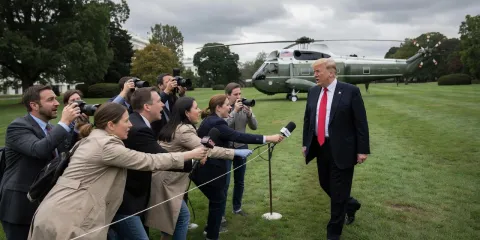
Trump rejects Iran's seven-day plan to reopen Hormuz and renames the strait "Trump Strait"
Donald Trump rejected the Iranian proposal passed on by Qatar: seven days of halted hostilities across the region, then the reopening of Hormuz, in exchange for lifting the US blockade and oil sanctions and unfreezing at least $12 billion in assets. Tehran says it is waiting for an official answer; according to the Wall Street Journal, Trump sees renewed bombing as likely after the midterm elections.
 +18
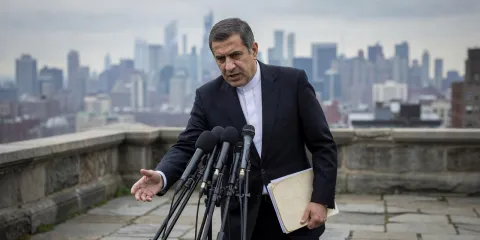
Iran offers to reopen the Strait of Hormuz within seven days if the blockade is lifted, and Trump reportedly rejects it
Relayed by Qatar, Abbas Araghchi's plan calls for lifting the naval blockade of Iranian ports, ending oil sanctions and a ceasefire including Lebanon, then reopening Hormuz on day six and resuming nuclear talks on day seven. Tehran rules out nuclear concessions. According to the Wall Street Journal, Donald Trump has rejected it; Tehran awaits an official answer.
 +14
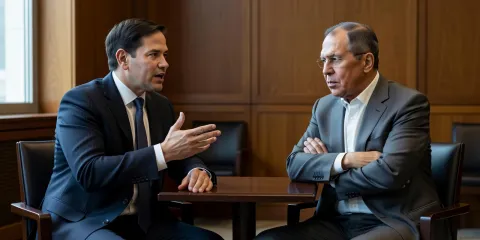
Washington invites Vladimir Putin to the G20 summit in Miami, and the Kremlin says it is "grateful"
After meeting Sergei Lavrov on the sidelines of the UN General Assembly, Marco Rubio announced that Vladimir Putin had been invited to the G20 summit in Miami in December: "In order to solve problems, you have to meet with the people that you disagree with." He raised the prospect of a limited truce covering grain and energy. The Kremlin said it was grateful; at the rostrum, Volodymyr Zelensky accused Moscow of using nationals of 47 countries to fight.
 +24
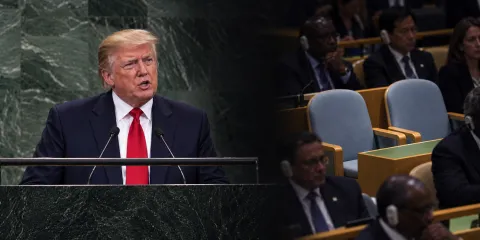
Trump threatens to "annihilate" Iran at the UN, then announces talks have resumed
At the General Assembly, Donald Trump said he would have to decide whether to annihilate Iran absent a deal, then minutes later announced a "very good" three-hour meeting between US and Iranian representatives in New York, led by Steve Witkoff and Jared Kushner. A deal, he said, could come after the midterm elections. The Iranian and Cuban delegations walked out; oil prices fell.
+28Understand global stakes from every perspective.
718 subjects · 75 countries · 8174 perspectives