20 perspectives, each in the voice of that country's press.
Buenos Aires sees Trump's refusal as a maneuver timed to the US electoral calendar rather than the substance of the Iranian proposal on the Strait of Hormuz.
2 sources
Canberra sees the naval blockade as the real lever of the crisis, while the Red Sea is also heating up near Riyadh.
4 sources
Budapest sees the renaming of the Strait of Hormuz to "Trump-szoros" as a staged event that covers up a refusal, the justification for which, as hammered out by Washington, remains above all economic: oil and the financial weakening of Tehran.
4 sources
Brasília is mainly concerned about the threat of a resumption of American bombings after the November midterm elections, more than the simple rejection of the seven-day plan announced on Saturday, September 26, 2026.
3 sources
Ottawa sees Donald Trump's refusal as an electoral calendar calculation as much as a diplomatic one, just a few weeks away from the November midterm elections.
4 sources
Berlin first assesses the energy dimension of the American refusal, with Tagesschau linking the prolonged blockade of the Strait of Ormuz to the global rise in energy prices rather than the diplomatic terms of the exchange.
Jakarta is scrutinizing the procedural gap between the public rejection of Donald Trump and the lack of official response transmitted by Qatari mediators.
Jerusalem welcomes the American refusal as confirmation that maximum pressure on Tehran continues to pay off, rather than as a mere disagreement over the Strait of Hormuz.
Tehran denounces American "contradictory" statements after Donald Trump rejected its plan in seven days, reaffirms that its conditions remain on the table via Qatari mediators, and warns Washington against any intervention in the Strait of Hormuz.
Islamabad is first measuring the impact of the American refusal on oil prices and traffic in the Strait of Hormuz, a vital artery on which a large part of the country's energy imports depend.
Lisbon retains above all the mediation offer launched by Moscow in the wake of the American refusal, more than the actual content of the Iranian plan for Hormuz.
Doha is gauging the blow to its mediation without deeming it fatal: Tehran claims it is still waiting for an official response from Washington, transmitted through the same channels that had carried the plan in seven days.
Moscow sees the American refusal as a new episode in a stalled mediation, where Tehran says it still has not received anything from the intermediaries despite Trump's public statement.
Riyadhh is distancing its position from the US-Iranian standoff: the kingdom is defending freedom of navigation in the Strait of Hormuz while recalling that it has itself suffered direct Iranian attacks.
Ankara sees the American rejection as a sign that Qatari mediation, hailed as "positive and constructive", was not enough to convince Donald Trump to test Tehran's sincerity.
The United States government draws a clear line: Iran's plan to reopen the Strait of Ormuz in seven days is not acceptable, and the President is turning the refusal into a show of force just five weeks before the midterm elections.
4 sources
Cross-media analysis
What the comparison reveals
Common ground and differences in coverage across the media analysed.
What the media report in common
1
Donald Trump announced on Saturday, September 26, that he had rejected the Iranian proposal to reopen the Strait of Hormuz, stating to the press, 'I reject their proposal,' a rejection reported by nearly all of the monitored sources, with the notable exception of Saudi press, which did not address this exchange.
2
The Iranian plan, presented by Minister Abbas Araghchi and transmitted through Qatari mediators, provided for seven days of cessation of hostilities followed by the reopening of the Strait of Hormuz, in exchange for the lifting of the US naval blockade, the suspension of oil sanctions, and the unfreezing of Iranian assets estimated at at least $12 billion.
Where media coverage diverges
Explanatory factor for the refusal
On the question of what factor had the most weight on the moment chosen by Trump to reject the plan, one part of the coverage highlights the calendar of the November midterm elections, while another prioritizes the economic pressure exerted by the naval blockade on Iranian oil revenues.
Coverage aligned with this reading
Coverage that diverges
Consequences of the blockade highlighted
On the question of what the maintenance of the strait blockade implies, one part of the coverage first retains the impact on global energy prices and oil traffic, while another highlights the regional security risks, between the Houthi attack on Riyadh the same weekend, the warning from the Revolutionary Guards and the Saudi call for freedom of navigation.
Coverage aligned with this reading
Coverage that diverges
Reading of the balance of power
On the question of what the exchange of statements between Washington and Tehran translates, one part of the coverage sees it as a demonstration of American strength, while another highlights Tehran's denunciation of American messages deemed inconsistent.
Coverage aligned with this reading
Coverage that diverges
This grouping describes the publications analysed, not the position of these countries’ populations or of their governments.
Buenos Aires sees Trump's refusal as a maneuver timed to the US electoral calendar rather than the substance of the Iranian proposal on the Strait of Hormuz.
KEY POINTS
In front of the White House on Saturday, September 26, Trump stated "Rechazo su propuesta" regarding the Iranian plan on Hormuz
The Iranian plan called for seven days of cessation of hostilities in exchange for the lifting of the naval blockade, the end of oil sanctions, and the unfreezing of at least $12 billion in assets
According to the Wall Street Journal cited by Perfil, Trump is skeptical about Iran's respect for the conditions and judges a resumption of bombings likely
ANALYSIS
Buenos Aires, September 27, 2026. The Argentine press reads the rejection, on Saturday, September 26, by Donald Trump of the Iranian proposal to reopen the Strait of Hormuz in light of a calendar that is more internal than international: that of the American mid-term elections in November. Perfil poses it from the start: the conflict in the Middle East "seems to be heading towards an escalation of the war confrontation, although conditioned by internal political issues in the United States and its mid-term elections".
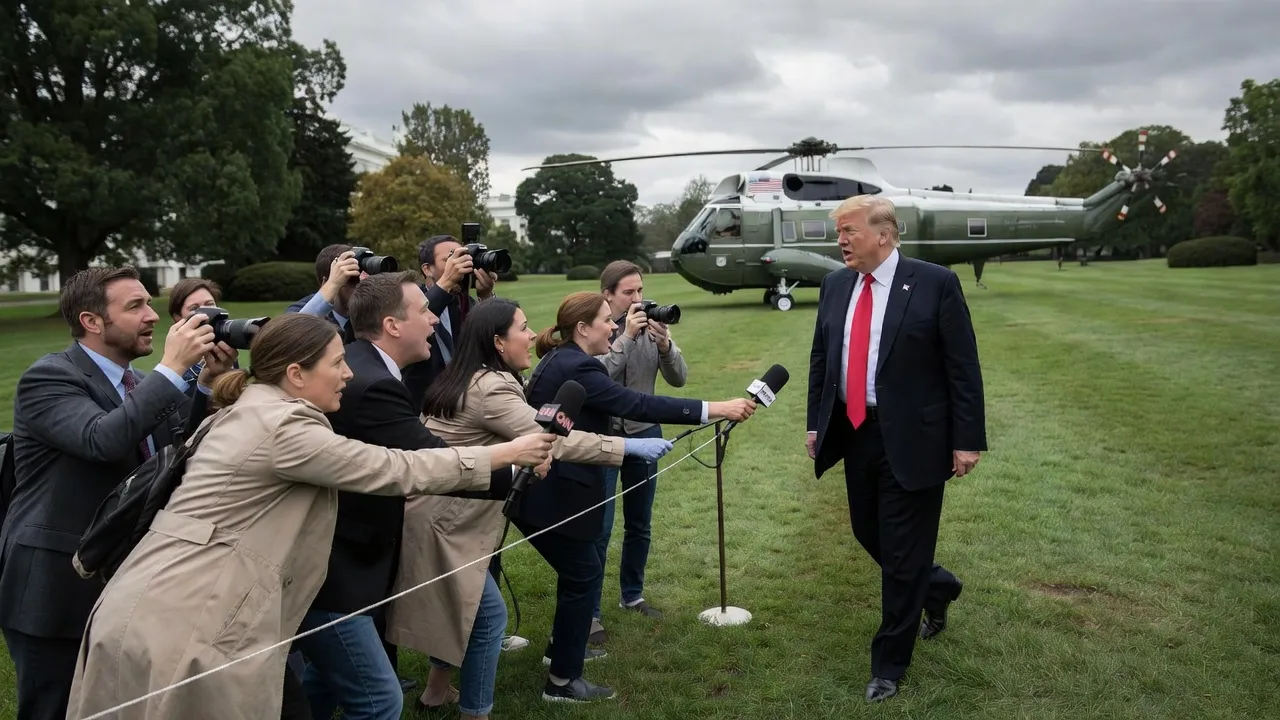
In front of the White House, on Saturday, the American president was categorical: "I reject their proposal". He added that the Iranian leaders "want to reach an agreement to open the strait immediately because they are losing ground drastically". The plan, transmitted by the Iranian Foreign Minister Abbas Araghchi on the sidelines of the UN General Assembly in New York, provided for seven days of cessation of hostilities - including Lebanon, which implies that Washington convinces Israel to stop its offensive against Hezbollah - in exchange for the lifting of the naval blockade, the end of oil sanctions, and the unfreezing of at least $12 billion in Iranian assets.
Perfil details seven demands transmitted by diplomatic sources to Arab agencies, regretting that "Western international media often simplify the conflict by focusing only on economic issues". Among them: the withdrawal of American air and naval forces from Iranian waters, compensation for the economic damages of the conflict, and the end of "hostile rhetoric".
According to the Wall Street Journal, cited by Perfil, Trump would be skeptical about Tehran's respect for its own demands and would judge a resumption of bombings likely. On Friday, September 25, Minister Araghchi had nevertheless stated: "If the necessary conditions are met, the strait can be reopened... in seven days", while warning that "Iran does not admit coercion, threats or intimidation".
Ámbito recalls that negotiations have been at a standstill since July, when Trump ended the agreement protocol concluded the previous month, after Iranian attacks on tankers in Hormuz. Washington claims to maintain "total control" of the strait despite the blockade, with 29 ships having transited the previous night.
Australia
DOMINANT ANGLE
Canberra sees the naval blockade as the real lever of the crisis, while the Red Sea is also heating up near Riyadh.
KEY POINTS
Trump, on Saturday, September 26, before heading to Tennessee: "I reject their proposal ... I rejected their agreement" (PerthNow).
The Iranian plan, transmitted via Qatar by Minister Abbas Araghchi, provided for seven days of cessation of hostilities, including Lebanon, in exchange for the lifting of the naval blockade, sanctions, and the unfreezing of at least $12 billion in assets (ABC News Australia).
The same weekend, Saudi defenses intercepted two drones and a Houthi ballistic missile targeting Riyadh and Khamis Mushait, the first alert of this type since March-April (The Age / Sydney Morning Herald).
ANALYSIS
Canberra, 27 September 2026. Australian newsrooms are focusing on one figure: seven days, the duration Iran proposed to reopen the Strait of Hormuz and suspend hostilities throughout the region, including Lebanon. Donald Trump made a decision on Saturday, leaving the White House for Tennessee: "I reject their proposal... I rejected their agreement," he said, adding that Tehran "wants to open the strait immediately because they are losing so heavily," due to a lack of revenue, as most of Iran's income passes through Hormuz.
According to PerthNow, the US naval blockade is targeting this financial nerve: in response to Iran's blockade of the strait, which has "significantly reduced" maritime traffic, Washington is maintaining economic pressure that Trump claims is a lever, while also asserting that it is keeping control of the strategic route.
ABC News Australia details the offer transmitted by Iranian Foreign Minister Abbas Araghchi via Qatar: resuming the agreement protocol signed in June, lifting sanctions, and unfreezing at least $12 billion in Iranian assets, in exchange for lifting the naval blockade. "The choice now belongs to the United States," Araghchi said, specifying that the agreement was possible "if the necessary conditions are met." Trump responded by posting a map of the strait renamed "Trump Strait" on Truth Social. A spokesman for the Revolutionary Guards, Hossein Mohebi, quoted by the Tasnim agency, warned that Tehran would not stop "punishing" Washington until the seven Iranian conditions were met.
Hungary
DOMINANT ANGLE
Budapest sees the renaming of the Strait of Hormuz to "Trump-szoros" as a staged event that covers up a refusal, the justification for which, as hammered out by Washington, remains above all economic: oil and the financial weakening of Tehran.
KEY POINTS
Trump justifies his refusal by Iran's economic situation: the country wants a rapid agreement because it is going through "serious economic difficulties" and is losing revenue due to the closure of the strait (444, HVG).
The Iranian plan, presented on Friday by Abbas Araghchi via Qatari mediators, provided for the reopening of Ormuz within seven days in exchange for the lifting of the American naval blockade and sanctions on oil (HVG, Telex).
The 14-point agreement signed in June in Pakistan never came into effect: the strikes resumed, with Iran targeting unauthorized ships and the United States targeting Iranian installations and tankers (444).
ANALYSIS
Budapest, September 27, 2026. The Hungarian press is providing detailed coverage of Donald Trump's rejection, on Saturday, September 26, of the Iranian proposal to reopen the Strait of Ormuz within seven days. Index, HVG, 444, and Telex all report the same sequence of events: on Friday, Iranian Foreign Minister Abbas Araghchi presented the plan to the United Nations General Assembly in New York, transmitted by Qatari mediators; on the same day, the White House described the discussions with Tehran as "positive and constructive". On Saturday morning, Donald Trump posted a map on Truth Social where the Strait of Ormuz was renamed "Trump-szoros" - "Trump Strait". According to HVG, this was his first public reaction to the Iranian offer.
In front of the White House, the American president subsequently confirmed his refusal to journalists. His justification, reported by several Hungarian titles, is economic in nature: Iran wants a rapid agreement because it is going through "grave economic difficulties" and is losing significant revenue due to the closure of the strait. "They want to conclude an agreement, and I find that normal, I also like to conclude agreements. But I reject their proposal," 444 quotes. Trump added that the United States already exercises "total control" over the strait, through which a "huge amount of oil" transits, according to him.
Brazil
DOMINANT ANGLE
Brasília is mainly concerned about the threat of a resumption of American bombings after the November midterm elections, more than the simple rejection of the seven-day plan announced on Saturday, September 26, 2026.
KEY POINTS
Donald Trump stated on Saturday, September 26, in front of the White House: "Rejeito a proposta deles" ("I reject their proposal")
The Iranian plan provided for seven days of regional ceasefire and the reopening of Ormuz in exchange for the lifting of the naval blockade, the end of oil sanctions, and the unfreezing of Iranian assets
According to the Wall Street Journal cited by Estadão, Trump considers it likely that bombings will resume after the November midterm elections; the September 1 strikes killed five people at a wedding in southeastern Iran
ANALYSIS
Brasília, September 27, 2026. Brazil's government views the rejection of the Iranian plan by Donald Trump, announced on Saturday, September 26, in front of the White House, as a step towards a resumption of hostilities rather than a de-escalation. "Rejeito a proposta deles" ("I reject their proposal"), the American president told journalists before heading to a college football game, judging that Tehran wants "to close a deal because it is losing ground in a spectacular way".
The plan, transmitted by Qatar, provided for seven days of cessation of hostilities throughout the region, including Lebanon, before the reopening of the Strait of Ormuz and the resumption of nuclear discussions, in exchange for the lifting of the American naval blockade, the end of oil sanctions, and the unfreezing of Iranian assets. "A escolha cabe agora aos Estados Unidos" ("The choice now belongs to the United States"), Iranian Foreign Minister Abbas Araghchi had said from the UN headquarters in New York, specifying that the conditions resumed the agreement protocol signed in June. President Massoud Pezeshkian assured that the plan had been developed "in coordination" with the supreme leader, with a team of six members authorized to decide.
Canada
DOMINANT ANGLE
Ottawa sees Donald Trump's refusal as an electoral calendar calculation as much as a diplomatic one, just a few weeks away from the November midterm elections.
KEY POINTS
Donald Trump stated on Saturday, September 26, that he rejected the Iranian proposal, saying: "I reject their proposal... I rejected their deal" (CBC News, Globe and Mail).
According to the Wall Street Journal, cited by CBC News and the National Post, Trump considers it likely that the bombing campaign against Iran will resume after the November midterm elections.
The Iranian plan, transmitted through Qatari mediators, called for a seven-day cessation of hostilities, including Lebanon, in exchange for the lifting of the US naval blockade, the suspension of oil sanctions, and the resumption of nuclear talks (Global News).
ANALYSIS
Ottawa, September 27, 2026. The rejection expressed by Donald Trump on Saturday, September 26, of the Iranian proposal to reopen the Strait of Ormuz is seen in Ottawa more as an electoral calendar calculation than as a diplomatic gesture. "I reject their proposal... I rejected their agreement," the American president stated in front of the White House before flying to Tennessee, according to CBC News and the Globe and Mail. The plan, presented at the United Nations General Assembly in New York and transmitted by Qatari mediators, provided for seven days of cessation of hostilities throughout the region, including Lebanon, in exchange for the lifting of the American naval blockade, the suspension of sanctions on Iranian oil, and the resumption of discussions on nuclear issues, reports Global News.
For Trump, cited by the Canadian press, the offer betrays Tehran's weakness: "They want to conclude an agreement to open the strait immediately because they are losing miserably," he said, adding: "We are winning enormously." The National Post emphasizes that the American naval blockade is exerting increasing economic pressure on Iran, whose revenues depend largely on traffic through the Strait of Ormuz.
Germany
DOMINANT ANGLE
Berlin first assesses the energy dimension of the American refusal, with Tagesschau linking the prolonged blockade of the Strait of Ormuz to the global rise in energy prices rather than the diplomatic terms of the exchange.
KEY POINTS
Tehran has transmitted to Washington, via Qatar, a "seven-day plan" providing for the reopening of the Strait of Hormuz, announced Minister Abbas Araghtschi on September 26 in New York.
Donald Trump rejected the offer to the press at the White House: "I rejected their agreement", citing the pressure exerted by the naval blockade on Iranian oil revenues.
According to the Wall Street Journal, Trump is considering resuming strikes against Iran after the November 3 midterm elections, and has renamed the strait "Trump Strait" on Truth Social.
ANALYSIS
Berlin, September 27, 2026.
The public broadcaster Tagesschau and the economic daily Handelsblatt are primarily focusing on the energy dimension of the standoff around the Strait of Ormuz, which has been blocked "for months, with consequences for the economy," according to Tagesschau. On Saturday, September 26, Iranian Foreign Minister Abbas Araghtschi confirmed in New York, on the sidelines of the UN General Assembly, that Tehran had transmitted a "seven-day plan" to Washington via Qatar: if the United States accepted it, Iran would reopen the maritime route, in four or five days, according to him. Donald Trump rejected the agreement outright in front of the press at the White House: "I rejected their agreement." He justified this refusal by recalling, according to Handelsblatt, that the American naval blockade is already depriving Iran of its oil revenues and thus maintaining economic pressure on Tehran.
The two media outlets note that Trump had published a map of the strait, renamed "Trump Strait," on Truth Social the previous evening, Friday, September 25 - a gesture that the German press reports without further comment. According to the Wall Street Journal, cited by Tagesschau and Handelsblatt, Trump is considering resuming strikes against Iran after the midterm elections to Congress on November 3. However, before the UN, he had mentioned the possibility of an agreement after this election.
France
DOMINANT ANGLE
Paris sees Donald Trump's refusal as a calculated setback, which shuts down but does not entirely close the Qatari track opened by Tehran.
KEY POINTS
The Iranian plan called for a seven-day cessation of hostilities and the reopening of the Ormuz Strait, in exchange for the lifting of the naval blockade, oil sanctions, and the unfreezing of at least $12 billion in assets.
Donald Trump said he rejected the proposal on Saturday, September 26, then posted a map on Truth Social of the strait renamed "Trump Strait".
According to the Wall Street Journal, Donald Trump thinks it is likely that strikes will resume after the November midterm elections.
ANALYSIS
Paris, September 27, 2026. The French press first notes the statement by the American president: "I reject their proposal." Spoken on Saturday, September 26, before the press outside the White House, this sentence provisionally closes a week of negotiations conducted on the sidelines of the United Nations General Assembly in New York. According to the accounts of Le Monde, L'Obs, BFMTV, and Sud Ouest, Iran had transmitted a plan on Friday, via Qatari mediators, providing for the reopening of the Strait of Ormuz within seven days, in exchange for the lifting of the American naval blockade, the end of oil sanctions, and the unfreezing of assets worth at least $12 billion, conditions already included in the agreement protocol signed in June. Iranian Foreign Minister Abbas Araghchi had stated from the UN headquarters that "the choice now belongs" to Washington.
The strait is at the heart of a conflict triggered at the end of February by American-Israeli strikes on Iran; before the war, a fifth of the world's hydrocarbons transited through it. Since then, the Islamic Republic has claimed control over it, while Washington has maintained a blockade on Iranian ports, according to Le Monde and BFMTV.
What the French editorial offices emphasize is the mechanics of the decision on the Iranian side as well as the content of the plan: President Massoud Pezeshkian specified to CBS that the proposal had been developed "in coordination" with Supreme Leader Mojtaba Khamenei, "the ultimate arbiter" of the Islamic Republic's decisions, and that a team of six members, combining the army, parliament, and government, had been given decision-making power.
Indonesia
DOMINANT ANGLE
Jakarta is scrutinizing the procedural gap between the public rejection of Donald Trump and the lack of official response transmitted by Qatari mediators.
KEY POINTS
Abbas Araghchi says Iran is waiting for an official US response conveyed through mediators, despite Trump's public rejection (CNN Indonesia).
Donald Trump, questioned by journalists: "I reject their proposal. They want to make a deal... because they are suffering heavy losses" (CNN Indonesia).
According to Tempo English, Washington accuses Tehran of having fired on commercial ships in the strait after the failure of the June protocol, and maritime traffic in Hormuz remains at a standstill.
ANALYSIS
Jakarta, September 27, 2026. The Indonesian press first notes the diplomatic hiatus between Donald Trump's public statement and the silence of official channels. According to CNN Indonesia, Iranian Foreign Minister Abbas Araghchi assured on Sunday that Tehran had "received nothing official through mediators," despite the rejection already expressed by the American president. "We heard the first reaction from the American president, but nothing was transmitted to us officially by the mediators," he said, quoted by Anadolu. Araghchi claims to be waiting for the final position transmitted by the intermediaries before making any decision, adding that Iran's conditions have already been outlined during meetings in New York.
These conditions, he specifies, do not go beyond what was included in the agreement protocol signed with Washington in June, a text that fell into disuse a few weeks later amid a resurgence of fighting, including in Lebanon. This memorandum provided for the easing of sanctions, the unfreezing of frozen assets, and the cessation of military operations.
On the substance of the American refusal, CNN Indonesia directly relays Donald Trump's remarks when questioned by journalists: "I reject their proposal. They want to conclude an agreement to quickly reopen the strait because they are suffering heavy losses." The American president adds that he appreciates "concluding deals," but judges this agreement unacceptable as it stands.
Israel
DOMINANT ANGLE
Jerusalem welcomes the American refusal as confirmation that maximum pressure on Tehran continues to pay off, rather than as a mere disagreement over the Strait of Hormuz.
KEY POINTS
Trump stated on Saturday in front of the White House: "I reject their proposal. I rejected it," asserting that Iran "is losing very heavily" while the United States "is winning tremendously"
The Iranian plan, presented by Abbas Araghchi at the UN and transmitted via Qatari mediators, provided for seven days of cessation of hostilities followed by the reopening of Ormuz and the lifting of the naval blockade and oil sanctions
Araghchi specified on Sunday that Tehran had only seen an "initial reaction" from Trump and was still waiting for an official response transmitted by the mediators before deciding on the next steps
ANALYSIS
Jérusalem, September 27, 2026. Israel views Donald Trump's rejection on Saturday of the Iranian proposal to reopen the Strait of Hormuz in seven days as confirmation that maximum pressure is still paying off. "I reject their proposal. I rejected it," the US President said in front of the White House before flying to Tennessee, adding that Tehran "wants to conclude an agreement to immediately reopen the strait because it is losing very badly" while "we are winning enormously".
The plan had been presented to the United Nations General Assembly by Iranian Foreign Minister Abbas Araghchi, transmitted to Washington via Qatari mediators: seven days of cessation of hostilities throughout the region, followed by the reopening of the strategic strait and a return to discussions on the nuclear program, in exchange for the lifting of the US naval blockade and oil sanctions.
On Sunday, Araghchi clarified that Tehran had perceived an initial reaction from Trump but was still waiting for an official response transmitted by the mediators before making a decision. This cautious formulation, relayed by the Israeli press, is interpreted as an admission of weakness rather than a signal of appeasement: Iran would be trying to gain time under blockade, without obtaining the immediate lifting of sanctions or the unfreezing of assets.
Iran
DOMINANT ANGLE
Tehran denounces American "contradictory" statements after Donald Trump rejected its plan in seven days, reaffirms that its conditions remain on the table via Qatari mediators, and warns Washington against any intervention in the Strait of Hormuz.
KEY POINTS
Araghchi (Mehr News): the conditions for reopening Ormuz, "approved by the Supreme National Security Council", have been transmitted to the mediators who relayed them to the Americans; a first reaction from Trump came, with no official follow-up since.
According to the Wall Street Journal cited by YJC, Trump rejected the seven-day ceasefire plan providing for the reopening of Ormuz in exchange for the lifting of the American naval blockade.
The spokesperson for the armed forces, General Chekartchi, warned that any American intervention in the Ormuz Strait "will receive a slap".
ANALYSIS
Tehran, September 27, 2026. The rejection of the Iranian plan in seven days by Donald Trump comes as no surprise to the Iranian press, which has been documenting for several days the precautions taken by the country's diplomacy to frame its proposal. According to Mehr News, Foreign Minister Abbas Araghchi explained that the central axis of his talks in New York, on the sidelines of the UN General Assembly, was to present conditions "approved by the Supreme National Security Council" for the reopening of the Strait of Hormuz, transmitted in full to the mediators and then relayed to the American side. A first reaction from the American president followed, he specified, "but nothing has yet been received from the mediators." Before Iranian journalists, Araghchi denounced "contradictory" statements from Washington and said he was waiting for a "definitive" position before making any decision.
The YJC website, citing the Wall Street Journal, reports that Trump rejected the proposal for a seven-day ceasefire at the end of which the Strait of Hormuz would be reopened and talks would be initiated, in exchange for the lifting of the American naval blockade. For analyst Seyed Mohammad Marandi, quoted by YJC, the pressure from Netanyahu and his allies may have weighed on this refusal; he warns that an Israeli prime minister fearing electoral defeat may seek to delay the vote through escalation.
Philippines
DOMINANT ANGLE
Manila is measuring the impact of the American refusal on oil prices and maritime traffic that the energy-importing archipelago depends on
KEY POINTS
Trump stated on Saturday, September 26, before heading to Tennessee: "I reject their proposal (...) I rejected their agreement"
The Iranian plan, transmitted through Qatari mediators, provided for seven days of cessation of hostilities before the reopening of the Strait of Hormuz
According to the Wall Street Journal, Trump privately judges it unlikely that Iran will respect its conditions and is considering resuming strikes after the November midterm elections
ANALYSIS
Manille, September 27, 2026. In the Philippines, where the island economy depends almost entirely on imported oil, Donald Trump's refusal to pave the way for a reopening of the Strait of Hormuz is seen as news that directly affects the national energy bill. On Saturday, September 26, the American president stated that he had rejected the Iranian proposal transmitted by Qatari mediators: "I reject their proposal (...) I rejected their agreement," he said before flying to Tennessee. The Iranian plan promised seven days of cessation of hostilities in the region, at the end of which Tehran would reopen the strategic strait, through which a major part of the world's oil passes.
For Trump, the urgency is on the Iranian side, not his: "They want to conclude an agreement to reopen the Strait of Hormuz immediately because they are losing heavily (...) We are winning enormously," he said, adding that Tehran lacks liquidity since its revenue depends precisely on the strait. Washington maintains an economic blockade on Iran to pressure the Iranian government in response to Tehran's blockade of the strait, which has significantly reduced maritime traffic in the area — a factor closely watched in Manille, where imported freight and fuel transit largely through sea routes sensitive to oil shocks. An American official had nevertheless earlier judged the discussions held with Iran through intermediaries as "positive and constructive".
Pakistan
DOMINANT ANGLE
Islamabad is first measuring the impact of the American refusal on oil prices and traffic in the Strait of Hormuz, a vital artery on which a large part of the country's energy imports depend.
KEY POINTS
Donald Trump stated on Saturday, September 26: "I reject their proposal... I rejected their agreement," from the White House.
The Iranian plan called for seven days of cessation of hostilities in exchange for the lifting of the naval blockade, oil sanctions, and the unfreezing of at least $12 billion in assets.
President Massoud Pezeshkian told CBS that coordination of the plan with Supreme Leader Mojtaba Khamenei "was carried out".
ANALYSIS
Islamabad, September 27, 2026. For the Pakistani press, the US rejection of the Iranian proposal on the Strait of Hormuz confirms the fragility of an energy route on which a large part of the country's oil supplies depend. According to Geo News, Donald Trump stated on Saturday, September 26, from the White House: "I reject their proposal... I rejected their agreement." He justified his refusal by claiming that Tehran sought to reopen Hormuz "immediately because they are losing very widely" while the United States "is gaining enormously," adding that it controls the maritime route despite the naval blockade imposed on Iran.
The plan, presented to the United Nations General Assembly and transmitted through Qatari mediators, provided for seven days of cessation of hostilities throughout the region before the reopening of the strait and the resumption of discussions on the Iranian nuclear issue, in exchange for the lifting of the naval blockade, oil sanctions, and the unfreezing of assets estimated at at least $12 billion — conditions repeated, according to Business Recorder, from the protocol signed in June.
President Massoud Pezeshkian told CBS that coordination with Supreme Leader Mojtaba Khamenei "has been carried out," and that a six-member committee, combining the army, parliament, and government, has "the authority to decide." "If the United States accepts and fulfills its obligations, we will do the same," he added. Minister Abbas Araghchi recalled that the plan's conditions repeated those of the June memorandum.
Portugal
DOMINANT ANGLE
Lisbon retains above all the mediation offer launched by Moscow in the wake of the American refusal, more than the actual content of the Iranian plan for Hormuz.
KEY POINTS
Sergey Lavrov stated at the UN that "Russia is available to help stabilize the situation in the Strait of Hormuz".
A White House source told the Wall Street Journal that Donald Trump doubts Tehran's ability to meet US requirements.
RTP recalls that before the conflict, around a fifth of the world's oil passed through the Strait of Hormuz.
ANALYSIS
Lisbon, September 27, 2026. The Portuguese press reported on Donald Trump's rejection, on Saturday, September 26, of the Iranian plan to reopen the Strait of Hormuz in seven days — but it's a reaction from Moscow that takes center stage in the reports from RTP and SAPO Notícias. Russian Foreign Minister Sergei Lavrov announced, on the sidelines of the 81st session of the United Nations General Assembly in New York, that "Russia is available to help stabilize the situation in the Strait of Hormuz." "We need trust in the relations between the Gulf states, the Arab states, and Iran. We need a stable regional architecture," he added, a statement quoted verbatim by the two Portuguese outlets.
The American rejection itself is reported in a factual manner: Donald Trump announced that he had refused the proposal transmitted by Iranian Foreign Minister Abbas Araghchi, which provided for seven days of ceasefire in the Middle East followed by the reopening of the strait, in exchange for the lifting of the American naval blockade, the end of oil sanctions, and the unfreezing of Iranian assets. RTP cites a White House source relayed by the Wall Street Journal, according to which Donald Trump "distrusts Tehran's ability to meet American requirements."
The Portuguese coverage also recalls the economic stakes of the issue: before the open conflict between Washington and Tehran, RTP estimates that about a fifth of the world's oil traffic passed through Hormuz. On the Iranian side, President Massoud Pezeshkian assured CBS that his country "would respect any agreement concluded with the United States."
Qatar
DOMINANT ANGLE
Doha is gauging the blow to its mediation without deeming it fatal: Tehran claims it is still waiting for an official response from Washington, transmitted through the same channels that had carried the plan in seven days.
KEY POINTS
Donald Trump describes the Iranian plan as "unacceptable" and claims that Tehran formulated it because "the money is no longer coming in" under the American naval blockade (Al Jazeera, September 26).
Abbas Araghchi responds that Iran "will not back down" from its conditions after the American rejection (Al Jazeera, September 27).
According to Al Jazeera, Iran claims it is still waiting for an official response from Washington regarding its proposal to reopen the Ormuz Strait within seven days, rather than acknowledging the breakdown (September 27).
ANALYSIS
Doha, September 27, 2026. The American rejection announced on Saturday by Donald Trump primarily affects the diplomatic channel that Qatar has made available for months between Washington and Tehran. The seven-day plan, presented by Iranian Foreign Minister Abbas Araghchi on the sidelines of the UN General Assembly, had been transmitted through Qatari mediators before being dismissed by the White House; its rejection does not close this channel, judging by the Iranian reaction reported by Al Jazeera.
The American president describes the offer as "unacceptable" and claims that Tehran only made it because "the money is no longer coming in" due to the American naval blockade, adding that Iran is "losing so badly" that it is seeking to negotiate. In response, the Iranian foreign minister says that Tehran "will not back down" on its conditions.
Rather than acknowledging a rupture, Abbas Araghchi chooses to ignore Trump's statements and leave the ball in the American court: according to Al Jazeera, Iran claims to still be waiting for an official response from Washington, transmitted through the same intermediaries who had carried the plan. It is this formulation - an expectation rather than a statement of failure - that Doha prioritizes: the channel opened at the time of the signing of the agreement protocol between Washington and Tehran remains, according to Tehran, relevant, even after a public rejection on social media.
Russia
DOMINANT ANGLE
Moscow sees the American refusal as a new episode in a stalled mediation, where Tehran says it still has not received anything from the intermediaries despite Trump's public statement.
KEY POINTS
Abbas Araghchi claims that Iran has received "no official notification" from the mediators, despite the public rejection announced by Donald Trump (Sputnik, RIA Novosti).
According to the Wall Street Journal, Trump doubts that Iran will accept his conditions and discusses with his staff the possibility of new strikes after the November midterm elections; Washington will not lift the naval blockade.
The UKMTO, cited by Interfax, reports that commercial traffic is still 75% below its pre-conflict level in the Strait of Ormuz, with 26 of the 43 incidents involving gunfire recorded since July 26 on the southern route off Oman.
ANALYSIS
Moscow, September 27, 2026. The Russian press is reporting on the contradictory announcements coming from Washington. On Saturday, September 26, Donald Trump confirmed that he had rejected the Iranian plan to reopen the Strait of Hormuz: "They made a proposal, but I rejected it," he told journalists at the White House, according to RIA Novosti. This seven-day plan, transmitted by Tehran "through intermediaries" according to Foreign Minister Abbas Araghchi, provided for the resumption of traffic in the strait and nuclear discussions in exchange for the lifting of the American naval blockade and oil sanctions adopted after the collapse of the memorandum signed in June between Washington and Tehran.
On Sunday, Araghchi clarified on Telegram, cited by Sputnik and RIA Novosti, that Iran had still not received "any official transmission" from the intermediaries despite "the first public reaction" of the American president, which he said contained "contradictory statements". "We are waiting for the final position of the intermediaries, and we will decide on this basis," he added, making any progress conditional on the satisfaction of Iranian conditions.
Saudi Arabia
DOMINANT ANGLE
Riyadhh is distancing its position from the US-Iranian standoff: the kingdom is defending freedom of navigation in the Strait of Hormuz while recalling that it has itself suffered direct Iranian attacks.
KEY POINTS
Prince Faisal bin Farhan called on the UN on Saturday to preserve the freedom of navigation in the Strait of Hormuz, Bab-el-Mandeb, the Red Sea, and the Gulf of Aden.
Riyadh demands a return to the conditions prior to February 28, without tolls or restrictions on these maritime routes.
The Saudi minister mentioned direct Iranian attacks targeting the security, capabilities, and civil and economic infrastructure of the kingdom and other countries in the region.
ANALYSIS
Riyadh, September 27, 2026. Saudi Arabia is closely following the rejection by Donald Trump of the Iranian plan to reopen the Strait of Hormuz in seven days, and on Saturday, the Saudi Minister of Foreign Affairs, Prince Faisal bin Farhan, spoke before the 81st session of the United Nations General Assembly. Without taking a stance on the substance of the exchange between Washington and Tehran, the kingdom stressed the need to "preserve the freedom of navigation" in international maritime routes, specifically mentioning the Strait of Hormuz, Bab-el-Mandeb, the Red Sea, and the Gulf of Aden.
The head of Saudi diplomacy called for a return to the conditions prior to February 28, "without the imposition of tolls or restrictions," and rejected any attempt to use these vital routes "as a tool of pressure, threat, or harm to the interests of other countries." This formula, without naming Tehran, resonates with the Iranian plan transmitted via Qatar: seven days of cessation of hostilities in Lebanon and the region, in exchange for the lifting of the American naval blockade, oil sanctions, and the unfreezing of at least $12 billion in frozen Iranian assets.
Prince Faisal bin Farhan went further by mentioning "direct Iranian attacks against Saudi Arabia and other countries in the region," targeting their security, capabilities, and civilian and economic infrastructure. The kingdom reaffirmed its "full right to protect its security, sovereignty, citizens, residents, and national assets," while calling on the international community to assume its responsibilities in the face of threats to international peace and security. For Riyadh, the security of the Gulf is "inseparable" from that of the region and the world.
Singapore
DOMINANT ANGLE
Singapore weighs the American refusal first in terms of oil and maritime freight, more than in the course of a diplomatic round at the UN.
KEY POINTS
Donald Trump stated on Saturday, September 26: "I reject their proposal... I rejected their agreement," before flying to Tennessee.
The Iranian plan, transmitted through Qatari mediators, offered seven days of cessation of hostilities and the reopening of Ormuz, but excluded any concessions on the nuclear program or uranium enrichment.
Iranian President Massoud Pezeshkian stated after meeting Antonio Guterres: "Iran has not left the negotiating table, but given the past, it no longer trusts the United States."
ANALYSIS
Singapour, 27 September 2026. For the city-state's press, the refusal opposed on Saturday, 26 September by Donald Trump to the Iranian plan is first read through the prism of oil and maritime traffic, the city being one of the major hubs of global energy trade. The Straits Times and Channel News Asia report that the American president outright rejected the proposal transmitted by Tehran via Qatari mediators on the sidelines of the United Nations General Assembly: "I reject their proposal... I rejected their agreement."
The Iranian plan promised seven days of cessation of hostilities in the Middle East and the reopening of the Strait of Hormuz, a strategic lock through which a major part of the world's oil transits, but Tehran refused any concession on its nuclear program or uranium enrichment, specifies The Straits Times. Donald Trump justified his refusal by Iran's financial situation, stating that Tehran sought an agreement "because they are losing so heavily" and "because they no longer have any money coming in, since they draw their revenue from the Strait of Hormuz". He added: "We are winning enormously", before flying to Tennessee.
The Straits Times notes that Washington maintains an economic blockade on Iran to pressure Tehran into lifting its own blockade of the strait, which has significantly reduced maritime traffic in the area, even as Trump reaffirmed that the United States retains control of it. The conflict, now at an impasse for nearly seven months despite new mediation efforts this week, continues to disrupt oil flows and the global economy, while Iran and its allies pursue their attacks in the region despite fruitless diplomatic attempts since February.
Turkey
DOMINANT ANGLE
Ankara sees the American rejection as a sign that Qatari mediation, hailed as "positive and constructive", was not enough to convince Donald Trump to test Tehran's sincerity.
KEY POINTS
The Iranian plan provides for seven days of cessation of hostilities throughout the region, including Lebanon, before the reopening of the Strait of Hormuz, according to Daily Sabah.
Abbas Araghchi told UN journalists: "Seçim artık ABD'ye ait" ("The choice now belongs to the US"), reports BBC News Türkçe.
According to the Wall Street Journal cited by Daily Sabah, Donald Trump posted a map of the strait renamed "Trump Strait" and considers it likely that bombing will resume after the November midterm elections.
ANALYSIS
Ankara, September 27, 2026. For the Turkish press, the diplomatic exchange surrounding the Strait of Ormuz illustrates less a military confrontation than a muted showdown, conducted under Qatari mediation and scrutinized from Ankara as a test of American word. According to Daily Sabah, Iranian President Massoud Pezeshkian and Foreign Minister Abbas Araghchi traveled to New York for the United Nations General Assembly and presented the Trump administration with a plan allegedly aimed at ending the fighting and reopening the strait within seven days, on condition that Washington lift its naval blockade on Iranian ports, unfreeze assets, and suspend oil sanctions - conditions already known, taken from the protocol signed in June. The novelty, notes Daily Sabah, lies in the tight calendar: Tehran has hinted that a rapid agreement could serve Donald Trump before the November midterm elections.
BBC News Türkçe reports Araghchi's statements to UN journalists: "Seçim artık ABD'ye ait" ("The choice now belongs to the United States"), and specifies that the proposal had been transmitted through Qatari mediators. An American official described the exchanges as "positive and constructive", according to the same source, while Secretary of State Marco Rubio mentioned "good" discussions and an openness to continue the dialogue.
United Kingdom
DOMINANT ANGLE
London measures the American refusal of the Iranian plan in seven days first in terms of oil markets, before seeing it as a diplomatic breakthrough.
KEY POINTS
The Strait of Hormuz, through which around a fifth of the world's oil and gas supply passes, has been closed since the conflict began in February.
Donald Trump stated that the United States has "total control" over the strait, where he claims "massive amounts of oil" are transported.
Abbas Araghchi wrote on Telegram that Trump had made "many contradictory statements", while awaiting an official American response conveyed through mediators, including Oman.
ANALYSIS
London, 27 September 2026. In the City and Westminster, Donald Trump's rejection of the Iranian plan to reopen the Strait of Hormuz is primarily viewed through the lens of energy markets. The US President dismissed on Saturday the proposal transmitted by Iranian Foreign Minister Abbas Araghchi on the sidelines of the United Nations General Assembly: "I reject their agreement," he stated, claiming that Washington exercises "total control" over the strait, where, according to him, "massive amounts of oil" transit.
The Iranian plan, based on the agreement protocol signed in June, provided for seven days of cessation of hostilities throughout the region, including Lebanon, in exchange for the lifting of the American naval blockade, the suspension of oil sanctions, and a thawing of assets. For the British press, the stakes go beyond diplomacy: the strait, through which around a fifth of the world's oil and gas supply transits, has been closed since the conflict began in February, and its reopening would directly impact energy prices as well as the trajectory of the Iranian economy, whose currency has reached record lows and inflation is soaring.
At the White House, Trump deemed the proposal unacceptable, estimating that Tehran was seeking an agreement "because they are losing so badly". Abbas Araghchi retorted on Telegram, accusing the US President of having made "numerous contradictory statements", while indicating that Iran is now awaiting an official response transmitted by mediators — Oman playing the role of intermediary between Washington and Tehran. The Revolutionary Guards, for their part, have promised to continue "punishing" the United States as long as their conditions are not met.
United States
DOMINANT ANGLE
The United States government draws a clear line: Iran's plan to reopen the Strait of Ormuz in seven days is not acceptable, and the President is turning the refusal into a show of force just five weeks before the midterm elections.
KEY POINTS
Donald Trump deemed the Iranian offer "unacceptable" on Saturday, September 26, as he left the White House, according to NPR.
The Iranian plan, transmitted via Qatar and detailed by Abbas Araghchi on Friday, September 25, called for the reopening of the strait in seven days in exchange for the lifting of the naval blockade, oil sanctions, and the unfreezing of assets, according to NBC News.
Trump posted a map of the strait, renamed "Trump Strait", on Truth Social Saturday morning, which ABC News links to the November midterm election calendar.
ANALYSIS
The United States, September 27, 2026. President Donald Trump made it clear on Saturday, September 26: the Iranian proposal to reopen the Strait of Hormuz in seven days "would not be acceptable". Speaking to journalists as he left the White House, he dismissed the offer transmitted by Tehran via Qatar on the sidelines of the United Nations General Assembly: "I also like to make a deal, but... this deal would not be acceptable", he said, according to NPR. The President immediately requalified the Iranian approach as a sign of weakness: "They want to make a deal to reopen the strait immediately because they are losing so heavily."
The plan, detailed on Friday by Foreign Minister Abbas Araghchi to the press at the Security Council, provided for the reopening of the strait six days after American acceptance, then the resumption of discussions on the Iranian nuclear program on the seventh day, in exchange for the lifting of the naval blockade, oil sanctions, and the unfreezing of Iranian assets — conditions already included, according to Araghchi, in the agreement protocol signed in June and remained a dead letter after new strikes. "The choice now belongs to the United States", he insisted, according to NBC News.
Explore every perspective on this subject across 20 countries.
Trump rejects Iran's seven-day plan to reopen Hormuz and renames the strait "Trump Strait"
published on
September 27, 2026
20
countries
57
sources
69
articles
90%
gap
Behind the brief exchange between Washington and Tehran, national media outlets shed light on aspects of the case that remained outside the official statement: the details of Iran's seven demands, the history of a June agreement that was never implemented, and two opposing interpretations of what this refusal means for the regional balance of power.
The American rejection remained without an official response: Tehran maintains its conditions and awaits a formal position from Washington transmitted by the mediators.
The details of the seven demands
The plan submitted by Abbas Araghchi is not limited to the four most cited counterparts. According to diplomatic sources cited by the Argentine daily Perfil, the seven Iranian demands also include the withdrawal of US air and naval forces from Iranian waters, compensation for the economic damage of the conflict, and an end to what Tehran calls Washington's "hostile rhetoric".
The Straits Times clarifies a point that few other coverage details: the Iranian offer excluded any concessions on the nuclear program or uranium enrichment, a subject that remained outside the exchange this week between the two capitals.
The plan, according to several editorials, reiterates the terms of an agreement protocol signed in June — in Pakistan, specifies the Hungarian site 444 — and remained ineffective. The Argentine Ámbito locates the failure of this agreement in July, after Donald Trump put an end to it following Iranian attacks on tankers in the strait; 444 reports that the two camps then resumed their strikes, Iran targeting ships that had attempted to cross the Strait of Hormuz without authorization, and the United States striking Iranian installations and tankers.
Three interpretations of the same refusal
Of the twenty national media outlets tracked on this topic, three link the timing chosen by Donald Trump to the calendar of November's midterm elections — Argentina, Brazil, Canada — while seven others primarily focus on the economic pressure of the naval blockade on Iranian oil revenues — Germany, Hungary, Philippines, Pakistan, Singapore, United Kingdom, Portugal. This count measures how each national press frames the information, not the actual weight of these factors in the American decision.
Iranian analyst Seyed Mohammad Marandi, cited by the YJC website, advances a third electoral hypothesis, this time from the Israeli side: according to him, a prime minister fearing defeat might seek to delay an election through escalation.
The Straits Times and Channel News Asia, in Singapore, report another nuance in the Iranian position: quoting Massoud Pezeshkian after his meeting with UN Secretary-General Antonio Guterres, they note that Tehran has "not left the negotiating table", while also saying it no longer trusts the United States given the past.
Seven months of hindered mediation
The Arabic edition of Al Jazeera places the episode in a precise timeline: 211 days have passed since the outbreak of war at the end of February, and 102 days since the signing of the agreement protocol between Washington and Tehran.
Since then, according to the Brazilian press, the United States has not struck Iranian territory since September 1, the date of a series of attacks that killed five people and injured dozens during a wedding in southeastern Iran, even though attacks on ships continue in the strait.
The Russian agency Interfax, citing the British organization UKMTO, adds a figure that has been ignored elsewhere: 26 of the 43 shooting incidents recorded in the strait since July 26 occurred on the southern route, off the coast of Oman. The Iranian maritime authority PGSA warns that ships taking unauthorized routes are exposed to "serious restrictions".
Proclaimed firmness, denounced inconsistency
For the Israeli press, which cites Donald Trump stating that Iran "loses very heavily" when the United States "wins enormously", this refusal confirms that a line of pressure continues to pay off against Tehran.
« It wasn't us who started closing the road. It's America that's closing it, and it's Israel that's setting the region on fire. »
Massoud Pezeshkian, statements made to Al Jazeera and relayed by the Iranian website Asr Iran, Sunday, September 27, 2026
The Iranian reading focuses on form more than substance: Abbas Araghchi, quoted by the Russian press, denounces American statements deemed "contradictory" and specifies that Tehran has received "no official transmission" from the mediators, only an initial public reaction from the American president.
President Massoud Pezeshkian, for his part, rejects any responsibility for the blockade of the strait.
The mediators
In addition to Qatar, Oman is also facilitating exchanges between Washington and Tehran, according to the British press.
The Revolutionary Guards
General Chekartchi warns that a US intervention in the strait "will receive a slap".
Saudi Arabia
Prince Faisal bin Farhan calls for freedom of navigation in the Strait of Hormuz at the UN on Saturday, September 26, without commenting on Trump.
Russia
Sergey Lavrov proposes, on Saturday, September 26, at the UN, Russia's assistance to stabilize the strait crisis.
Abbas Araghchi says Iran is still waiting for an official response from the mediators.
The Age and the Sydney Morning Herald are placing the episode in a broader regional context: the same weekend, Saudi defenses intercepted two drones and a Houthi ballistic missile targeting Riyadh and Khamis Mushait, with alerts also triggered in Abha and Jazan — a first of its kind since March-April. US Treasury Secretary Scott Bessent praised the cooperation of the United Kingdom, Turkey, Oman, and the United Arab Emirates in the effort to exert economic pressure on Tehran, which he deemed fruitful.
Several Australian titles cite the Wall Street Journal, according to which Trump privately doubts that Tehran will uphold its commitments and is considering resuming strikes after the November midterm elections.
The newspapers recall the terms of the Iranian offer: in exchange for the lifting of the American naval blockade on Iranian ports and sanctions on oil exports, Tehran would reopen the Strait of Ormuz within seven days and resume discussions on its nuclear program. Araghchi refers to the 14-point agreement signed in June in Pakistan, which never came into effect: the strikes have resumed since, with Iran targeting ships that attempted to cross the strait without authorization, and the United States striking Iranian facilities and tankers.
The context dates back to Tuesday, during the 81st United Nations General Assembly: Index recalls that Donald Trump accused Iran of supporting terrorism and swore never to let Tehran acquire nuclear weapons. President Massoud Pezeshkian left New York after rejecting the threat while leaving the door open to diplomacy.
Telex finally notes that Trump has promised a "big decision" on Iran after the midterm elections, while Pezeshkian, quoted by Telex, stated that Iran "has never been an aggressor" and remains committed to dialogue.
What the Brazilian press retains most is the military calendar. According to the Wall Street Journal, cited by Estadão and G1, Trump remains privately skeptical about Iran's compliance with its commitments and considers a new bombing campaign likely after the November mid-term legislative elections. Washington has not struck Iranian territory since September 1, the date of a series of attacks that killed five people and injured dozens at a wedding in the southeast of the country, even if attacks on ships continue in the strait.
On Friday, before his statement, Trump had posted on Truth Social a map renaming the Strait of Ormuz "Estreito Trump", a route through which 20% of the world's hydrocarbons once passed. Since the American-Israeli strikes at the end of February, Iran has de facto control over access and maritime traffic has fallen sharply. The Brazilian press also notes that a missile was intercepted by Saudi Arabia, attributed to the Houthis supported by Iran in Yemen, a sign that the region remains tense despite the ongoing talks at the UN.
However, it is the electoral mechanism that structures the Canadian reading of the file. Citing the Wall Street Journal and unidentified American officials, CBC News and the National Post report that Trump considers it likely that the bombing campaign against Iran will resume after the November midterm elections, saying he is skeptical about Iran's willingness to meet his conditions. Asked about a possible resumption of strikes, he refused to answer, notes the National Post, which recalls that the outlined agreement resembled the protocol of understanding signed in mid-June, which led to a fragile ceasefire that collapsed a few weeks later.
The Globe and Mail also notes that Tehran has also approached its Saudi rival regarding the strait, a sign of the stakes in a seven-month-old conflict. Global News adds that Saudi Arabia claims to have intercepted a new missile attributed to the Iran-backed Houthis in Yemen, and that Iranian President Massoud Pezeshkian left New York after the UN gathering, including indirect talks with Washington.
No Canadian media outlet in the corpus relays a direct statement from the Revolutionary Guards or a detailed Iranian version of the exchanges with the Qatari mediators: the narrative remains constructed almost exclusively from Trump's statements and anonymous American sources cited by the Wall Street Journal.
The Iranian plan reiterates the terms of the protocol signed in June: an end to the naval blockade, lifting of sanctions on Iranian oil sales, and a cessation of hostilities extended to Lebanon. Tagesschau recalls that the war began at the end of February with Israeli-American strikes against Iran, followed by Iranian reprisals against Gulf neighbors, and that Tehran has since maintained the blockade of the strait - a factor, the channel emphasizes, in the global increase in energy prices. Saudi Arabia is also reporting new attacks in the region.
For the German press, which is dependent on global energy supplies, the immediate issue is therefore not so much diplomatic as the persistence of a petroleum bottleneck whose outcome remains tied to the American electoral calendar.
Donald Trump's refusal is seen in the light of the American electoral calendar. The Wall Street Journal, cited by La Tribune, L'Obs, and Sud Ouest, reports that the president considers it likely that bombing will resume after the November midterm elections, estimating that Tehran is unable to keep its commitments. His map of the strait renamed "Strait Trump", published on Truth Social even before the official announcement, is presented as a "sign of the persistent distrust" between the two capitals.
On Sunday, Abbas Araghchi maintained his conditions, ensuring that Tehran had "never closed the door" to negotiations, in the absence at this stage of official transmission, by the Qatari mediators, of the final American positions.
Tempo English resituates the episode in the chronology of the conflict: after the signing of the protocol in June, tensions resumed three weeks later, with Washington accusing Tehran of having fired on commercial ships in the strait. The two sides have since resumed their strikes, and maritime traffic in the Hormuz Strait remains, according to the media, at a standstill.
The Indonesian press does not mention the American mid-term electoral calendar in November, nor the renaming of the strait to "Trump Strait" mentioned on Truth Social, two central elements of other international coverage. It prioritizes procedural follow-up: who said what, through which channel, and what remains pending as long as Washington has not formally responded through mediators.
For Jerusalem, the US rejection validates the hard line defended for months: no concessions on Hormuz as long as the Iranian nuclear program is not dismantled and the Revolutionary Guards continue their regional operations, including in Lebanon. The likely resumption of strikes after the November midterm elections, mentioned by Trump, is seen as a sign of strategic constancy rather than gratuitous escalation: the seven-day window proposed by Tehran is deemed insufficient to guarantee credible disarmament.
The map of the strait renamed "Trump Strait", published on Truth Social, is more commented on as a communication gesture than as a new diplomatic commitment. The warnings from the Revolutionary Guards, which promise to continue punishing Washington as long as their conditions are not met, reinforce the reading that Tehran is negotiating under constraint, without having renounced its regional nuisance capabilities.
President Massoud Pezeshkian, in an interview with Al Jazeera relayed by Asr Iran, rejected any responsibility for the closure of the passage: "It was not us who started closing the route. It is America that is closing it, and it is Israel that is setting the region on fire." He believes the file can be resolved "through dialogue, not coercion".
On the military front, the spokesman for the armed forces, General Chekartchi, warned that any American intervention in the strait "will receive a slap", while Tabnak reports on an American MQ-1 drone claimed to have been shot down by the Revolutionary Guards — an assertion whose technical details, the site itself notes, remain unverified independently.
The Wall Street Journal, cited by the Philippine press, reports that Trump privately considers it unlikely that Iran will respect its conditions and is considering a resumption of strikes after the November midterm elections. On the Iranian side, President Massoud Pezeshkian stated on CBS that the Islamic Republic would honor its commitments and that the plan had been "coordinated with the guide of the revolution," according to excerpts broadcast by the official IRNA agency.
For an archipelago that imports most of its energy, the persistence of the blockade of the Strait of Hormuz — and the lack of any prospect of a short-term agreement — maintains the risk of prolonged pressure on global crude oil prices, without either side seeming eager to give in.
For Islamabad, the issue goes beyond diplomacy: Hormuz remains the mandatory passage for a large part of the oil imported by Pakistan, and the Wall Street Journal, cited by Geo News, reports that Trump considers it likely that bombing will resume after the November midterm elections — a scenario that would prolong uncertainty over prices and supply flows for already fragile economies like Pakistan's. A US official had earlier described the discussions via mediators as "positive and constructive." The local press also notes that Tehran has associated its Saudi rival with discussions on the strait, a sign of the regional stakes in a seven-month-old conflict that continues to disrupt oil flows in a critical maritime route for the region's energy importers.
In this sequence, Lisbon is therefore more focused on Moscow's diplomatic gesture, which positions itself as a potential mediator at the very moment when the Americans are closing the door to the Iranian proposal — a reading that puts Russia at the center of the Gulf's security architecture, rather than Qatar, which is nonetheless described elsewhere as the transmission channel for the plan.
The Arabic edition of Al Jazeera places the episode in the long term: 102 days since the signing of the agreement protocol between the two capitals, 211 days since the outbreak of war. This count, absent from the English-language dispatches consulted, recalls the slow pace of the file that Qatari mediation has been accompanying since its origin, and the price that a new failure would have on the credibility of this role.
In the consulted dispatches, neither Trump nor Araghchi is directly questioned about the Qatari role: the channel is used, but the mediators themselves do not appear by name. This silence, at this stage, contrasts with the public exposure of the file that they have been carrying for months between the two capitals.
According to the Wall Street Journal, cited by Sputnik and Vedomosti, Trump doubts that Tehran will accept his conditions and has told his collaborators that new strikes are likely after the November midterm elections; Washington will not lift the naval blockade. However, a White House official assured CNN, according to Vedomosti, that the discussions via intermediaries remain "positive and constructive", with the United States being in a position of strength due to their control of the strait and therefore "without urgency".
At the UN General Assembly podium on Saturday, Sergey Lavrov placed the crisis in a broader context: restoring trust between Iran and the Arab countries of the Gulf is, in his view, a prerequisite for a settlement, and Moscow says it is ready to contribute to this, while the resumption of fighting weighs on maritime transport and, by extension, on the global economy.
On the ground, the British UKMTO, cited by Interfax, is measuring the extent of the blockade: commercial traffic in the strait remains 75% lower than its pre-conflict level, with tankers making up the majority of the ships involved. The southern route, off the coast of Oman, has seen 26 of the 43 reported incidents of gunfire since July 26. Tehran, through its PGSA authority, has warned that ships taking unauthorized routes are exposed to "serious restrictions".
The Saudi statement does not explicitly take a position on Donald Trump's rejection or the coordination of the Iranian plan with the Supreme Leader, revealed by President Massoud Pezeshkian on CBS. It places the Hormuz file in a broader framework than the sole American-Iranian confrontation: that of a region where the freedom of navigation remains, according to Riyadh, the primary condition for any stability, and where past attacks against Saudi territory weigh as much as the current negotiations between Washington and Tehran.
Channel News Asia reports that Iranian President Massoud Pezeshkian, back from New York after meeting with UN Secretary-General Antonio Guterres, stated: "Iran has not left the negotiating table, but given the past, it no longer trusts the United States." Earlier in the week, Iranian Foreign Minister Abbas Araghchi had spoken with a Donald Trump emissary.
For Singapour, a logistics hub and regional refiner, the persistence of the blockade in Hormuz directly affects the freight costs and energy supply of Asia, more than the diplomatic outcome itself.
But the Wall Street Journal, cited by the two Turkish titles, claims that Donald Trump has privately rejected the initiative, doubting that Tehran will keep its commitments, and indicated to his team that a resumption of bombings is likely after the November election. On Saturday, he published a map of the strait renamed "Trump Strait" on social media, a gesture that Daily Sabah notes without further comment, while signaling that Pezeshkian was returning to Tehran at the same time, according to Iranian state media.
The Turkish press also recalls the broader verbal climate: before the UN, Trump had threatened to "annihilate" the Islamic Republic, while Pezeshkian promised to fight "until the last breath" before opening the door to diplomacy at the end of his speech. For Ankara, this Ormuz proposal is part of the same ambiguity: a concrete, quantified offer, transmitted by a regional mediator that Turkey knows well, but suspended pending an American decision that is slow to come.
The most commented-on gesture across the Channel, however, remains symbolic: on Friday night, Trump published on Truth Social a map renaming the maritime route "Trump Strait", an affront that the British press describes as a calculated provocation rather than a diplomatic gesture. This staging, combined with the uncertainty surrounding a possible resumption of bombings after the November mid-term elections, fuels the idea in London that the dossier remains primarily governed by the American electoral calendar and oil prices, rather than a genuine desire for regional de-escalation.
On the American side, the White House limited itself to mentioning "positive and constructive" exchanges with the mediators, specifying that it was not in a hurry to conclude. A few hours after Trump's rejection, he published on Truth Social a map of the strait renamed "Trump Strait", a gesture that ABC News relates to the electoral calendar: the Iranian offer, notes the agency, could "help Trump before the midterm elections".
In fact, the repeated closure of the strait — a fifth of the world's oil and gas before the war — has posed "political problems" for the President and his Republican camp as the November election approaches, according to the Associated Press. Iran had closed the maritime route after the US-Israeli strikes on February 28; the June agreement, intended to put an end to it, had collapsed over a disagreement on formulation, particularly on the control of the strait. Washington is therefore displaying public firmness, while leaving the door ajar to Qatari mediators, without setting a deadline or counter-proposal.