
DOMINANT ANGLE
Budapest sees the renaming of the Strait of Hormuz to "Trump-szoros" as a staged event that covers up a refusal, the justification for which, as hammered out by Washington, remains above all economic: oil and the financial weakening of Tehran.
Dominant angle identified — does not reflect unanimity of this country’s media
KEY POINTS
- 01
Trump justifies his refusal by Iran's economic situation: the country wants a rapid agreement because it is going through "serious economic difficulties" and is losing revenue due to the closure of the strait (444, HVG).
- 02
The Iranian plan, presented on Friday by Abbas Araghchi via Qatari mediators, provided for the reopening of Ormuz within seven days in exchange for the lifting of the American naval blockade and sanctions on oil (HVG, Telex).
- 03
The 14-point agreement signed in June in Pakistan never came into effect: the strikes resumed, with Iran targeting unauthorized ships and the United States targeting Iranian installations and tankers (444).
ANALYSIS
Budapest, September 27, 2026. The Hungarian press is providing detailed coverage of Donald Trump's rejection, on Saturday, September 26, of the Iranian proposal to reopen the Strait of Ormuz within seven days. Index, HVG, 444, and Telex all report the same sequence of events: on Friday, Iranian Foreign Minister Abbas Araghchi presented the plan to the United Nations General Assembly in New York, transmitted by Qatari mediators; on the same day, the White House described the discussions with Tehran as "positive and constructive". On Saturday morning, Donald Trump posted a map on Truth Social where the Strait of Ormuz was renamed "Trump-szoros" - "Trump Strait". According to HVG, this was his first public reaction to the Iranian offer.
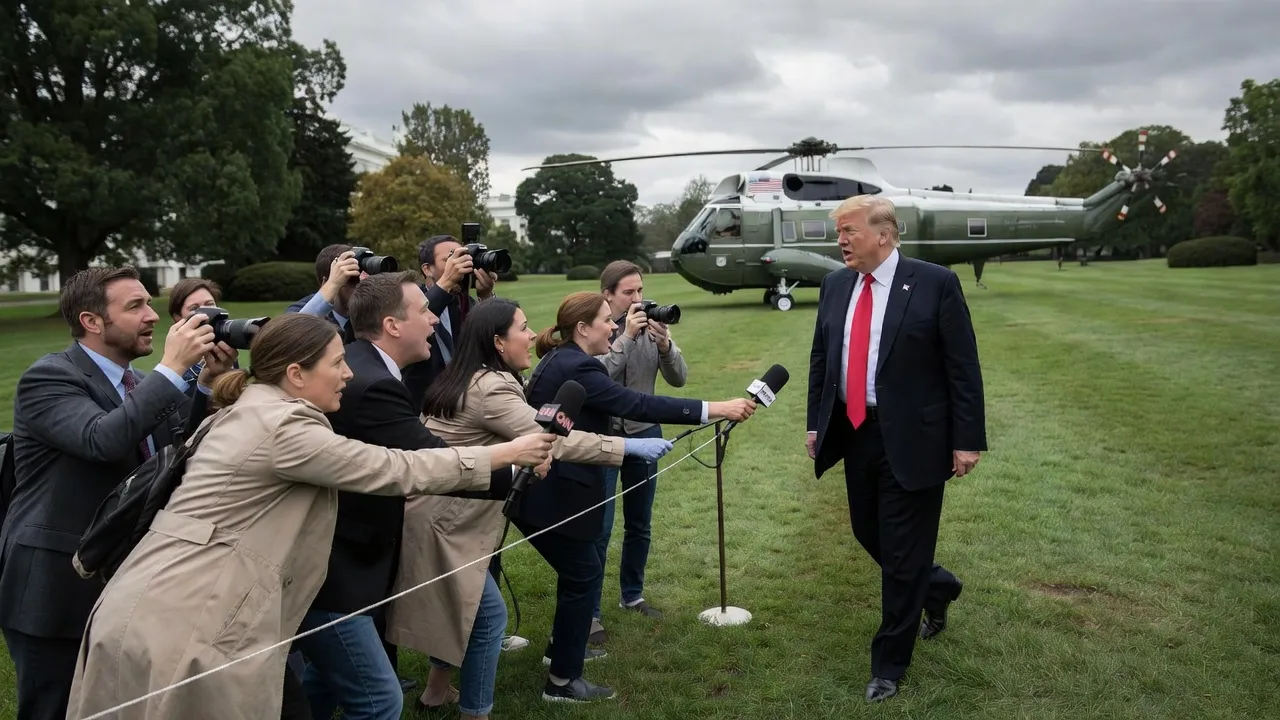
In front of the White House, the American president subsequently confirmed his refusal to journalists. His justification, reported by several Hungarian titles, is economic in nature: Iran wants a rapid agreement because it is going through "grave economic difficulties" and is losing significant revenue due to the closure of the strait. "They want to conclude an agreement, and I find that normal, I also like to conclude agreements. But I reject their proposal," 444 quotes. Trump added that the United States already exercises "total control" over the strait, through which a "huge amount of oil" transits, according to him.
The newspapers recall the terms of the Iranian offer: in exchange for the lifting of the American naval blockade on Iranian ports and sanctions on oil exports, Tehran would reopen the Strait of Ormuz within seven days and resume discussions on its nuclear program. Araghchi refers to the 14-point agreement signed in June in Pakistan, which never came into effect: the strikes have resumed since, with Iran targeting ships that attempted to cross the strait without authorization, and the United States striking Iranian facilities and tankers.
The context dates back to Tuesday, during the 81st United Nations General Assembly: Index recalls that Donald Trump accused Iran of supporting terrorism and swore never to let Tehran acquire nuclear weapons. President Massoud Pezeshkian left New York after rejecting the threat while leaving the door open to diplomacy.
Telex finally notes that Trump has promised a "big decision" on Iran after the midterm elections, while Pezeshkian, quoted by Telex, stated that Iran "has never been an aggressor" and remains committed to dialogue.
SOURCES (4)
- 444MEDIUM
- TelexMEDIUM
- HVGMEDIUM
- IndexMEDIUM