
DOMINANT ANGLE
Ottawa sees Donald Trump's refusal as an electoral calendar calculation as much as a diplomatic one, just a few weeks away from the November midterm elections.
Dominant angle identified — does not reflect unanimity of this country’s media
KEY POINTS
- 01
Donald Trump stated on Saturday, September 26, that he rejected the Iranian proposal, saying: "I reject their proposal... I rejected their deal" (CBC News, Globe and Mail).
- 02
According to the Wall Street Journal, cited by CBC News and the National Post, Trump considers it likely that the bombing campaign against Iran will resume after the November midterm elections.
- 03
The Iranian plan, transmitted through Qatari mediators, called for a seven-day cessation of hostilities, including Lebanon, in exchange for the lifting of the US naval blockade, the suspension of oil sanctions, and the resumption of nuclear talks (Global News).
ANALYSIS
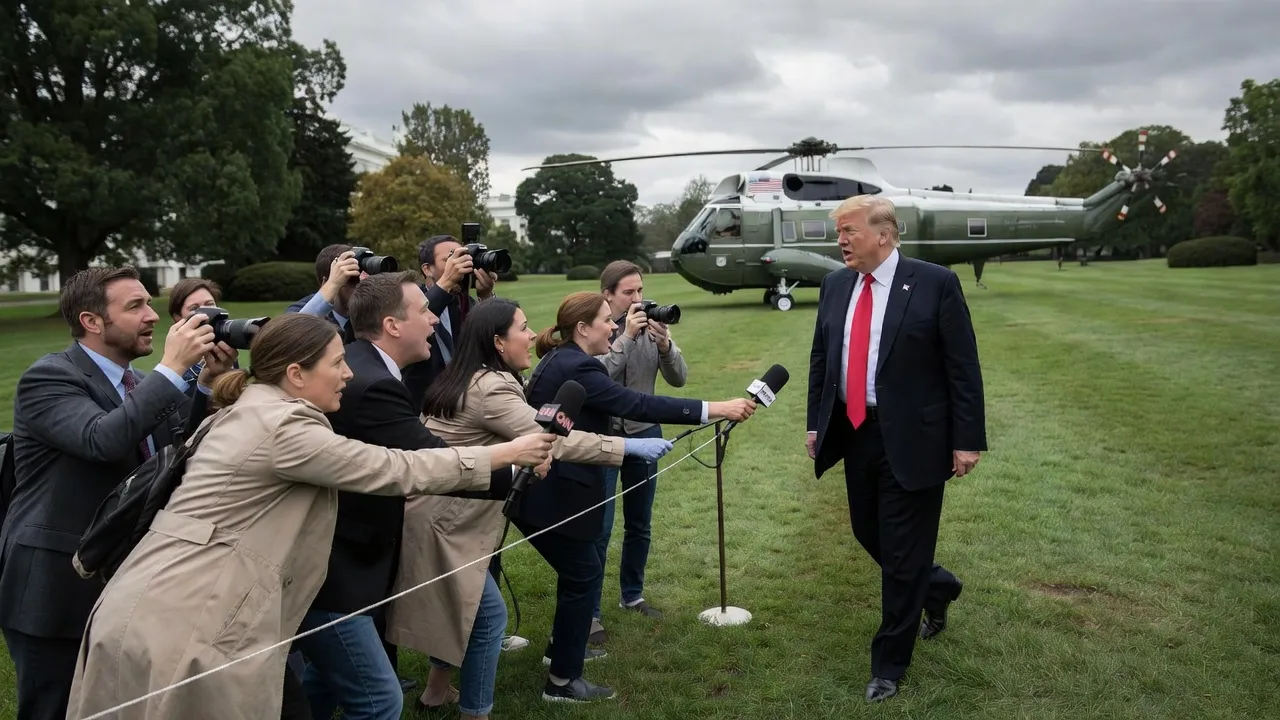
Ottawa, September 27, 2026. The rejection expressed by Donald Trump on Saturday, September 26, of the Iranian proposal to reopen the Strait of Ormuz is seen in Ottawa more as an electoral calendar calculation than as a diplomatic gesture. "I reject their proposal... I rejected their agreement," the American president stated in front of the White House before flying to Tennessee, according to CBC News and the Globe and Mail. The plan, presented at the United Nations General Assembly in New York and transmitted by Qatari mediators, provided for seven days of cessation of hostilities throughout the region, including Lebanon, in exchange for the lifting of the American naval blockade, the suspension of sanctions on Iranian oil, and the resumption of discussions on nuclear issues, reports Global News.
For Trump, cited by the Canadian press, the offer betrays Tehran's weakness: "They want to conclude an agreement to open the strait immediately because they are losing miserably," he said, adding: "We are winning enormously." The National Post emphasizes that the American naval blockade is exerting increasing economic pressure on Iran, whose revenues depend largely on traffic through the Strait of Ormuz.
However, it is the electoral mechanism that structures the Canadian reading of the file. Citing the Wall Street Journal and unidentified American officials, CBC News and the National Post report that Trump considers it likely that the bombing campaign against Iran will resume after the November midterm elections, saying he is skeptical about Iran's willingness to meet his conditions. Asked about a possible resumption of strikes, he refused to answer, notes the National Post, which recalls that the outlined agreement resembled the protocol of understanding signed in mid-June, which led to a fragile ceasefire that collapsed a few weeks later.
The Globe and Mail also notes that Tehran has also approached its Saudi rival regarding the strait, a sign of the stakes in a seven-month-old conflict. Global News adds that Saudi Arabia claims to have intercepted a new missile attributed to the Iran-backed Houthis in Yemen, and that Iranian President Massoud Pezeshkian left New York after the UN gathering, including indirect talks with Washington.
No Canadian media outlet in the corpus relays a direct statement from the Revolutionary Guards or a detailed Iranian version of the exchanges with the Qatari mediators: the narrative remains constructed almost exclusively from Trump's statements and anonymous American sources cited by the Wall Street Journal.
SOURCES (4)
- Globe and MailMEDIUM
- National PostMEDIUM
- Global NewsMEDIUM