
DOMINANT ANGLE
Moscow sees the American refusal as a new episode in a stalled mediation, where Tehran says it still has not received anything from the intermediaries despite Trump's public statement.
Dominant angle identified — does not reflect unanimity of this country’s media
KEY POINTS
- 01
Abbas Araghchi claims that Iran has received "no official notification" from the mediators, despite the public rejection announced by Donald Trump (Sputnik, RIA Novosti).
- 02
According to the Wall Street Journal, Trump doubts that Iran will accept his conditions and discusses with his staff the possibility of new strikes after the November midterm elections; Washington will not lift the naval blockade.
- 03
The UKMTO, cited by Interfax, reports that commercial traffic is still 75% below its pre-conflict level in the Strait of Ormuz, with 26 of the 43 incidents involving gunfire recorded since July 26 on the southern route off Oman.
ANALYSIS
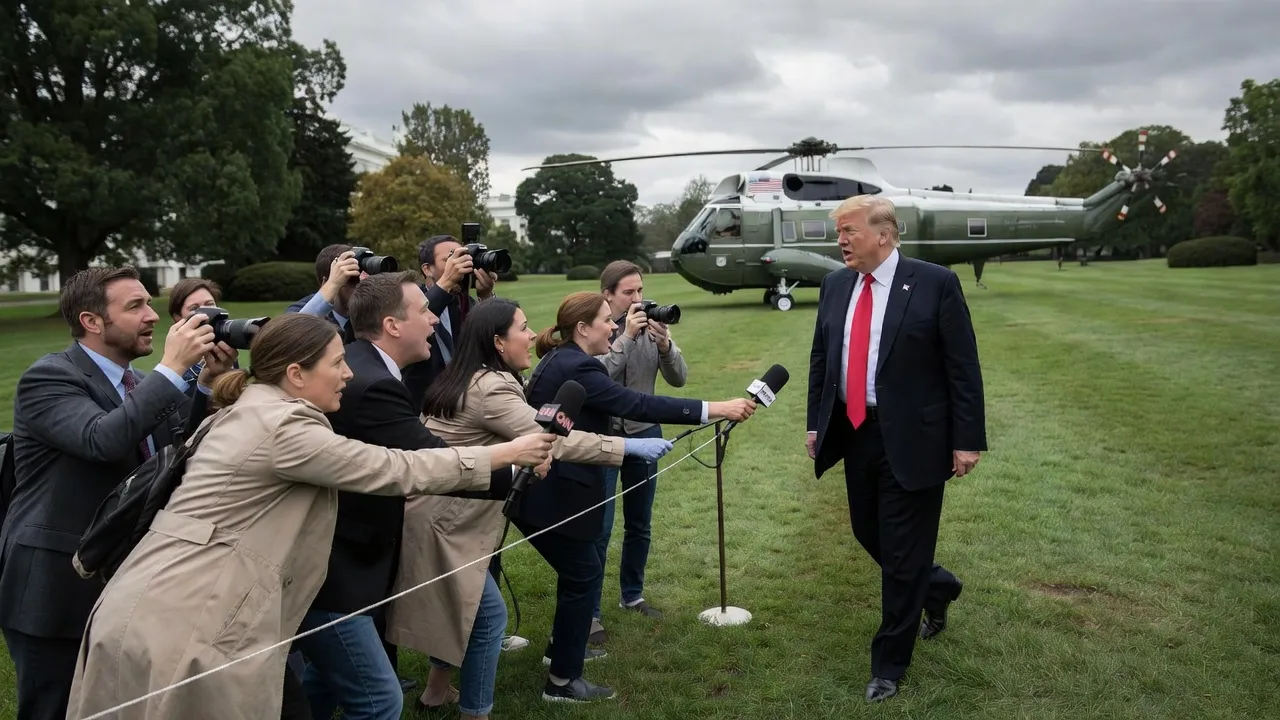
Moscow, September 27, 2026. The Russian press is reporting on the contradictory announcements coming from Washington. On Saturday, September 26, Donald Trump confirmed that he had rejected the Iranian plan to reopen the Strait of Hormuz: "They made a proposal, but I rejected it," he told journalists at the White House, according to RIA Novosti. This seven-day plan, transmitted by Tehran "through intermediaries" according to Foreign Minister Abbas Araghchi, provided for the resumption of traffic in the strait and nuclear discussions in exchange for the lifting of the American naval blockade and oil sanctions adopted after the collapse of the memorandum signed in June between Washington and Tehran.
On Sunday, Araghchi clarified on Telegram, cited by Sputnik and RIA Novosti, that Iran had still not received "any official transmission" from the intermediaries despite "the first public reaction" of the American president, which he said contained "contradictory statements". "We are waiting for the final position of the intermediaries, and we will decide on this basis," he added, making any progress conditional on the satisfaction of Iranian conditions.
According to the Wall Street Journal, cited by Sputnik and Vedomosti, Trump doubts that Tehran will accept his conditions and has told his collaborators that new strikes are likely after the November midterm elections; Washington will not lift the naval blockade. However, a White House official assured CNN, according to Vedomosti, that the discussions via intermediaries remain "positive and constructive", with the United States being in a position of strength due to their control of the strait and therefore "without urgency".
At the UN General Assembly podium on Saturday, Sergey Lavrov placed the crisis in a broader context: restoring trust between Iran and the Arab countries of the Gulf is, in his view, a prerequisite for a settlement, and Moscow says it is ready to contribute to this, while the resumption of fighting weighs on maritime transport and, by extension, on the global economy.
On the ground, the British UKMTO, cited by Interfax, is measuring the extent of the blockade: commercial traffic in the strait remains 75% lower than its pre-conflict level, with tankers making up the majority of the ships involved. The southern route, off the coast of Oman, has seen 26 of the 43 reported incidents of gunfire since July 26. Tehran, through its PGSA authority, has warned that ships taking unauthorized routes are exposed to "serious restrictions".
SOURCES (4)
- SputnikMEDIUM
- InterfaxMEDIUM
- VedomostiMEDIUM
- RIA NovostiMEDIUM