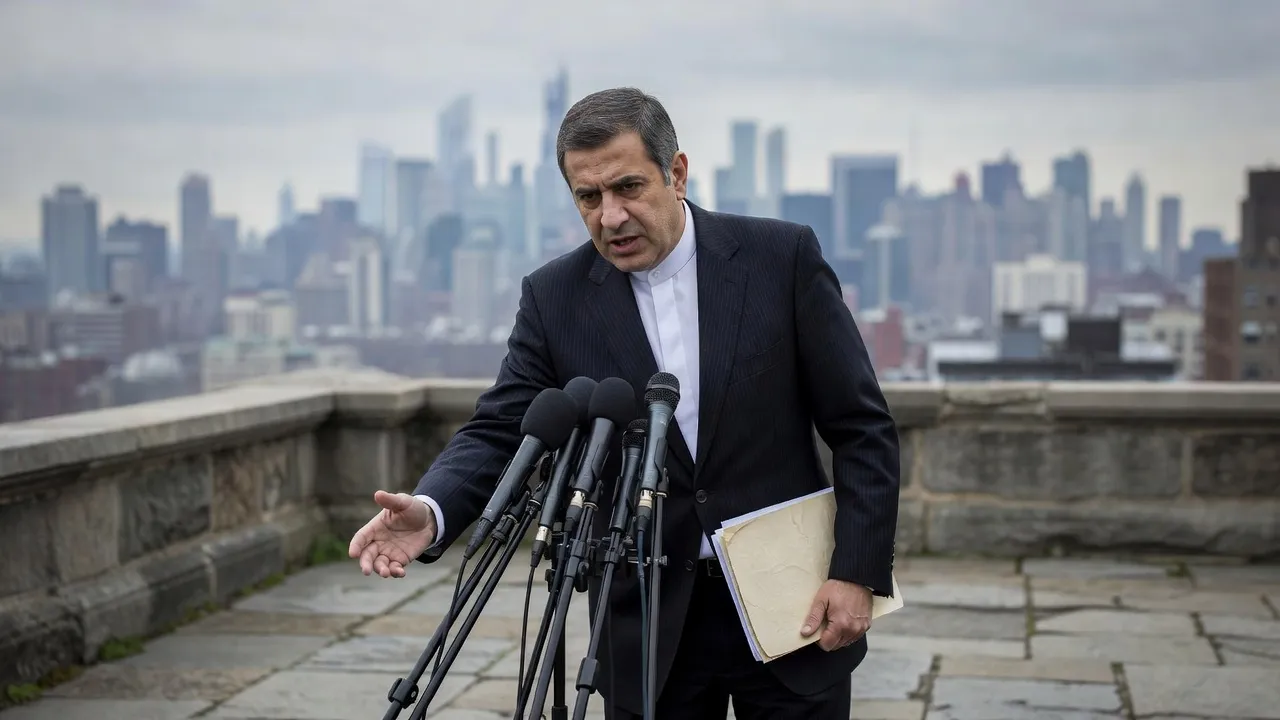
Iran offers to reopen the Strait of Hormuz within seven days if the blockade is lifted, and Trump reportedly rejects it
published on
countries
sources
articles
Before being confirmed by Abbas Araghchi himself on Friday, the Iranian plan had first been revealed by the Japanese agency Kyodo as early as Tuesday, then denied by Iranian media. It reiterates, almost word for word, an agreement protocol signed in June between Washington and Tehran, which has been dormant. Its presentation comes as several capitals, from Moscow to Islamabad, are claiming a role in the surrounding diplomacy.
The Wall Street Journal mentions a rejection by Donald Trump, not publicly confirmed by the White House, while Tehran was waiting on Saturday for an official response from Washington.
A plan born in the shadows
According to the French press, the proposal had initially circulated discreetly: the Japanese agency Kyodo revealed it as early as Tuesday, before Iranian media denied it, without official clarification from Tehran until Friday.
The text reproduces, almost word for word, the agreement protocol signed in June between Donald Trump and Massoud Pezeshkian, which remained a dead letter, the French press emphasizes. According to VG and Aftenposten, Abbas Araghchi himself specified that these conditions implied nothing significantly more than what the two countries had agreed on in June. YLE Uutiset recalls that this agreement had collapsed after Iranian attacks on merchant ships accused of having deviated from their route.
In New York, Iranian diplomacy keeps several channels open in parallel: Abbas Araghchi also met his Russian counterpart Sergey Lavrov, with both ministers stating that "there is no alternative to a diplomatic solution", according to the Russian Ministry of Foreign Affairs, as quoted by Sputnik.
A contested American rejection
The rejection of the plan attributed to Donald Trump is based, in several perspectives in the corpus, solely on the Wall Street Journal: seven of the eighteen national covers gathered here - Brazilian, Finnish, French, Malaysian, Nepalese, Portuguese, and Romanian - relay this information without official confirmation from the White House; this count measures the circulation of information in the press, not its accuracy.
« nearly 22 million barrels of oil left the strait last night »
The Norwegian and Qatari perspectives, on the other hand, only report exchanges described as "positive and constructive" by American officials, without mentioning any rejection: VG and Aftenposten quote a White House official to this effect, and Al Jazeera reports that State Department spokesperson Tommy Pigott assured on Saturday that the door to diplomacy remained open.
Before the General Assembly, Donald Trump summarized his dilemma without making a decision: he had, according to CBS News, "a big decision to make", between an agreement with Iran or "annihilating" the country.
Mediators claiming a role
Doha highlights its role as a channel: according to Gulf Times, it was through Qatar that Iran transmitted its plan to Washington, without either party announcing a breakthrough at this stage.
Islamabad claims an earlier role: before the UN, Prime Minister Shehbaz Sharif stated that he had brought Washington and Tehran "under one roof" in Islamabad, ahead of a memorandum of understanding that he described as a "historic step", praising the efforts of Chief of Army Staff Asim Munir.
Seoul, on its part, is conducting a two-pronged diplomacy: according to Korea Pro, on September 24, South Korean Foreign Minister Cho Hyun met with Abbas Araghchi to demand a guaranteed passage for all ships, without engaging his country in the conflict; the two ministers signed a treaty on the transfer of convicted prisoners between their two countries on the same day.
Already measurable effects
On the markets, the announcement had an immediate effect on Friday: the Dow Jones gained 0.93%, report El Financiero and RTP Notícias, while the US reference barrel, West Texas Intermediate, fell by 1.91%, to $92.80, according to El Financiero.
Saudi Arabia has already reorganized its crude sales: Riyadh increased its exports to 6 million barrels per day in September, an increase of nearly 80% compared to August, bypassing the strait, according to CNBC.
The UN warns on another front: Deputy Secretary-General Jorge Moreira da Silva warned that at least 45 million people in developing countries risk food shortages if the supply of fertilizers through the Strait of Hormuz, through which a third of global trade passes, remains disrupted, according to TASS.
Regional tensions are not easing: Bahraini Foreign Minister Abdul Latif Al-Zayani recalled the death of an Indian national in an attack on a ship off the coast of Oman, while Houthi missile strikes targeted Saudi targets on Friday, according to Nepalese and American press.
He posted on Truth Social a map of the strait renamed "Trump Strait".
Tasnim says Araghchi-Witkoff contact was unauthorized, calls it a "major mistake".
80 countries led by Bahrain demand, in the name of resolution 2817, the immediate reopening.
He says Tehran would allow nuclear inspectors if Washington accepted the plan.
How each country reads it
18 perspectives, each in the voice of that country's press.
 Bangladesh
Dhaka is aware of how even the slightest disruption in the Strait of Hormuz directly impacts its energy bill and the Bangladeshi workers employed in the Gulf.
2 sources
 Brazil
Brasília is deciphering the Iranian announcement in light of the US electoral calendar, with the Brazilian press mainly noting that Trump would wait for the November midterm elections to, according to the Wall Street Journal, resume bombings rather than accept Tehran's plan.
3 sources
 Canada
Ottawa sees the Iranian plan as a calculated gamble on the US electoral calendar, rather than a simple offer to ease energy tensions.
2 sources
 Finland
Helsinki interprets the refusal attributed to Trump through the US electoral calendar rather than the diplomacy of the Strait of Hormuz.
2 sources
 France
Paris is deciphering a diplomatic scenario already seen in June: Tehran is putting unchanged conditions back on the table, Washington is responding with a rejection relayed by the American press rather than through an official channel.
6 sources
 Israel
Israel is separating the Iranian offer to reopen Ormuz from the one thing it cares about: the absence of any concessions on the nuclear program.
3 sources
 Iran
IranTehran is setting its conditions for any reopening of the Ormuz Strait: lifting the blockade, ending petroleum sanctions, and a ceasefire extended to Lebanon, without affecting the nuclear program.
2 sources
 South Korea
Seoul is taking a two-pronged approach on the Strait of Hormuz: as a co-signer of the declaration by 80 nations demanding immediate reopening, South Korea is maintaining a bilateral channel with Tehran in parallel to protect its trade without getting involved in the war.
3 sources
 Mexico
Mexico City is gauging the Ormuz crisis in index points: Wall Street and the Mexican Stock Exchange rose on Friday on hopes of an agreement, while the barrel retreated.
2 sources
 Malaysia
Kuala Lumpur is measuring the economic weight of a still-closed Strait of Hormuz, a vital crossroads for global oil supply, after the reported American rejection of the Iranian plan in seven days.
2 sources
 Norway
Oslo views the Iranian proposal as more of a calendar mechanism than a diplomatic breakthrough, at a time when the Norwegian merchant fleet is monitoring any risks weighing on the Gulf routes.
2 sources
 Nepal
NepalKathmandu first gauges the energy stakes of the showdown over the Strait of Hormuz, through which a fifth of the world's oil and gas transited before the war.
2 sources
 Pakistan
Islamabad claims to have mediated between Washington and Tehran, positioning the Strait of Hormuz as a "main artery of the global economy" that no party should turn into a chokepoint.
3 sources
 Portugal
Lisbon measures the Iranian offer by its immediate effect on the markets and on fuel prices, between stock market relief on Wall Street and domestic political pressure on fuel tax.
2 sources
 Qatar
QatarDoha is asserting its role as a discreet channel between Tehran and Washington, placing Qatari mediation at the heart of the seven-day plan to reopen the Strait of Hormuz.
2 sources
 Romania
Bucharest is watching a showdown where the American response, on Saturday, came in the form of a renowned post on Truth Social rather than a written commitment on the Iranian plan.
2 sources
 Russia
Moscow defends the diplomatic path as the only way out of the Gulf crisis, highlighting the Iranian plan to reopen the Ormuz Strait in seven days rather than the responsibility that Washington attributes to Tehran.
2 sources
 United States
The United States is conditioning its response to the electoral calendar: the US government has itself predicted that no agreement with Iran will be found before the November midterm elections, when Tehran is pressing for a rapid outcome.
5 sources
What the comparison reveals
Common ground and differences in coverage across the media analysed.
What the media report in common
Iranian Minister Abbas Araghchi presented, on Friday in New York on the sidelines of the UN General Assembly, a plan transmitted to Washington via Qatar to reopen the Strait of Hormuz in seven days.
The Iranian plan conditions the reopening of the Strait of Hormuz on the lifting of the naval blockade imposed by the United States on Iranian ports.
Where media coverage diverges
US Response to the Plan
Several perspectives report, citing the Wall Street Journal, a rejection of the plan attributed to Donald Trump, while others only report exchanges described as 'positive and constructive' by US officials, without confirmation of a rejection.
Anticipated Outcome of the Crisis
Some perspectives report, according to the Wall Street Journal, the hypothesis of a resumption of US strikes after the November midterm elections in the event of a failure of the talks, while others relay the position of Moscow and Tehran according to which only a diplomatic solution is considered.
Iranian Nuclear Concession
The US press reports the statements of President Pezeshkian according to which Iran would respect its commitments until allowing nuclear inspectors if the plan is accepted, while Israeli and Iranian perspectives report that no concession will be made on the nuclear program.
Coverage aligned with this reading
This grouping describes the publications analysed, not the position of these countries’ populations or of their governments.
The full text, country by country
Bangladesh
DOMINANT ANGLE
Dhaka is aware of how even the slightest disruption in the Strait of Hormuz directly impacts its energy bill and the Bangladeshi workers employed in the Gulf.
KEY POINTS
- The Iranian seven-day plan includes a cessation of hostilities in Lebanon, the release of frozen Iranian assets estimated at at least $12 billion, the lifting of oil sanctions, and the end of the naval blockade, with the reopening of the Strait of Hormuz on the seventh day.
- Trump said he is not in a hurry to conclude a deal, even though high oil prices are fueling inflation and increasing the cost of living.
- The US Army has deployed high-energy lasers in the Strait of Hormuz against drones and awarded AeroVironment a $464.8 million contract for its Enduring-High Energy Laser program.
ANALYSIS
Dhaka, September 26, 2026. Iranian Foreign Minister Abbas Araghchi presented a plan in New York, on the sidelines of the United Nations General Assembly, to reopen the Strait of Hormuz in seven days. According to his own specifications, cited by the New York Times, the text provides for a cessation of all hostilities in the Middle East for seven days, including in Lebanon, the release of frozen Iranian assets estimated at at least $12 billion, the lifting of sanctions on Iranian oil sales, and the end of the US naval blockade. The strait would reopen on the seventh day of the truce. "If certain conditions are met, the strait will be opened within seven days and discussions will begin," Araghchi said. He claims that China supports the proposal, while Xi Jinping met with Trump the same week in Washington.
For Dhaka, which depends on energy supplies transiting through the Gulf and the revenue of its expatriate workers in the region, the issue is not just diplomatic. Trita Parsi, from the Quincy Institute, who was present at the New York meeting, estimates that a quick agreement would benefit Trump politically before the November midterm elections. But the US President said he is not in a hurry to conclude, even if high oil prices fuel inflation and worsen the cost of living — a phrase that resonates directly for an importing economy like Bangladesh's.
The local press also notes that Washington is not disarming its positions in the strait: the US military has deployed high-energy lasers against drones, and has just awarded AeroVironment a $464.8 million contract for its Enduring-High Energy Laser program, the first production contract of its kind. A signal that military deterrence continues to coexist with the diplomatic channels opened by Tehran via Qatar.
On the Iranian side, the authorities in Tehran have not publicly confirmed the exact terms of the plan: the Kyodo agency was the first to reveal it, before Iranian media denied this version. Araghchi also met with US envoy Steve Witkoff, while a spokesman for the Revolutionary Guards added the end of hostilities in Yemen to Tehran's list of demands.
Brazil
DOMINANT ANGLE
Brasília is deciphering the Iranian announcement in light of the US electoral calendar, with the Brazilian press mainly noting that Trump would wait for the November midterm elections to, according to the Wall Street Journal, resume bombings rather than accept Tehran's plan.
KEY POINTS
- Abbas Araghchi announced that Iran has transmitted a seven-day plan via Qatar to reopen the Strait of Hormuz on the seventh day if conditions are met
- According to the Wall Street Journal cited by G1, Trump is privately skeptical and told his team that another bombing campaign is likely after the November midterm elections
- Massoud Pezeshkian, interviewed by Fox News, deemed it preferable to have an agreement before the US midterm elections, while saying that before or after would make no difference for Iran
ANALYSIS
Brasília, September 26, 2026. The Brazilian press is detailing developments in the Strait of Ormuz crisis after the publication, on Friday, September 25, of a Wall Street Journal article stating that Donald Trump is set to reject the Iranian plan to reopen the strait and is considering resuming bombings after the US midterm elections in November.
According to G1, citing the WSJ, "in private conversations, Trump is showing skepticism about the possibility that Iran will meet its demands" and has told his team that a new bombing campaign is likely. Iranian Foreign Minister Abbas Araghchi had announced on Friday in New York that Tehran had transmitted to Washington, via Qatar, "a concrete seven-day plan": if the conditions are met, the strait would reopen on the seventh day and normal maritime traffic would resume. "The decision is now up to the United States. Iran does not accept coercion, threats, or intimidation," he added, according to the Jornal de Brasília.
The Folha de S.Paulo recalls that the proposal largely repeats the terms of a memorandum of understanding signed between Washington and Tehran in June, which quickly became a dead letter. A US official cited by the newspaper mentions "positive and constructive conversations" via mediators, while specifying that Washington will not rush into an agreement.
Iranian President Massoud Pezeshkian, interviewed by Fox News, stated that "it's up to the United States to decide if they want to put an end to it" with the war, adding that his country, "pushed by Israel," does not want the conflict to continue. He considered it "preferable" for an agreement to be reached before the US midterm elections, while downplaying: before or after this election, "what difference does it make to us?"
Brazilian media are highlighting the gap between the mutually hostile speeches delivered at the UN on Thursday, September 24 - Trump threatening Iran with "annihilation," Pezeshkian promising that his country will not be intimidated - and the discreet diplomacy behind the scenes, deemed to bring "great advantages" to both sides.
Canada
DOMINANT ANGLE
Ottawa sees the Iranian plan as a calculated gamble on the US electoral calendar, rather than a simple offer to ease energy tensions.
KEY POINTS
- Araghchi detailed the plan at the UN on Friday: reopening the Strait of Hormuz in seven days in exchange for lifting the naval blockade, ending oil sanctions, and a ceasefire including Lebanon (Globe and Mail).
- The Globe and Mail links the disruption of the strait, which carried a fifth of the world's oil and gas before the war, to the political fallout for Trump and Republicans ahead of the November midterm elections.
- The National Post reports that Araghchi met with US envoy Steve Witkoff on Tuesday and that the plan would provide for the unblocking of at least $12 billion in frozen Iranian assets.
ANALYSIS
Ottawa, September 26, 2026. Canada's press first notes the hidden political calculation behind the seven-day plan presented by Tehran on Friday. According to the Globe and Mail, Iranian Foreign Minister Abbas Araghchi detailed to journalists, on the sidelines of the UN Security Council, an offer transmitted to Washington via Qatar: lifting of the naval blockade, suspension of sanctions on Iranian oil, and a ceasefire including Lebanon, in exchange for the reopening of the Strait of Ormuz. "The seven-day deadline will begin as soon as the United States accepts this plan," he said. According to the reported details, the first steps would take four to five days, the strait would reopen on the sixth day, and nuclear talks would resume on the seventh.
The Globe and Mail emphasizes that the disruption of the strait — through which a fifth of the world's oil and gas traded before the war — has become Tehran's main lever, with effects felt far beyond the Middle East and political fallout for Donald Trump and the Republican Party ahead of the November midterm elections. The White House is sticking to mentioning "positive and constructive conversations" with mediators, specifying that it is already facilitating significant oil exports through the strait.
The National Post adds that Araghchi met with Trump's emissary, Steve Witkoff, on Tuesday, and that the plan would also provide for the unblocking of frozen Iranian assets estimated at at least $12 billion. "Iran accepts neither coercion, nor threats, nor intimidation, and will not give up its sovereign rights under pressure," the minister insisted, adding: "if the seriousness is there on the American side, everything is ready." According to a source close to the file cited by the Associated Press and reported by the Globe and Mail, Saudi Arabia is showing skepticism towards this new attempt, with no Gulf capital having reacted publicly.
This Canadian reading emphasizes less the energy mechanisms than the fact that Tehran is playing the American electoral clock, a bet already attempted in June according to the Globe and Mail, without success.
Finland
DOMINANT ANGLE
Helsinki interprets the refusal attributed to Trump through the US electoral calendar rather than the diplomacy of the Strait of Hormuz.
KEY POINTS
- Araghchi handed over a plan in New York on Friday, via Qatar, providing for the reopening of Ormuz in seven days in exchange for the lifting of the naval blockade, oil sanctions, and the unfreezing of Iranian assets.
- According to government sources cited by the Wall Street Journal (as reported by MTV Uutiset), Trump allegedly told his advisors that he would likely continue bombing Iran after the November midterm elections.
- The June agreement between Washington and Tehran, intended to consolidate the spring ceasefire, collapsed after Iranian attacks on merchant ships accused of having strayed from their route.
ANALYSIS
Helsinki, September 26, 2026. For the Finnish press, the fate of the Strait of Hormuz is being decided less in the waters of the Gulf than in the US electoral calendar. MTV Uutiset, citing the Wall Street Journal, reports that President Donald Trump has rejected the Iranian plan transmitted via Qatar, which was supposed to pave the way for a seven-day truce and the reopening of the strait to commercial traffic. According to government sources cited by the American daily, Trump would have indicated to his advisors that he would likely continue the bombings against Iran after the November midterm elections - a detail that MTV highlights as the key to reading the file.
YLE Uutiset, on the other hand, details the content of the plan presented on Friday in New York by Iranian Foreign Minister Abbas Araghchi, on the sidelines of the UN General Assembly. The text, handed over to the United States through Qatar, provides for a cessation of hostilities in the Middle East - including Lebanon - for a week, the unfreezing of Iranian assets, the lifting of oil sanctions, and the end of the US naval blockade on Iranian ports. "I can say that everything is ready, if the American side has a real willingness to reach an agreement," Araghchi said, adding that Tehran would accept "no constraint, no threat, no intimidation".
Maritime traffic remains restricted in this strategic corridor for oil transport since the outbreak of war between the United States, Israel, and Iran at the end of February. YLE recalls that an agreement signed in June between Washington and Tehran, intended to consolidate the ceasefire concluded in the spring, had collapsed after Iranian attacks on merchant ships accused of having deviated from their route.
For Finnish editorial offices, the refusal attributed to Trump illustrates an internal American arbitration more than a geopolitical choice: Washington seems to be calibrating its military calendar to the electoral agenda, delaying any compromise on Hormuz until after the November election. None of the two articles consulted links the episode to Finland's direct energy supply, as the country is little dependent on Gulf oil.
France
DOMINANT ANGLE
Paris is deciphering a diplomatic scenario already seen in June: Tehran is putting unchanged conditions back on the table, Washington is responding with a rejection relayed by the American press rather than through an official channel.
KEY POINTS
- Abbas Araghchi announced from the UN headquarters in New York that he had transmitted, via Qatar, a plan to reopen the Strait of Hormuz in seven days, specifying that "the seven-day deadline will begin as soon as the United States accepts this plan".
- According to the Wall Street Journal, citing American officials, Donald Trump rejected the offer and is considering resuming bombings against Iran after the November midterm elections.
- A fifth of the world's hydrocarbons passed through the Strait of Hormuz before the war triggered at the end of February by American-Israeli strikes against Iran.
ANALYSIS
Paris, September 26, 2026. The scenario has a familiar diplomatic tone. From the UN headquarters in New York, Iranian Foreign Minister Abbas Araghchi announced on Friday that he had transmitted a plan to the United States, through Qatar, to reopen the Strait of Hormuz within seven days. "The seven-day deadline will begin as soon as the United States accepts this plan," he specified, adding that "the choice now belongs" to Washington. In exchange for a cessation of hostilities in the Middle East, including in Lebanon, the unblocking of at least $12 billion in frozen Iranian assets, the lifting of oil sanctions, and the end of the American naval blockade, the strait would be reopened on the seventh day.
The French press recalls that the proposal had initially circulated in the shadows: the Japanese agency Kyodo had mentioned it as early as Tuesday, before Iranian media denied it, without any official communication coming to clarify Tehran's position until Friday. It also emphasizes that these conditions are not new: they almost exactly replicate the agreement protocol signed in June by Donald Trump and Massoud Pezeshkian, which remained a dead letter after divergent interpretations between the two capitals. 20 Minutes sees this as a continuation of a "game of liar's poker". On the American channel CBS, the Iranian president assured on Friday that "if the United States agrees to proceed in this manner, everything will return to normal", also saluting the "thoughtful support" of Xi Jinping for a return to the June text.
But a few hours later, the Wall Street Journal, citing American officials, reported that Donald Trump had rejected the offer, judging Tehran's ability to keep its commitments as skeptical, and was considering resuming bombings after the November midterm elections. The American president responded in his own way, by publishing a map of the strait renamed "Strait Trump" on Truth Social. No official confirmation has come from the White House.
The French media recall the economic stakes of the issue: before the war triggered at the end of February by American-Israeli strikes, a fifth of the world's hydrocarbons passed through this passage, whose partial closure has been fueling tensions on oil markets for seven months.
Israel
DOMINANT ANGLE
Israel is separating the Iranian offer to reopen Ormuz from the one thing it cares about: the absence of any concessions on the nuclear program.
KEY POINTS
- A senior Iranian official stated that Tehran will make no concessions on its nuclear program even if the US accepts the plan (Arutz Sheva).
- According to Haaretz, the offer includes lifting the naval blockade, ending oil sanctions, and a ceasefire including Lebanon, in exchange for reopening the Strait of Hormuz within seven days.
- A White House official said Washington is in no hurry, noting that "nearly 22 million barrels of oil left the strait last night" (Jerusalem Post).
ANALYSIS
Jérusalem, Saturday, September 26, 2026. The plan presented Friday in New York by Iranian Foreign Minister Abbas Araghchi is occupying the Israeli press, but attention is focused less on the seven-day calendar to reopen the Strait of Hormuz than on what Tehran refuses to include: its nuclear program. A senior Iranian official, quoted by Arutz Sheva, was explicit: "Senior Iranian official says Tehran will not compromise on its nuclear program even if the US accepts Iran's conditions to reopen the Strait of Hormuz." This phrase is being taken as the key to understanding the dossier in Jerusalem.
According to Haaretz, the offer transmitted to the Americans provides for the lifting of the naval blockade of Iranian ports, the end of sanctions on Iranian oil, and a ceasefire including Lebanon, in exchange for the reopening of the strait within seven days of Washington's agreement. This last point - a ceasefire that would encompass the Lebanese front, therefore Hezbollah - is particularly holding attention, as it would directly affect the security balance that Israel has depended on since the beginning of the war, which started nearly seven months ago.
The Jerusalem Post notes that Araghchi linked his proposal to the agreement protocol concluded in June between Washington and Tehran, and that he suggested a political calendar: "I think it would be much better if it is done before the midterm election, but it depends on the US administration to decide." A White House official, quoted by the Financial Times and reported by the Jerusalem Post, responded that Washington "is not in a hurry," specifying that "nearly 22 million barrels of oil left the strait last night" - a sign, for the Israeli press, that the Trump administration has a margin of maneuver that Tehran does not have.
Iranian President Massoud Pezeshkian has also indicated that he wants an agreement before the American midterm elections, a statement read in Jerusalem as an admission of internal pressure rather than a concession. While the Wall Street Journal mentions a rejection of the proposal by Donald Trump, the Israeli press is mainly retaining that nothing in the Iranian offer touches on the nuclear issue - the point on which Israel has been waiting for a gesture since the beginning of the conflict.
Iran
DOMINANT ANGLE
Tehran is setting its conditions for any reopening of the Ormuz Strait: lifting the blockade, ending petroleum sanctions, and a ceasefire extended to Lebanon, without affecting the nuclear program.
KEY POINTS
- Araghchi told Sergey Lavrov that insecurity in the Strait of Hormuz is "the direct result of the US breaching its commitments and taking criminal actions" (Mehr News).
- The Tasnim agency reported that the three-hour direct contact between Araghchi and US envoy Steve Witkoff in New York on Tuesday was not authorized by Iranian decision-making bodies, calling it a "major mistake" (Iran International).
- President Massoud Pezeshkian devoted the opening and closing of his UN speech to rejecting Donald Trump's accusations, saying he welcomes negotiations but refuses any "intimidation", while Tehran rules out any nuclear concessions (Iran International).
ANALYSIS
Tehran, September 26, 2026. In New York, on the sidelines of the United Nations General Assembly, Iranian diplomacy is multiplying contacts while locking in its red lines. On Friday, Foreign Minister Abbas Araghchi met with his Russian counterpart, Sergey Lavrov, and repeated that the insecurity in the Strait of Hormuz is "the direct result of the United States' breach of their commitments and their criminal actions against Iran," according to Mehr News. He detailed the agreement concluded with Oman to establish a safe maritime route in the strait, entrusting mediators with transmitting Tehran's conditions to Washington for a return to the diplomatic process. On the same day, before the Arab League Secretary-General and then during a meeting of the Economic Cooperation Organization, Araghchi denounced a "terrorist and unjustified" aggression by the United States and Israel, citing more than 4,000 civilians killed, including 168 schoolchildren in Minab, and the death of the Supreme Leader.
These seven conditions, according to the Tasnim agency, close to the Revolutionary Guards, were supposed to remain confined to an indirect channel via mediators. But a direct three-hour contact between Araghchi and American envoy Steve Witkoff on Tuesday in New York sparked internal controversy: Tasnim reported on Wednesday that this rapprochement had not been authorized by the decision-making bodies, including the Supreme National Security Council, calling it a "major mistake" and demanding explanations from the minister. This is a sign of a fault line less about pursuing dialogue than about the degree of proximity to Washington.
In substance, Tehran excludes any concession on the nuclear program, even if Washington accepted the proposal on Hormuz. On Wednesday, before the General Assembly, President Massoud Pezeshkian devoted the opening and closing of his speech to rejecting Donald Trump's accusations, saying he welcomes negotiations but refuses any "intimidation". For Tehran, the reopening of the strait depends first on verifiable American gestures - lifting the blockade, oil sanctions, and a ceasefire extended to Lebanon - before any resumption of talks, including nuclear ones.
South Korea
DOMINANT ANGLE
Seoul is taking a two-pronged approach on the Strait of Hormuz: as a co-signer of the declaration by 80 nations demanding immediate reopening, South Korea is maintaining a bilateral channel with Tehran in parallel to protect its trade without getting involved in the war.
KEY POINTS
- Iran has transmitted a plan to reopen the Strait of Hormuz in seven days if Washington lifts the naval blockade, oil sanctions, and respects a ceasefire including Lebanon, detailed by Araghchi in New York (Korea Times)
- On September 18, 79 other countries and South Korea signed a declaration at the UN demanding the immediate reopening of the strait and condemning the provocations of Iran and the Houthis (KBS World)
- On September 24, South Korean Minister Cho Hyun met with Araghchi, demanded a guaranteed passage for all ships, and the two countries signed a treaty on the transfer of convicted prisoners (Korea Pro)
ANALYSIS
Seoul, September 26, 2026. On the banks of the East River, South Korean diplomacy is playing a two-pronged approach on the Strait of Hormuz issue. On Friday, Iran transmitted a proposal to the United States via mediators to reopen the maritime route in seven days if Washington lifts its naval blockade, waives sanctions on Iranian oil, and respects a ceasefire including Lebanon. Iranian Foreign Minister Abbas Araghchi detailed this plan during a private meeting on the sidelines of the United Nations General Assembly in New York, according to a participant cited by Korea Times, which also reports that Trita Parsi, from the Quincy Institute, sees this as an opportunity for Donald Trump to conclude an agreement before the November midterm elections. The same article notes deep skepticism on both sides, with Saudi Arabia doubting the resumption of these talks, and Iranian Parliament Speaker Mohammad Bagher Qalibaf publicly acknowledging internal divisions in Tehran.
South Korea, for its part, is taking a different stance. On Thursday, it co-signed a joint statement in New York with 79 other countries, including Gulf monarchies and major Western powers, demanding the "immediate reopening" of the Strait of Hormuz and condemning the armed provocations of Iran and its Houthi rebel allies in Yemen, according to KBS World. The text, read by the Bahraini Foreign Minister, calls for a "safe and unimpeded" passage for all ships, in accordance with the United Nations Convention on the Law of the Sea.
But Seoul is not limiting itself to this collective solidarity. According to Korea Pro, South Korean Foreign Minister Cho Hyun met with his Iranian counterpart Araghchi on Wednesday to reiterate that the free and safe passage of all ships "must be guaranteed", while avoiding any commitment to the war in the Middle East. The two ministers also signed a treaty on the transfer of convicted prisoners between the two countries, a sign that the bilateral channel remains open despite regional tensions. For Seoul, which is dependent on energy supplies transiting through the strait, the goal is to influence the outcome without aligning itself with one camp, between collective pressure at the UN and direct diplomacy with Tehran, even as the American press mentions a possible rejection of the Iranian plan by Donald Trump.
Mexico
DOMINANT ANGLE
Mexico City is gauging the Ormuz crisis in index points: Wall Street and the Mexican Stock Exchange rose on Friday on hopes of an agreement, while the barrel retreated.
KEY POINTS
- Friday, the Dow Jones gained 0,93 %, the S&P/BMV IPC 1,13 % and the FTSE-BIVA 1,08 %, on the expectation of an agreement to reopen Ormuz (El Financiero).
- West Texas Intermediate fell 1,91 %, to 92,80 dollars a barrel, a sign of anticipated calm on the oil market.
- Iranian Foreign Minister Abbas Araghchi presented a proposal in New York to reopen the Ormuz Strait "en un plazo de siete días" (El Norte, AFP).
ANALYSIS
Mexico, September 26, 2026. From Mexico's financial hub, the Ormuz Strait crisis is first reflected in stock market indices. On Friday, the Dow Jones gained 0.93%, to 51,828.62 points, the S&P 500 0.51%, and the Nasdaq 0.48%, driven by expectations of an agreement that would pave the way for the reopening of the Ormuz Strait, reports El Financiero. In Mexico, the local stock exchange followed the trend: the S&P/BMV IPC rose 1.13%, to 64,992.23 points, and the FTSE-BIVA of the Bolsa Institucional de Valores 1.08%, to 1,316.66 points. A sign of the anticipated easing on oil markets, West Texas Intermediate fell 1.91%, to $92.80 a barrel, while Brent also lost ground.
On the diplomatic front, El Financiero recalls that Tehran presented a plan to reopen the strait and resume discussions on its nuclear program, provided that Washington lifts the naval blockade of its ports and reduces military pressure. UN Secretary-General António Guterres asked Iranian President Massoud Pezeshkian on Friday to resolve the conflict "through dialogue and negotiation" and to respect the freedom of navigation in the strait, including "navigation freedoms and rights." He had warned earlier this week that traffic there was "practically paralyzed."
El Norte, citing AFP, confirms that Iranian Foreign Minister Abbas Araghchi presented a proposal to several foreign media outlets in New York to reopen the Ormuz Strait "within a period of seven days." Pezeshkian had defended Iran's willingness to negotiate before the General Assembly on Wednesday, while refusing to give in to military pressure and American sanctions.
For the Mexican press, the stakes are measured first in dollars and index points: before the war, around a fifth of the world's oil and gas transited through this corridor, according to El Financiero. The mere prospect of a compromise, even uncertain on the American side, was enough on Friday to drive up indices and the Mexican stock exchange while causing the barrel to fall, from New York to Mexico.
The stock market rebound is not solely due to the Ormuz file: El Financiero also notes the caution displayed by the Federal Reserve, with analyst Ulrike Hoffmann-Buchardi (UBS) judging that "resilient growth and solid earnings should help markets withstand a moderate adjustment cycle."
Malaysia
DOMINANT ANGLE
Kuala Lumpur is measuring the economic weight of a still-closed Strait of Hormuz, a vital crossroads for global oil supply, after the reported American rejection of the Iranian plan in seven days.
KEY POINTS
- Araghchi presented a seven-day plan to the UN, transmitted via Qatar, to reopen the Strait of Hormuz and restore normal maritime traffic
- According to the Wall Street Journal, Trump reportedly rejected the proposal, deeming Tehran unlikely to uphold its commitments and considering a resumption of bombings
- Before the conflict, which began nearly seven months ago, around a fifth of the world's oil and gas passed through the Strait of Hormuz
ANALYSIS
Kuala Lumpur, September 26, 2026. For Malaysia, a producer of oil and liquefied natural gas and manager of one of the other major chokepoints of global maritime trade, the Strait of Malacca, the impasse around the Strait of Hormuz resonates as a reminder of the fragility of energy routes. The Sun MY and The Vibes report that Iranian Foreign Minister Abbas Araghchi presented on Friday, on the sidelines of the United Nations General Assembly in New York, a seven-day plan transmitted to Washington via Qatar: reopening the strait and restoring normal maritime traffic if conditions are met. "Iran has conveyed to the United States, through Qatar, a concrete seven-day plan," Araghchi said, adding: "The choice now rests with the United States. Iran does not accept coercion, threats, or intimidation."
A few hours later, according to the Wall Street Journal cited by local headlines, Donald Trump would have rejected the proposal, deeming it unlikely that Tehran would keep its commitments and instead considering a resumption of bombings. The American president posted on Truth Social a map of the strait renamed "Trump Strait", a gesture that the Malaysian press relays without further comment.
For Kuala Lumpur, the issue goes beyond bilateral diplomacy: the conflict has been going on for nearly seven months, and before its outbreak, about a fifth of the oil and gas traded in the world transited through Hormuz. A prolonged blockade, or its maintenance after an American refusal, would directly impact the energy prices that Malaysia, itself an exporter but also an importer of crude oil for its refineries, closely monitors. The articles recall that American envoy Steve Witkoff had met with Araghchi on Tuesday for talks, a sign that the diplomatic channel remained open despite the reported rejection. The local press relays the facts as sourced by international headlines, without adding any numerical analysis of the specific impact on the Malaysian economy, due to a lack of more in-depth local coverage of the case at this stage.
Norway
DOMINANT ANGLE
Oslo views the Iranian proposal as more of a calendar mechanism than a diplomatic breakthrough, at a time when the Norwegian merchant fleet is monitoring any risks weighing on the Gulf routes.
KEY POINTS
- Abbas Araghchi claims to have transmitted a plan through intermediaries to reopen the Strait of Hormuz "by the end of the seventh day" if certain conditions are met.
- The Iranian conditions include the lifting of the naval blockade of ports, the release of frozen Iranian funds, and the end of the war on all fronts, according to Iranian state media cited by VG and Aftenposten.
- American and Iranian representatives met on Tuesday on the sidelines of the UN General Assembly, the first direct exchange in several months; a White House official mentions "positive and constructive" discussions.
ANALYSIS
Oslo, Saturday, September 26, 2026. The Norwegian press reports, via VG and Aftenposten, the Iranian proposal transmitted to Washington on the sidelines of the United Nations General Assembly: to reopen the Strait of Ormuz after seven days if certain conditions are met. Iranian Foreign Minister Abbas Araghchi, quoted by the two newspapers, stated: "We have submitted a plan to the United States through intermediaries: if certain conditions are met, the Strait of Ormuz can be reopened at the end of the seventh day and talks can resume."
According to VG and Aftenposten, the conditions transmitted by Tehran include the lifting of the naval blockade of Iranian ports, the release of frozen Iranian funds, and the end of the war on all fronts. Araghchi specified that these conditions did not imply anything significantly more than what the two countries had agreed on in June, without wanting to elaborate further.
The two newspapers note that American and Iranian representatives met on Tuesday on the sidelines of the General Assembly, a first direct exchange in several months. A White House official described the discussions led by third parties as "positive and constructive," without confirming or denying the acceptance of the Iranian plan.
For Oslo, whose merchant fleet and oil sector closely follow any risk weighing on the Gulf's maritime routes, the calendar announced by Tehran is less of a diplomatic breakthrough than a mechanism of stages: opening on the sixth day, resuming talks on the seventh, on a format based on the agreement already mentioned in June. Neither VG nor Aftenposten mentions the position attributed to Donald Trump by the Wall Street Journal, nor the role of intermediary attributed to Qatar, nor the American electoral calendar that Tehran says it wants to avoid. The Norwegian account remains focused on the mechanics of the proposal and on the official statements, Iranian and American, as reported by the two newspapers.
Nepal
DOMINANT ANGLE
Kathmandu first gauges the energy stakes of the showdown over the Strait of Hormuz, through which a fifth of the world's oil and gas transited before the war.
KEY POINTS
- Abbas Araghchi proposed reopening the Strait of Hormuz in seven days if Washington lifts the naval blockade, returns frozen funds, and lifts oil sanctions, a plan transmitted via Qatar.
- Before the war began late February, around 20% of the world's oil and liquefied natural gas transited through the Strait of Hormuz, whose closure has caused significant fluctuations in energy prices.
- The Wall Street Journal reports that Donald Trump rejected the Iranian proposal, while 80 UN countries, led by Bahrain, are demanding the immediate reopening of the strait under Resolution 2817.
ANALYSIS
Katmandou, September 26, 2026. From the podium of the United Nations General Assembly in New York, Iranian Foreign Minister Abbas Araghchi presented a plan transmitted to Washington through Qatar: to reopen the Strait of Hormuz in seven days if the United States lifts the naval blockade of its ports, returns its frozen funds, lifts sanctions on its oil, and respects a ceasefire including the Lebanese front. "The choice now belongs to the United States," he said, specifying that the conditions were already included in the agreement protocol signed in June between Tehran and Washington. For the Nepalese press, which picks up international dispatches, the stakes are measured first in terms of the market: before the war started at the end of February, about a fifth of the oil and liquefied natural gas traded in the world passed through this strait, and its closure has caused strong fluctuations in global energy prices.
The Nepalese government is closely following the situation, as the White House reportedly had Donald Trump reject the proposal and mention new bombings against Iran to his collaborators. The White House only mentions "positive and constructive" exchanges with Qatari mediators, particularly on the nuclear issue. Tehran, which claims to have prepared everything for a rapid reopening, is waiting for an official response. A high-ranking Iranian official warned that no concessions would be made on the right to enrich uranium.
Nepalese newspapers are also relaying the appeal launched in New York by eighty UN member states, led by Bahrain, calling for the immediate and complete reopening of the strait in the name of energy security and the global economy, based on Resolution 2817 adopted in March. Bahraini Minister Abdul Latif Al-Zayani recalled the death of an Indian national during an attack on a ship off the coast of Oman, and the Houthi missile strikes against Saudi Arabia. For a landlocked country without strategic reserves, the fear is not geopolitical but budgetary: any prolongation of the blockade increases hydrocarbon imports and weighs on the remittances of Nepalese workers in the Gulf, two pillars of an already fragile economy. The pressure on Washington is also calendar-related, just a few weeks before the November midterm elections, which Iranian diplomacy does not fail to emphasize.
Pakistan
DOMINANT ANGLE
Islamabad claims to have mediated between Washington and Tehran, positioning the Strait of Hormuz as a "main artery of the global economy" that no party should turn into a chokepoint.
KEY POINTS
- Shehbaz Sharif, before the 81st UN General Assembly, called the Strait of Hormuz and Bab al-Mandeb the "arteries of the global economy" that "must remain open"
- A Memorandum of Understanding was reached in talks that brought together Washington and Tehran, with a tribute to Marshal Asim Munir
- Traffic in the Strait of Hormuz fell to nine ships on Thursday, down from fourteen the day before, far from the around 125 daily ships before the war, which accounted for a fifth of the world's oil and gas supply
ANALYSIS
Islamabad, September 26, 2026. Before the 81st session of the United Nations General Assembly, on Friday in New York, Prime Minister Shehbaz Sharif demanded that the Straits of Hormuz and Bab al-Mandeb remain open, calling them "arteries of the global economy" that "must connect nations, not become chokepoints of confrontation". He warned that the recent flare-up in hostilities had put these vital maritime routes under severe pressure, advocating for "the voice of diplomacy to resonate louder than the din of missiles, drones, and arms".
The head of the Pakistani government claimed an active role in de-escalation: Islamabad claims to have brought Washington and Tehran "under one roof" during talks organized in the Pakistani capital, resulting in a Memorandum of Understanding presented as a "historic step" towards the end of the conflict. Shehbaz Sharif praised the "tireless efforts" of the Chief of the Army Staff, General Asim Munir, for having opened a space for dialogue "in exceptionally difficult circumstances".
The Prime Minister also condemned the Houthi attacks against Saudi Arabia, particularly a drone strike attempt targeting Mecca, qualifying any threat against holy sites as a "red line that must never be crossed", and reaffirmed Pakistan's solidarity with Riyadh, notably through the Mecca joint defense agreement associating Saudi Arabia, Turkey, and Pakistan.
On the ground, maritime tracking data cited by the Pakistani press shows that transits through the Strait of Hormuz fell to nine on Thursday, compared to fourteen the day before, for a ten-day average of eighteen - far from the approximately one hundred and twenty-five daily ships before the war, which represented a fifth of the world's oil and gas supply. According to sources cited by Reuters, Washington and Tehran are discussing a "multi-step" agreement in New York: a reopening of Hormuz in exchange for the lifting of the American economic blockade, a senior Iranian official mentioning the possibility of recovering frozen assets. Donald Trump hinted that an agreement might only come after the November 3 midterm elections.
Portugal
DOMINANT ANGLE
Lisbon measures the Iranian offer by its immediate effect on the markets and on fuel prices, between stock market relief on Wall Street and domestic political pressure on fuel tax.
KEY POINTS
- The Iranian plan conditions the reopening of the Strait of Hormuz to the lifting of the naval blockade, the end of oil sanctions, and respect for the Israel-Hezbollah ceasefire in Lebanon (RTP)
- Wall Street closed higher (Dow +0.93%, Nasdaq +0.48%, S&P500 +0.51%) amid a decline in oil prices linked to hopes of reopening the Strait of Hormuz (RTP)
- According to the Wall Street Journal, cited by Observador, Donald Trump rejects the proposal and Washington could resume its strikes after the November 3 midterm elections
ANALYSIS
Lisbon, September 26, 2026. In New York, on the sidelines of the United Nations General Assembly, Iranian Foreign Minister Abbas Araghchi presented a seven-day plan on Friday to reopen the Strait of Hormuz. According to RTP, the proposal, transmitted to US envoy Steve Witkoff on Tuesday, conditions the reopening on the lifting of the naval blockade of Iranian ports, the end of sanctions on oil sales, and respect for the ceasefire between Israel and Hezbollah in Lebanon. "If certain conditions are met, the strait will be reopened within a seven-day period and negotiations will resume," Araghchi said. Trita Parsi, vice president of the Quincy Institute, notes that the plan was presented during a private meeting with US representatives last Thursday. For researcher Urban Coningham, of the Royal United Services Institute, quoted by Al Jazeera, Tehran is pressuring Donald Trump on oil and gas prices, reminding him that this window of opportunity may not present itself again before the US midterm elections.
The Portuguese press first notes the shockwave on the markets. According to RTP, Wall Street closed higher, driven by the decline in oil prices: the Dow Jones gained 0.93%, the Nasdaq 0.48%, and the S&P 500 0.51%. "Hopes for a diplomatic solution to the conflict in the Middle East have led to a decrease in oil prices today," explained Angelo Kourkafas, of Edward Jones, to AFP. However, investors remain concerned about the rise in bond yields: the 30-year rate reached 5.50%, a high since 2004, and the 10-year rate 5.22%, unseen since 2007.
Observador reports that the Wall Street Journal, citing anonymous US officials, claims that Donald Trump is rejecting the proposal, doubting Tehran's ability to keep its commitments, and that Washington may resume its strikes after the November 3 election.
In Portugal itself, the oil equation is fueling an internal debate: Iniciativa Liberal, PCP, and CDS are criticizing the government of Luís Montenegro for not lowering the ISP. "The government is not legally obligated to do so, but it is morally obligated," said IL president Mariana Leitão, citing families "deeply affected" by the rise in fuel prices.
Qatar
DOMINANT ANGLE
Doha is asserting its role as a discreet channel between Tehran and Washington, placing Qatari mediation at the heart of the seven-day plan to reopen the Strait of Hormuz.
KEY POINTS
- The plan to reopen the Strait of Hormuz was transmitted to the US and the UN in seven days (Gulf Times).
- The plan includes a seven-day ceasefire including Lebanon, the lifting of the naval blockade, the end of oil sanctions, and the unfreezing of at least $12 billion in Iranian assets (Gulf Times).
- US Central Command redirected 122 commercial ships to maintain the blockade against Iran, according to Al Jazeera (September 26).
ANALYSIS
Doha, September 26, 2026. At the United Nations headquarters in New York, Qatari diplomacy conveyed this week the messages exchanged between Tehran and Washington regarding the future of the Strait of Ormuz. According to Al Jazeera, it was through this channel that Iran transmitted to the United States a seven-day plan to reopen the strait, which has been closed for nearly seven months of war. Iranian Foreign Minister Abbas Araghchi, who had met with Donald Trump's emissary Steve Witkoff on Tuesday, specified on Thursday on the sidelines of the General Assembly, according to Gulf Times: "Iran has transmitted to the United States, through Qatar, a concrete seven-day plan. If the necessary conditions are met, the strait can be reopened and normal maritime traffic restored in seven days." He added: "The choice now belongs to the United States. Iran accepts neither coercion, nor threats, nor intimidation."
The plan, still according to Gulf Times, provides for a seven-day regional ceasefire including Lebanon, the lifting of the American naval blockade, the end of sanctions on Iranian oil, and the unfreezing of Iranian assets estimated at at least $12 billion; Ormuz would be reopened on the seventh day of the truce.
Doha has not claimed any breakthrough: both parties have described the indirect contact as "positive", without announcing any diplomatic progress. Analysts cited by Al Jazeera doubt that a firm agreement is near, as Iran wants to resume the framework of a previous agreement entrusting Tehran and Oman with the management of the strait before addressing a broader peace. Washington, which claims to maintain "total control" of Ormuz, wants to immediately open the file on the Iranian nuclear issue, a condition that Iran refuses as long as the blockade is not lifted.
On Saturday, State Department spokesperson Tommy Pigott assured Al Jazeera that the door to diplomacy with Iran remained open, rejecting the idea that Washington is responsible for the blockade. The same day, the US Central Command announced that it had redirected 122 commercial ships to enforce the blockade, a sign that military pressure continues while the Qatari channel remains open between the two capitals.
Romania
DOMINANT ANGLE
Bucharest is watching a showdown where the American response, on Saturday, came in the form of a renowned post on Truth Social rather than a written commitment on the Iranian plan.
KEY POINTS
- Iran was awaiting an official response from Washington on Saturday to its plan to reopen the Strait of Hormuz in seven days, presented Friday by Minister Abbas Araghchi at the UN General Assembly in New York
- According to the Wall Street Journal, cited by Reuters and then by Digi24, Donald Trump is said to have rejected the agreement and responded by posting on Truth Social a map renaming the strait "Strâmtoarea Trump"
- The plan transmitted via Qatar provides, according to G4Media citing the Independent, for the lifting of the naval blockade, the abandonment of sanctions on Iranian oil, and a ceasefire including Lebanon, in exchange for the reopening of the strait
ANALYSIS
Bucharest, September 26, 2026. Since Saturday, the Romanian press has been following from a distance an exchange that has been left pending between Tehran and Washington: Digi24 recalls that Iran is waiting for an official response from the United States to its plan to reopen the Strait of Ormuz, presented on Friday by Foreign Minister Abbas Araghchi on the sidelines of the UN General Assembly in New York. The text was transmitted to the American side through Qatar, specifies G4Media, which cites the Independent and the Wall Street Journal.
What is drawing attention is not so much the content of the proposal - seven days to reopen the maritime route in exchange for the lifting of the naval blockade, the abandonment of oil sanctions, and a ceasefire including Lebanon - as the way Donald Trump responded to it. Rather than a statement, the American president published a map of the strait renamed "Strâmtoarea Trump" on Truth Social, taking up an idea already put forward at the beginning of September and already taken up by the White House on an official map. Digi24 emphasizes that, according to the Wall Street Journal cited by Reuters, Trump would have actually rejected the agreement - the gestural response being, for the time being, all that Tehran is getting.
G4Media insists on the tension in the indirect negotiations: Tehran is conditioning any concession to a reduction in American military pressure and the lifting of the blockade, while the Iranian delegation that came to New York had, according to the site, a mandate for diplomatic talks. Reuters had already reported that Iran said it was ready to reopen the maritime route in one week if Washington reduced its military pressure. Despite these elements, the situation remained, on Saturday, unclear as to an official response from the American side. G4Media also recalls that Iran has discussed the issue with Saudi Arabia, a sign of the regional stakes of a seven-month-old conflict that has disrupted one of the most strategic oil routes in the world and weighed on the global economy.
For the Romanian press, the case illustrates a familiar pattern: a concrete, quantified, and scheduled diplomatic initiative on the Iranian side, confronted with an American response that remains, on Saturday, symbolic rather than a written commitment.
Russia
DOMINANT ANGLE
Moscow defends the diplomatic path as the only way out of the Gulf crisis, highlighting the Iranian plan to reopen the Ormuz Strait in seven days rather than the responsibility that Washington attributes to Tehran.
KEY POINTS
- Lavrov and Araghchi stated that there is no alternative to a diplomatic solution to the Gulf crisis, according to the Russian Foreign Ministry.
- The Iranian plan transmitted via Qatar provides for the reopening of the Strait of Hormuz on the sixth day and a resumption of negotiations on the seventh.
- The UN warns that at least 45 million people in developing countries risk food shortages if fertilizer shipments via Hormuz remain disrupted.
ANALYSIS
Moscow, September 26, 2026. Russian diplomacy intervened on the sidelines of the United Nations General Assembly to support a negotiated outcome to the Strait of Hormuz crisis. According to the Russian Ministry of Foreign Affairs, Foreign Minister Sergei Lavrov and his Iranian counterpart Abbas Araghchi stated that "there is no alternative to a diplomatic solution" to the Gulf crisis, during a meeting dedicated to developments around Iran and the schedule of upcoming Russian-Iranian contacts.
This meeting preceded Tehran's presentation of a concrete seven-step plan, transmitted to Washington via Qatar. "If the necessary conditions are met, the strait can be reopened and normal navigation restored within seven days. The choice now belongs to the United States," Araghchi said, specifying that the requested measures are "not new" but are already included in the memorandum of understanding signed by Washington before its violation this summer. The strait would reopen on the sixth day, and negotiations on a final agreement would begin on the seventh.
Iranian President Massoud Pezeshkian, interviewed by CBS, recalled that the reopening must conform to the memorandum signed in Pakistan: "We signed, the President of the United States signed, we were moving forward on this basis." If Washington agrees to resume this framework, "everything will return to normal," he added.
Araghchi also denounced from the UN podium an American-Israeli attempt to "whitewash their criminal acts," detailing a toll of over 5,000 dead, including hundreds of women and children, and citing strikes on a school in Minab, a stadium in Lamerd, and a wedding in Sirik. He judged that the Middle Eastern states that facilitated the aggression, by opening up territory, bases, and intelligence, bear direct responsibility.
On the humanitarian front, the UN warned that at least 45 million people in developing countries risk food shortages if the blockade disrupts the supply of fertilizers, a third of which transit through the Strait of Hormuz. Jorge Moreira da Silva urged Washington and Tehran to treat this issue separately from a comprehensive settlement of the conflict.
United States
DOMINANT ANGLE
The United States is conditioning its response to the electoral calendar: the US government has itself predicted that no agreement with Iran will be found before the November midterm elections, when Tehran is pressing for a rapid outcome.
KEY POINTS
- According to CBS News, Donald Trump stated at the UN that he had a "big decision to make" between concluding an agreement with Iran or "annihilating" the country, and predicted that no agreement would be reached before the November midterm elections.
- Iranian President Massoud Pezeshkian asserted on Face the Nation that Tehran would respect its commitments if Washington accepted the plan within seven days, even allowing nuclear inspectors.
- CNBC reports that transits through the Strait of Ormuz have fallen to nine ships, well below the pre-war level, while Saudi Arabia has increased its exports to 6 million barrels per day in September, up nearly 80% from August.
ANALYSIS
The United States, September 26, 2026. At the United Nations podium, Donald Trump summarized the week from the American side: a "big decision to make" — conclude an agreement with Iran or "annihilate" the country — without publicly deciding between the two options. According to CBS News, the president himself predicted that no agreement would be sealed before the November midterm elections, a deadline that Iranian President Massoud Pezeshkian is invoking to pressure Washington to respond to the seven-day plan presented this week by Iranian Foreign Minister Abbas Araghchi.
The text, which provides for the reopening of the Strait of Hormuz in exchange for the lifting of the naval blockade, oil sanctions, and a ceasefire extended to Lebanon, has so far received no official response from the White House, notes CBS. American officials have held indirect discussions with Tehran through mediators, but Trump himself has not spoken with the Iranian delegation in New York, despite initially showing an openness to a meeting.
Questioned on Friday on "Face the Nation," Pezeshkian mentioned a "climate of mistrust" and recalled previous instances where the United States has struck Iran during negotiations, while assuring that Tehran would respect its commitments if Washington accepted the proposal, even to the point of allowing nuclear inspectors.
On the economic front, the American press is mainly measuring the effect of the prospect of an agreement on the markets: Bloomberg notes a decline in oil prices following the announcement of step-by-step negotiations, while CNBC highlights that transits through the strait have fallen to nine ships, well below the pre-war level, as Saudi Arabia has increased its exports to 6 million barrels per day in September, an increase of nearly 80% compared to August thanks to the bypassing of Hormuz. CNBC also reports Houthi missile strikes against Saudi targets on Friday and a planned meeting of Saudi, Turkish, and Pakistani chiefs of staff.
For American coverage, the central question remains less the detail of the plan than the calendar: Trump is stalling, Pezeshkian is pressing, and the fate of the Strait of Hormuz appears to be suspended between Washington's electoral agenda and the negotiations themselves.
Explore every perspective on this subject across 18 countries.
Compare viewpoints and see where they diverge.