
DOMINANT ANGLE
Paris is deciphering a diplomatic scenario already seen in June: Tehran is putting unchanged conditions back on the table, Washington is responding with a rejection relayed by the American press rather than through an official channel.
Dominant angle identified — does not reflect unanimity of this country’s media
KEY POINTS
- 01
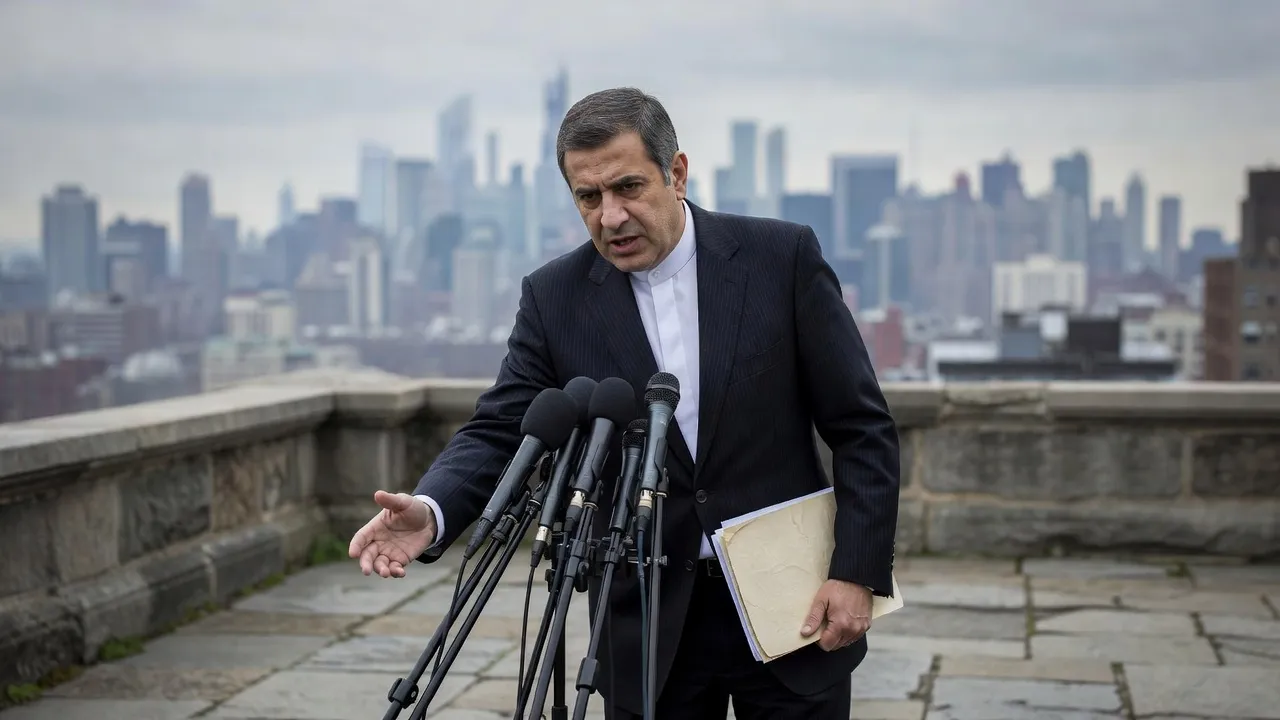
Abbas Araghchi announced from the UN headquarters in New York that he had transmitted, via Qatar, a plan to reopen the Strait of Hormuz in seven days, specifying that "the seven-day deadline will begin as soon as the United States accepts this plan".
- 02
According to the Wall Street Journal, citing American officials, Donald Trump rejected the offer and is considering resuming bombings against Iran after the November midterm elections.
- 03
A fifth of the world's hydrocarbons passed through the Strait of Hormuz before the war triggered at the end of February by American-Israeli strikes against Iran.
ANALYSIS
Paris, September 26, 2026. The scenario has a familiar diplomatic tone. From the UN headquarters in New York, Iranian Foreign Minister Abbas Araghchi announced on Friday that he had transmitted a plan to the United States, through Qatar, to reopen the Strait of Hormuz within seven days. "The seven-day deadline will begin as soon as the United States accepts this plan," he specified, adding that "the choice now belongs" to Washington. In exchange for a cessation of hostilities in the Middle East, including in Lebanon, the unblocking of at least $12 billion in frozen Iranian assets, the lifting of oil sanctions, and the end of the American naval blockade, the strait would be reopened on the seventh day.
The French press recalls that the proposal had initially circulated in the shadows: the Japanese agency Kyodo had mentioned it as early as Tuesday, before Iranian media denied it, without any official communication coming to clarify Tehran's position until Friday. It also emphasizes that these conditions are not new: they almost exactly replicate the agreement protocol signed in June by Donald Trump and Massoud Pezeshkian, which remained a dead letter after divergent interpretations between the two capitals. 20 Minutes sees this as a continuation of a "game of liar's poker". On the American channel CBS, the Iranian president assured on Friday that "if the United States agrees to proceed in this manner, everything will return to normal", also saluting the "thoughtful support" of Xi Jinping for a return to the June text.
But a few hours later, the Wall Street Journal, citing American officials, reported that Donald Trump had rejected the offer, judging Tehran's ability to keep its commitments as skeptical, and was considering resuming bombings after the November midterm elections. The American president responded in his own way, by publishing a map of the strait renamed "Strait Trump" on Truth Social. No official confirmation has come from the White House.
The French media recall the economic stakes of the issue: before the war triggered at the end of February by American-Israeli strikes, a fifth of the world's hydrocarbons passed through this passage, whose partial closure has been fueling tensions on oil markets for seven months.
SOURCES (6)
- 20 MinutesMEDIUM
- Le Monde InternationalMEDIUM
- Sud OuestMEDIUM
- BFMTVMEDIUM